Firenca
Italija
Đžoto di Bondone
Đžoto
Otkrijte Đžota di Bondona (1267-1337), revolucionarnog italijanskog slikara! Istražite njegove freske u stilu proto-renesanse, naturalizam i emotivnu dubinu u delima poput Scrovegnijeve kapel. Ključna figura u istoriji umetnosti.
Proto-renesansa
Masacio
Čimabue
oko 1267. godine
1337. godine
Đžoto di Bondone
Italijan
Scrovegnijeva kapela
Firenca,
Otkrijte Điotovolo remek-delo u Kapeli Skrovegni! Uznemirite se prelepim freskama u kultnoj areni kapeli u Padovi – obavezno umetničko iskustvo.
Italija
Padova
Kapela Skrovegni
Điotove freske
20.000+
800 kvadratnih metara
Muzej Fresaka
1305
Sadrži kolekciju rimskih skulptura.
1
Koje je primarno umetničko značenje Kapela Skrovegni?
A Radiance of Benevolence: Giotto’s Vision of Charity
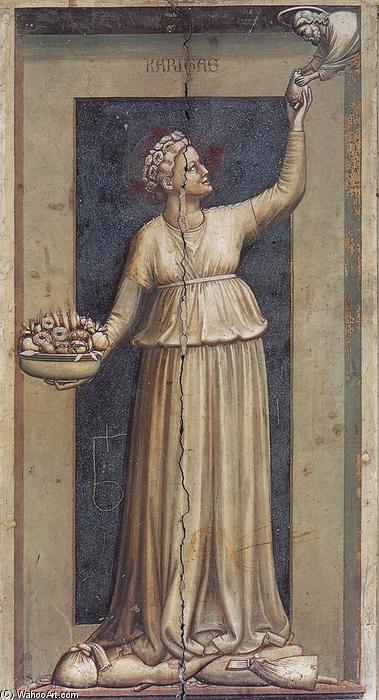
In the hallowed, sun-drenched expanse of the Cappella Scrovegni in Padua, there exists a moment of profound tenderness that transcends the centuries. Giotto di Bondone’s No. 45 The Seven Virtues: Charity is not merely a fresco; it is a window into the soul of the early Renaissance. Executed in 1306, this masterpiece captures a pivotal moment in art history when the rigid, golden stylization of the Byzantine tradition began to yield to a new, breathing naturalism. The scene unfolds with an intimate grace, depicting a woman—the personification of Charity—as she offers a bountiful basket of fruit to a supplicant. There is a palpable sense of movement and connection in her gesture, a soft reaching that bridges the gap between the divine and the earthly, inviting every viewer to partake in her spirit of selfless love.
The technical mastery displayed in this work serves as a testament to Giotto’s revolutionary approach to form and space. Moving away from the flattened, symbolic figures of his predecessors, Giotto utilizes tempera on plaster to create a sense of weight, volume, and anatomical presence. Through subtle gradations of color and a pioneering use of perspective, he imbues the fresco with a remarkable depth. One can almost feel the texture of the drapery folds as they cascade around the figures, and notice how the light seems to catch the skin of the fruit, lending an ethereal yet grounded quality to the composition. This meticulous attention to detail—from the delicate facial expressions to the geometric patterns on the background wall—demonstrates a profound commitment to capturing the truth of the human experience.
Symbolism and the Language of Devotion
Every element within this fresco is steeped in a rich, symbolic vocabulary designed to elevate the viewer's spiritual contemplation. The central act of presenting fruit serves as a powerful metaphor for generosity and the abundance of divine grace. An apple, positioned near the heart of the composition, acts as a visual anchor, perhaps hinting at both the sweetness of virtue and the complexities of human nature. The presence of bowls and the upward reaching of the supplicant further reinforce themes of nourishment—both physical and spiritual. Even the surrounding wall design, which echoes the intricate patterns of Byzantine mosaics, creates a beautiful tension between the ancient, sacred traditions and the emerging, human-centric realism of the Proto-Renaissance.
For the discerning collector or interior designer, a high-quality reproduction of this work offers more than just aesthetic beauty; it brings a sense of historical weight and emotional serenity into a contemporary space. The soft, luminous palette and the timeless narrative of compassion make it an ideal centerpiece for rooms intended to inspire reflection, warmth, and peace. To possess such a piece is to hold a fragment of the Florentine Renaissance, a reminder of a time when art first began to truly look upon the world with eyes wide open, finding the divine within the very fabric of human kindness.