Explore Giotto di Bondone (1267-1337), the revolutionary Italian painter! Discover his proto-Renaissance frescoes, naturalism & emotional depth in works like the Scrovegni Chapel. A key figure in art history.
Firenca
Italija
Đžoto di Bondone
Đžoto
Otkrijte Đžota di Bondona (1267-1337), revolucionarnog italijanskog slikara! Istražite njegove freske u stilu proto-renesanse, naturalizam i emotivnu dubinu u delima poput Scrovegnijeve kapel. Ključna figura u istoriji umetnosti.
Proto-renesansa
Masacio
Čimabue
oko 1267. godine
1337. godine
Đžoto di Bondone
Italijan
Scrovegnijeva kapela
Firenca,
Explore Santa Maria Novella in Florence: A stunning basilica blending Gothic & Renaissance art. Discover masterpieces by Giotto, Masaccio & Ghirlandaio, and the historic Officina Profumo-Farmaceutica.
The Dawn of Humanism: Giotto’s Revolutionary Vision
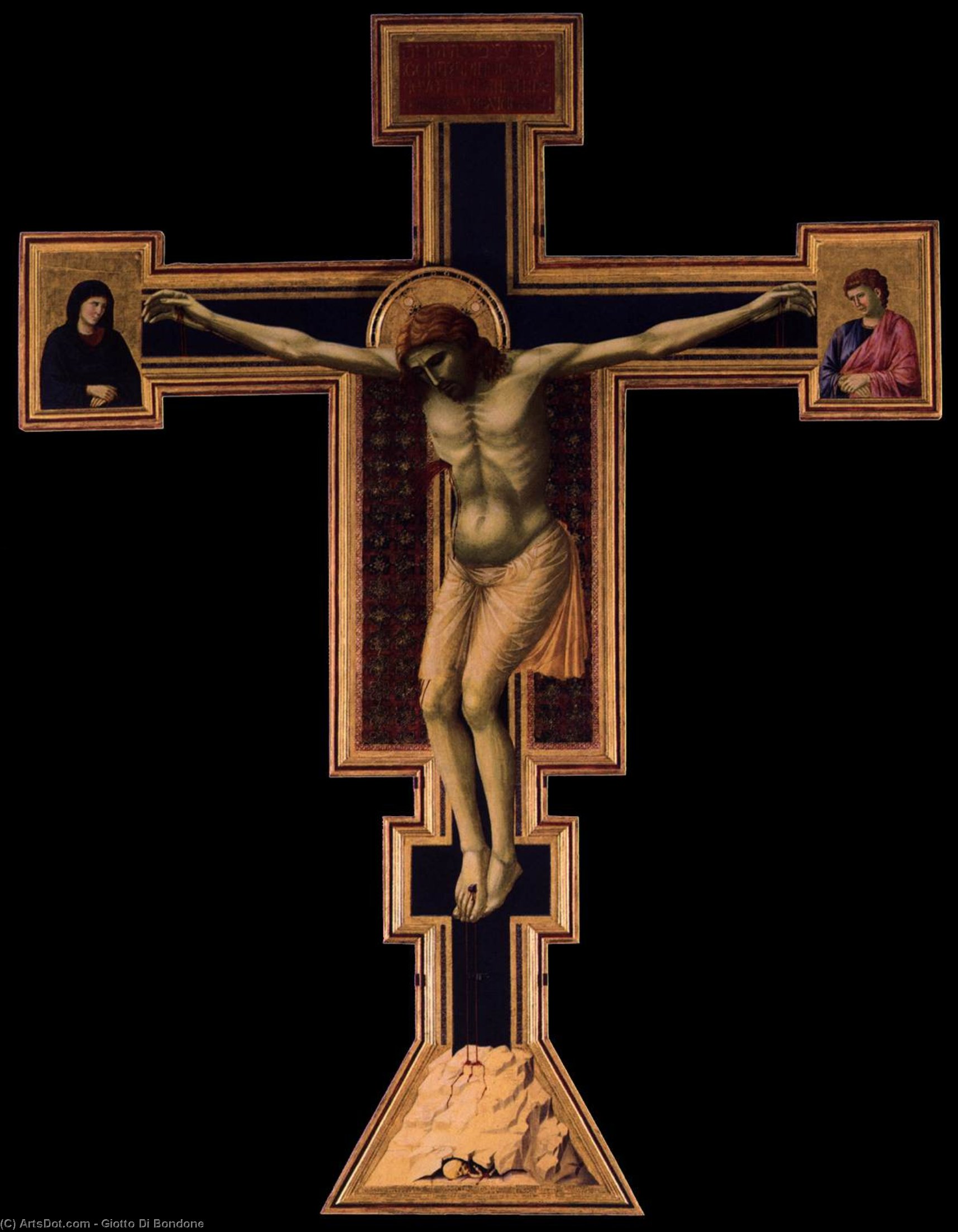
In the quiet, hallowed nave of the Santa Maria Novella basilica in Florence, a monumental presence commands the gaze of all who enter. The Crucifix (11), a masterpiece birthed around 1290 by the Florentine visionary Giotto di Bondone, stands as more than just a religious icon; it is a profound threshold between two worlds. At a time when the art of Europe was largely defined by the rigid, flattened, and ethereal conventions of the Byzantine style, Giotto dared to introduce the weight of humanity. This massive tempera on wood panel, measuring an awe-inspiring 578 x 406 cm, captures the precise moment when the spiritual began to embrace the physical, marking the first tremors of the Renaissance.
The composition is a masterclass in dramatic tension and emotional gravity. At its heart, the figure of Jesus hangs upon the cross, yet he is not the stylized, weightless icon of previous centuries. Instead, Giotto employs a revolutionary naturalism, emphasizing the earthly heaviness of the body. The subtle anatomical details and the palpable sense of physical suffering invite the viewer to empathize with the divine. Flanking the central figure are Mary Magdalene and John, whose presence provides a poignant emotional anchor. Through their gestures and expressions, Giotto weaves a narrative of grief and devotion that transcends the wood and pigment, pulling the observer into the very heart of the tragedy.
A Symphony of Technique and Light
To behold this work is to witness the mastery of traditional media pushed to new expressive heights. Using tempera and gold on a vast wood panel, Giotto utilized the luminosity of gold not merely for ornamentation, but to create a celestial backdrop that contrasts sharply with the visceral reality of the crucifixion. The ornate design above Christ’s head adds an element of elegance, yet it never distracts from the raw, human drama unfolding below. His ability to manipulate color and light creates a sense of three-dimensional depth that was radical for the late 13th century, effectively breaking away from the two-dimensional flatness of his predecessors.
For the discerning collector or interior designer, a high-quality reproduction of this Crucifix offers more than just a decorative element; it brings a piece of art history’s most significant turning point into a contemporary space. The painting's scale and its ability to command attention make it an ideal focal point for grand halls or curated galleries. It serves as a conversation piece that speaks to the enduring power of human emotion and the timeless beauty of Florentine craftsmanship. Whether placed in a setting of classical elegance or modern minimalism, the Crucifix (11) radiates a profound sense of history, depth, and spiritual resonance.