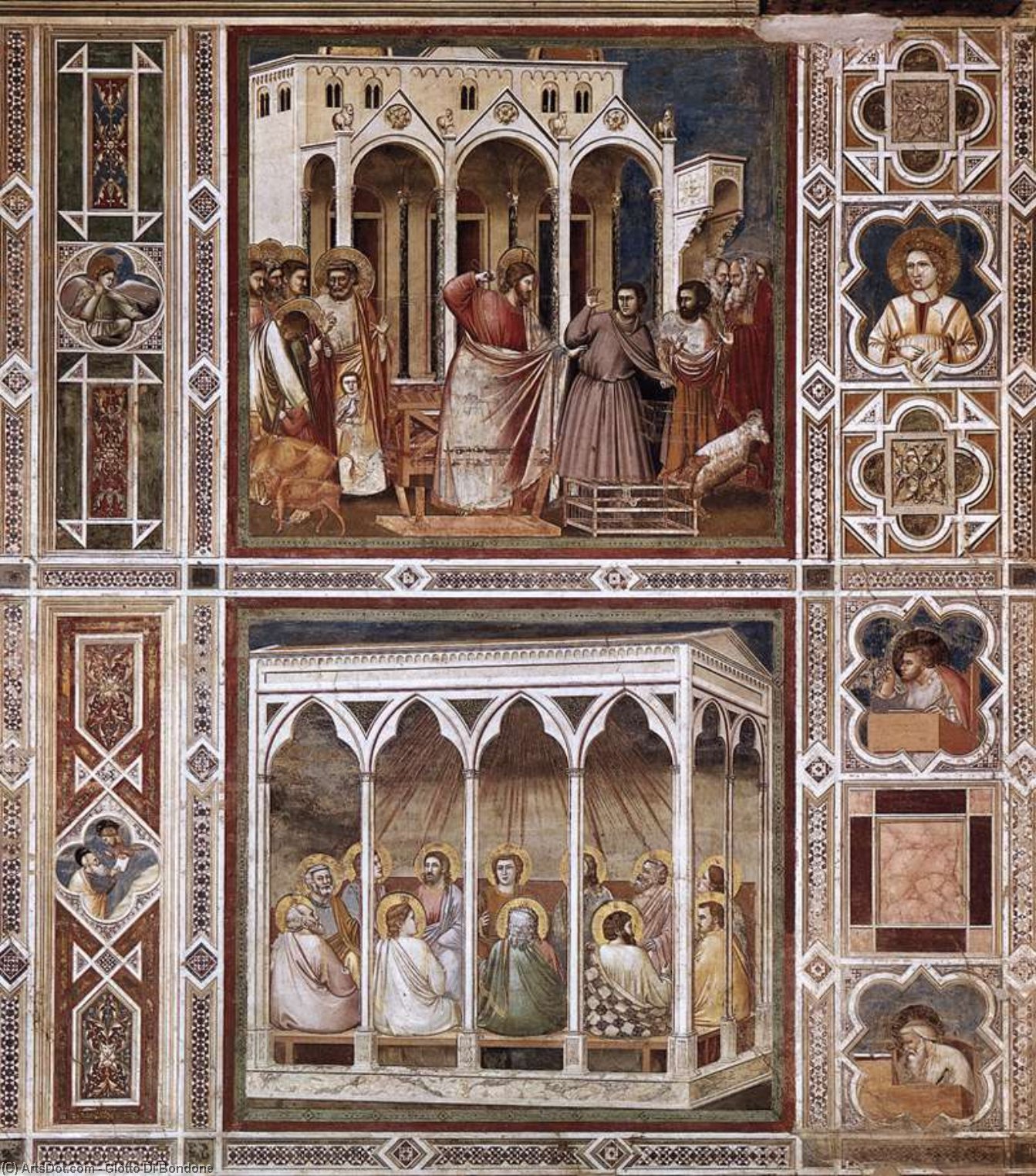
Discover Giotto's 'Decorative Bands,' a groundbreaking fresco from the Scrovegni Chapel (1304). Explore its innovative perspective, emotional depth & pivotal role in Early Renaissance art. A masterpiece of biblical narrative and artistic skill.
Firenca
Italija
Đžoto di Bondone
Đžoto
Otkrijte Đžota di Bondona (1267-1337), revolucionarnog italijanskog slikara! Istražite njegove freske u stilu proto-renesanse, naturalizam i emotivnu dubinu u delima poput Scrovegnijeve kapel. Ključna figura u istoriji umetnosti.
Proto-renesansa
Masacio
Čimabue
oko 1267. godine
1337. godine
Đžoto di Bondone
Italijan
Scrovegnijeva kapela
Firenca,
Otkrijte Điotovolo remek-delo u Kapeli Skrovegni! Uznemirite se prelepim freskama u kultnoj areni kapeli u Padovi – obavezno umetničko iskustvo.
Italija
Padova
Kapela Skrovegni
Điotove freske
20.000+
800 kvadratnih metara
Muzej Fresaka
1305
Sadrži kolekciju rimskih skulptura.
1
Koje je primarno umetničko značenje Kapela Skrovegni?
Decorative Bands
Giotto Di Bondone’s “Decorative Bands,” nestled within the Cappella Scrovegni in Padua, Italy, stands as a cornerstone of Early Renaissance art—a testament to Giotto's revolutionary vision and enduring influence. Commissioned by Enrico Scrovegni between 1303 and 1305, this fresco cycle wasn’t merely decoration; it was an act of profound spiritual penitence for the Scrovegni family, tasked with honoring God through artistic grandeur. Giotto Di Bondone, a trailblazer who decisively moved away from Byzantine conventions, accepted this challenge with unparalleled skill, reshaping the landscape of painting and establishing new standards for naturalism and emotional depth.
The Historical Context
The Cappella Scrovegni’s genesis lies in the Scrovegni family's desire to expiate sins—specifically, involvement in illicit affairs and disputes over inheritance. Recognizing the transformative power of art, they entrusted Giotto with creating a monumental fresco cycle depicting scenes from the Life of Mary and Christ – an ambitious undertaking reflecting the prevailing piety of the era. This project coincided with a pivotal moment in artistic history: the gradual abandonment of Byzantine stylistic rigidity for the burgeoning naturalism championed by artists like Cimabue and subsequently embraced by Giotto himself.
Artistic Significance
“Decorative Bands” is integral to Giotto’s comprehensive fresco cycle, showcasing his groundbreaking approach to perspective and spatial representation. Unlike the flattened, stylized figures characteristic of Byzantine art, Giotto imbued his figures with palpable human emotion and anatomical accuracy—a dramatic departure that signaled a fundamental shift toward realism. The painting depicts a gathering of men around a building – likely a castle or church – skillfully employing foreshortening to create an illusion of depth and space within the confines of a two-dimensional surface. Furthermore, the prominent animal figure serves as a focal point, adding dynamism to the composition and reinforcing its symbolic resonance. Giotto’s meticulous attention to detail—from drapery folds to facial expressions—elevates “Decorative Bands” beyond mere visual spectacle; it embodies the spirit of innovation that defined the Early Renaissance.
Relevance and Legacy
Giotto Di Bondone's "Decorative Bands" transcends its immediate historical context, inspiring generations of artists who followed him. Michelangelo and Raphael, among others, acknowledged Giotto’s pioneering role in establishing naturalistic painting as a dominant aesthetic tradition. The Cappella Scrovegni itself remains a pilgrimage site for art historians and enthusiasts alike—a tangible embodiment of Giotto's artistic genius and the transformative power of faith to inspire creative expression. For those seeking to immerse themselves in the splendor of Renaissance masterpieces, exploring reproductions of “Decorative Bands” offers a captivating journey back in time—a celebration of artistry and spiritual contemplation.
- Key Points:
- Commissioned by Enrico Scrovegni between 1303 and 1305.
- Located in Cappella Scrovegni, Padua, Italy.
- Part of Giotto's fresco cycle depicting the lives of Mary and Christ.
- Features naturalistic proportions and expressions, marking a departure from Byzantine art.
Conclusion
“Decorative Bands” by Giotto Di Bondone stands as an indelible emblem of Early Renaissance artistic achievement—a profound reflection of its spiritual convictions and enduring aesthetic legacy. Its influence on subsequent artists underscores its significance within the annals of art history, inviting contemplation and appreciation for a timeless masterpiece. For those eager to delve deeper into the world of Renaissance artistry, reproductions of “Decorative Bands” provide an invaluable portal to understanding one of the era’s most transformative visions.