The Genesis of Realism: Giotto's Dramatic Depiction
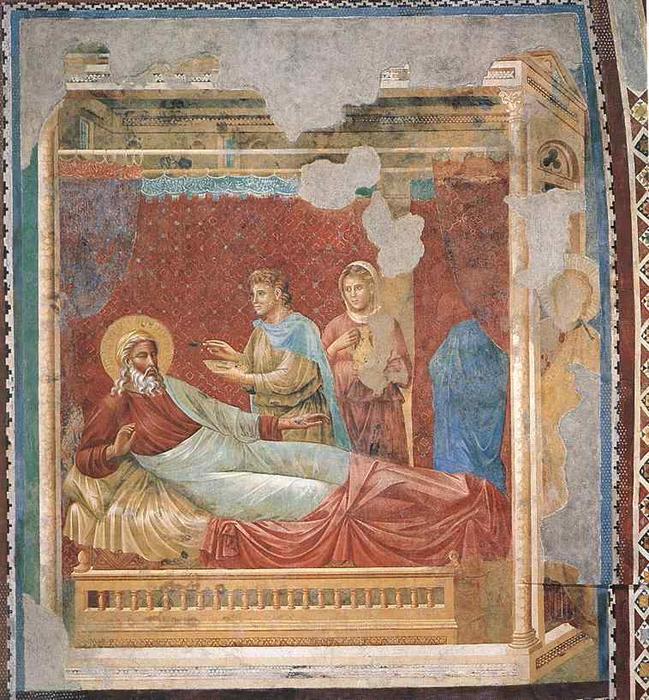
Giotto di Bondone’s “Isaac Rejecting Esau,” painted around 1290, isn’t merely a biblical illustration; it’s a pivotal moment in the artistic landscape of early Italy. Emerging from the shadow of Byzantine formality, Giotto boldly ushered in a new era—an era where human emotion and naturalism took center stage. This fresco, housed within the Basilica of Saint Francis of Assisi, captures a fraught exchange between twin brothers, Isaac and Esau, a narrative brimming with familial rivalry, divine promise, and the very essence of human choice. The scene unfolds within a modestly furnished room—two beds, a chair, and a simple cup—a deliberate restraint that focuses our attention entirely on the emotional core of the story: Isaac’s resolute rejection of his birthright offered by Esau.
- Proto-Renaissance Style: Giotto's work represents the transition from the stylized, flattened forms of Byzantine art to the more three-dimensional and emotionally resonant style that would characterize the Renaissance.
- Narrative Innovation: Giotto moved away from purely symbolic representation towards a focus on telling a story with believable characters and gestures.
A Study in Human Emotion – Giotto’s Breakthrough
What immediately strikes the viewer is Giotto's masterful portrayal of human feeling. Isaac, depicted as an elderly figure, isn’t rendered as a static symbol of patriarchal authority but as a man wrestling with a difficult decision. His posture—leaning towards Esau, gesturing emphatically—conveys a potent sense of internal conflict and unwavering resolve. Rebecca, his wife, is equally compelling; her demure presence and clasped hands suggest both concern for her husband and an understanding of the weighty consequences of this exchange. Esau’s pleading stance, with outstretched hands, communicates desperation and a yearning for the legacy he believes rightfully belongs to him. Giotto achieves this remarkable realism through subtle details: the furrowed brow, the slight tilt of the head, the carefully rendered folds in their garments—all contribute to a profound sense of immediacy.
Note the use of light and shadow, characteristic of Giotto’s technique, which adds depth and volume to the figures, further enhancing the emotional impact of the scene.
Symbolism Woven into the Fabric of Faith
Beyond the immediate narrative, “Isaac Rejecting Esau” is rich in symbolic meaning. The two beds represent not just a physical space but also the foundation upon which Isaac’s future lineage and the promise of Israel will be built. The cup, likely belonging to Jacob, subtly foreshadows his eventual role as the patriarch of the Israelites. The act of rejection itself—the relinquishing of the birthright—is a powerful metaphor for the challenges inherent in fulfilling God's plan, highlighting the importance of faith and obedience. The scene echoes themes prevalent throughout the Old Testament – the tension between older and younger sons, the consequences of pride and greed, and ultimately, the enduring power of divine grace.
A Legacy of Innovation: Giotto’s Enduring Influence
Giotto's “Isaac Rejecting Esau” stands as a cornerstone of Renaissance art. His commitment to naturalism, his ability to convey complex emotions through gesture and expression, and his innovative use of narrative—all contributed significantly to the development of Western painting. Reproductions of this fresco offer a unique opportunity to experience firsthand the genius of one of history’s most influential artists. The work's emotional depth and historical significance continue to resonate with viewers today, reminding us of the timeless themes explored within its captivating depiction of faith, family, and human choice.