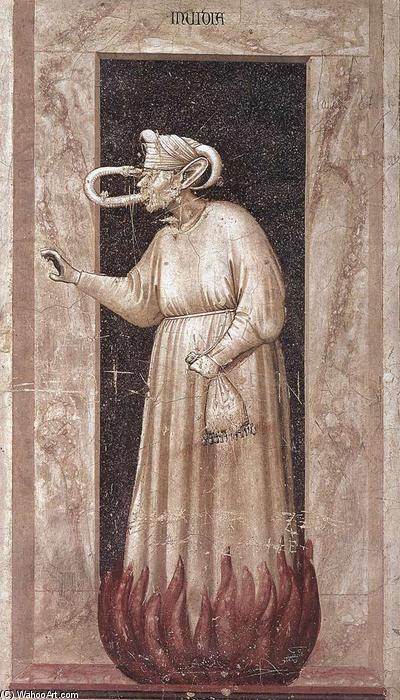
No. 48 The Seven Vices: Envy - A Deep Dive
- Artist: Giotto di Bondone
- Date: 1306
- Dimensions: 120 x 55 cm
- Location: Cappella Scrovegni (Arena Chapel), Padua, Italy
Historical Context and Significance
“No. 48 The Seven Vices: Envy” is a remarkable fresco forming part of Giotto di Bondone’s monumental cycle within the Cappella Scrovegni in Padua. Commissioned by Enrico Scrovegni, a wealthy merchant seeking redemption for his family's past and his own sins, the chapel stands as a testament to medieval piety and artistic innovation. Built between 1303 and 1305, the Arena Chapel became Giotto’s canvas for depicting scenes from both the lives of Christ and the consequences of sin – the Seven Vices.
Artistic Elements and Technique
This fresco exemplifies Giotto's revolutionary approach to painting. Departing from the stylized conventions of Byzantine art, he sought a greater degree of naturalism and emotional depth. The figure of Envy is rendered with a striking realism, showcasing detailed facial features and expressive gestures. The use of vibrant colors, though somewhat faded over time, contributes to the dramatic impact of the scene. Giotto’s mastery of perspective, while still developing compared to later Renaissance standards, creates a sense of spatial depth within the limited confines of the fresco.
The technique itself – fresco – is crucial to understanding the artwork's longevity and visual qualities. Fresco involves painting directly onto wet plaster, allowing the pigments to bind with the plaster as it dries, creating a durable and vibrant surface. The texture of the plaster contributes to the overall aesthetic, adding a tactile quality to the image.
Symbolism and Interpretation
The fresco powerfully depicts the sin of Envy through symbolic imagery. The central figure, an unsettling man with horns suggesting demonic influence, embodies the destructive nature of envy. He holds a trumpet, traditionally symbolizing announcements or news; in this context, it represents the spread of malicious gossip and rumors fueled by envy. The fire at his feet signifies the consuming and destructive power of this vice. An open doorway behind him is often interpreted as a gateway to hell or a path leading towards damnation, visually representing the consequences of succumbing to envy.
The inclusion of smaller figures in the background adds another layer of complexity. Their expressions and postures suggest they are victims of Envy's influence, further emphasizing the widespread impact of this sin.
Emotional Impact and Legacy
“No. 48 The Seven Vices: Envy” is not merely a depiction of a theological concept; it’s an emotionally charged portrayal of human failings. Giotto masterfully conveys the ugliness, bitterness, and destructive potential of envy through his figure's expression and posture. The fresco’s vivid storytelling and emotional depth profoundly influenced subsequent generations of artists, contributing significantly to the development of Western art. The Cappella Scrovegni as a whole remains a cornerstone of early Renaissance art, celebrated for its innovative techniques and enduring message about morality and redemption.