Giotto di Bondone (c. 1267–1337) revolutionized painting with his naturalistic style and emotional depth, exemplified by the monumental frescoes of the Cappella Scrovegni in Padua. Influenced by Byzantine tradition but forging a path toward Renaissance realism, Giotto’s work profoundly impacted Western art history.
Firenca
Italija
Đžoto di Bondone
Đžoto
Otkrijte Đžota di Bondona (1267-1337), revolucionarnog italijanskog slikara! Istražite njegove freske u stilu proto-renesanse, naturalizam i emotivnu dubinu u delima poput Scrovegnijeve kapel. Ključna figura u istoriji umetnosti.
Proto-renesansa
Masacio
Čimabue
oko 1267. godine
1337. godine
Đžoto di Bondone
Italijan
Scrovegnijeva kapela
Firenca,
Otkrijte Điotovolo remek-delo u Kapeli Skrovegni! Uznemirite se prelepim freskama u kultnoj areni kapeli u Padovi – obavezno umetničko iskustvo.
Italija
Padova
Kapela Skrovegni
Điotove freske
20.000+
800 kvadratnih metara
Muzej Fresaka
1305
Sadrži kolekciju rimskih skulptura.
1
Koje je primarno umetničko značenje Kapela Skrovegni?
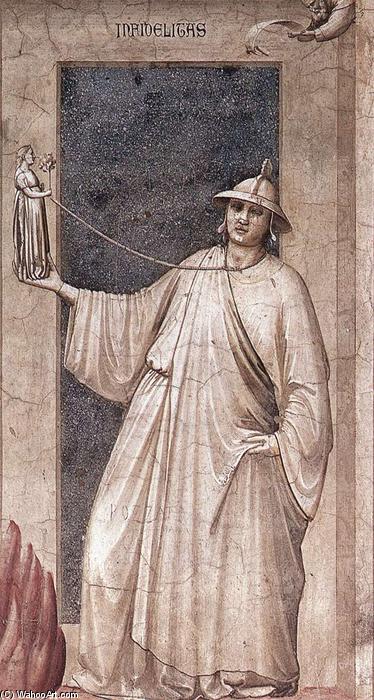
No. 49 The Seven Vices: Infidelity
“No. 49 The Seven Vices: Infidelity,” by Giotto Di Bondone, stands as a cornerstone of Early Renaissance art and a testament to Giotto’s revolutionary approach to painting. Created in 1306 for the Cappella Scrovegni (Padua, Italy), this fresco is more than just an image; it's a profound meditation on morality conveyed through masterful technique and symbolic representation.
Artistic Significance
- Giotto Di Bondone was a pioneer of his time, fundamentally altering the artistic landscape. Prior to Giotto, Byzantine art dominated Florence, characterized by stylized figures and shimmering gold backgrounds. Giotto decisively rejected these conventions, prioritizing naturalism—the depiction of human emotion and realistic spatial depth—a breakthrough that would influence generations of artists to come.
- The fresco’s composition is remarkably innovative for its era. Giotto skillfully employs perspective, subtly suggesting depth within the chapel walls, a technique previously unexplored in Florentine painting. This achievement alone marks him as a visionary artist who anticipated developments centuries later.
Symbolism and Composition
- The scene depicts a man holding a smartphone while standing next to a doorway—a striking juxtaposition of the ancient and modern, reflecting Giotto’s ability to grapple with complex themes. Two birds are prominently featured: one perched on the left side of the fresco and another positioned at the bottom right corner. These birds symbolize freedom or the soul, adding layers of meaning to the artwork's narrative.
- A clock dominates the upper left area of the painting, serving as a poignant reminder of time’s passage and prompting contemplation about moral responsibility. The man’s white robe signifies purity—a deliberate choice by Giotto to imbue his subject with spiritual significance.
- Furthermore, Giotto’s meticulous attention to detail extends beyond mere representation; he captures subtle expressions of emotion on the faces of the figures, conveying psychological depth that was unprecedented in Florentine art.
Context and Location
The Cappella Scrovegni itself holds immense historical importance. Commissioned by Enrico Scrovegni—a wealthy merchant seeking atonement for his sins—the chapel embodies the fervent piety of its patron and reflects the broader spiritual climate of the period. Giotto’s frescoes were conceived as a didactic tool, intended to educate viewers on the virtues and vices that shaped human conduct.
Relevance in Art History
Giotto's influence reverberates throughout Western art history. His Cappella Scrovegni frescoes are considered among the greatest artistic achievements of the Early Renaissance, establishing a new standard for naturalism and emotional expression. Giotto’s work paved the way for artists like Masaccio and Michelangelo, shaping the trajectory of Italian Renaissance painting.
Conclusion
"No. 49 The Seven Vices: Infidelity" exemplifies Giotto Di Bondone's genius—his ability to fuse moral contemplation with captivating visual artistry. This fresco stands as a beacon of artistic innovation and continues to inspire admiration for its profound symbolism and masterful execution. For deeper insights into Giotto’s life and oeuvre, explore Giotto Di Bondone: Last Judgment (Cappella Scrovegni (Arena Chapel), Padua) and Giotto Di Bondone: Last Judgment (detail 14) (Cappella Scrovegni (Arena Chapel), Padua) on ArtsDot.com.