A Triumph of Good Over Evil: Exploring *Políptico de Bolonia 2*
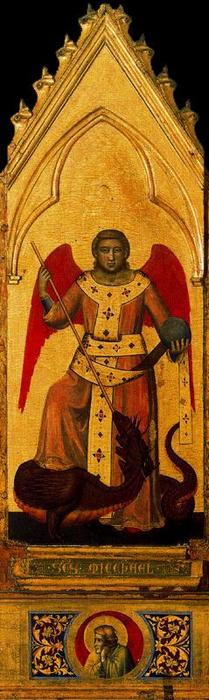
This striking vertical panel painting, *Políptico de Bolonia 2*, is a powerful example of Italian artistry from the late medieval period – likely the 14th or early 15th century. It vividly depicts the archetypal battle between good and evil, embodied in the figures of Saint Michael vanquishing the dragon and, below him, Saint George poised for heroic action. The artwork’s enduring appeal lies not only in its dramatic subject matter but also in its masterful execution and rich symbolic language.
Style & Technique: A Bridge Between Gothic and Renaissance
The painting showcases a fascinating transition in style. While retaining elements of the elegant elongation characteristic of late
Gothic art – seen in the figures’ proportions – it also anticipates the emerging naturalism of the early
Renaissance. Executed primarily in tempera on wood panel, the artist skillfully employed gold leaf to create a luminous and opulent background. This use of gold wasn't merely decorative; it imbued the scene with a sacred aura, elevating the narrative beyond the earthly realm. The slightly textured surface is testament to the meticulous layering of paint typical of this technique.
Iconography & Symbolism: A Visual Narrative
The subject matter draws directly from Christian iconography. Saint Michael, clad in ornate armor and wielding a lance and shield, represents divine force and righteous victory over Satan, symbolized by the monstrous dragon he defeats. The coiled form of the dragon itself is rendered with intricate detail – its scales and menacing features emphasizing its evil nature. Below, Saint George, instantly recognizable by his helmet and sword, embodies courage and faith in the face of adversity. These figures aren’t simply portraits; they are powerful symbols representing abstract concepts of good versus evil, faith versus darkness. The architectural framing—arches and decorative moldings—further enhances the sense of grandeur and reinforces the sacred nature of the scene.
Historical Context: Giotto's Influence & Artistic Innovation
Attributed to the workshop or followers of
Giotto di Bondone (1267-1337), this panel reflects the revolutionary impact he had on Italian painting. Giotto broke away from the stylized Byzantine tradition, introducing a greater sense of realism and emotional depth into his work. While direct attribution to Giotto himself remains unconfirmed for *Políptico de Bolonia 2*, the artwork clearly demonstrates his influence in its compositional structure – particularly the pyramidal arrangement with Saint Michael at the apex – and its focus on humanizing religious figures. The painting’s creation likely coincided with a period of significant artistic patronage, as wealthy families and religious institutions commissioned increasingly elaborate works to adorn churches and private chapels.
Composition & Emotional Impact
The composition is dynamically balanced. The imposing figure of Saint Michael dominates the upper portion, drawing the viewer’s eye upwards in a gesture of reverence. The dragon's serpentine form creates tension and movement, while the smaller panel depicting Saint George provides a grounding element. The use of light and shadow further emphasizes the figures’ forms and adds to the dramatic intensity of the scene.
- Color Palette: Dominated by rich gold, complemented by earthy browns, vibrant reds, and deep blues.
- Lines & Shapes: Clear outlines define the figures, while geometric shapes – circles for eyes, triangles for armor – contribute to the overall structure.
- Emotional Resonance: The painting evokes a sense of awe, reverence, and triumph. It’s a powerful reminder of the enduring struggle between good and evil and the ultimate victory of faith.
*Políptico de Bolonia 2* is more than just a religious artwork; it's a testament to human artistry and spiritual devotion – a piece that continues to inspire and captivate viewers centuries after its creation. Its blend of Gothic elegance and Renaissance innovation makes it a compelling addition to any collection or interior space, offering both visual beauty and profound symbolic meaning.