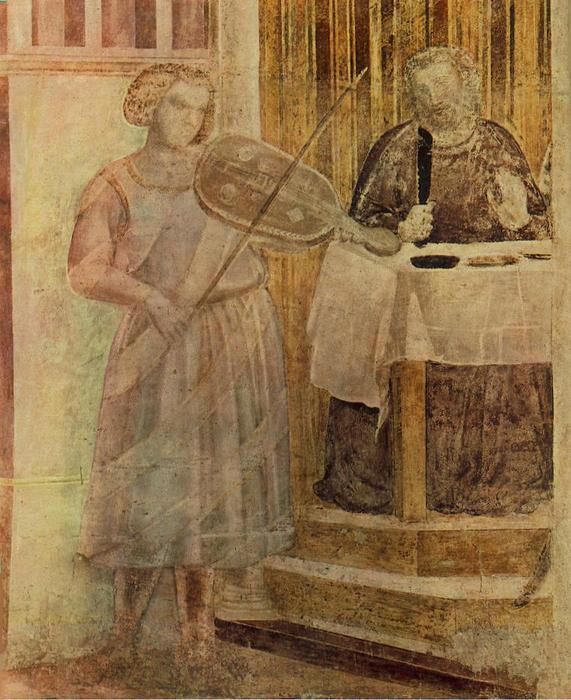
Scenes from the Life of St John the Baptist: 3. Feast of Herod (detail)
Giotto Di Bondone’s “Scenes from the Life of St John the Baptist: 3. Feast of Herod” stands as a cornerstone of Early Renaissance art, encapsulating not merely visual beauty but profound theological contemplation and masterful artistic innovation. Painted in 1320 for the Peruzzi Chapel within Santa Croce Cathedral in Florence, this fresco fragment—a mere detail from a larger narrative cycle—offers an unparalleled glimpse into Giotto’s revolutionary approach to depicting human emotion and spatial realism.
- The Narrative Context: The scene portrays Herod Antipas's banquet following the execution of St John the Baptist, orchestrated by Salome’s insistent dance. It’s a dramatic confrontation between piety and ambition, reflecting anxieties about papal authority and divine judgment prevalent in Florence during Giotto’s time.
- Stylistic Breakthrough: Unlike the Byzantine tradition that dominated Florentine art prior to Giotto, this detail exemplifies his decisive break from stylized figures and flattened perspectives. Giotto abandons illusionistic depth for a more psychologically nuanced portrayal of characters—particularly Herod—whose gaze conveys contemplation rather than dominance.
- Technical Mastery: Giotto’s technique is characterized by meticulous observation of nature. The artist skillfully renders the textures of clothing, skin, and drapery with remarkable accuracy, utilizing encaustic paint—a mixture of beeswax and pigment—to achieve luminous surfaces and subtle gradations of color. This method distinguishes itself from tempera painting, which was more common at the time.
- Symbolic Resonance: The composition is carefully arranged to draw the viewer’s eye toward the central event—the beheading—and simultaneously conveys a sense of solemnity and moral seriousness. The muted palette—dominated by earthy tones—creates an atmosphere of subdued grandeur, mirroring the spiritual significance of the depicted episode.
- Emotional Impact: Giotto's depiction captures the palpable tension between Herod’s calculated composure and Salome’s desperate plea for vengeance. Facial expressions are rendered with astonishing subtlety, conveying a spectrum of emotions that resonate deeply with viewers centuries later—a testament to Giotto’s ability to translate theological concepts into compelling visual narratives.
Giotto Di Bondone: Life and Legacy
Giotto Di Bondone (c. 1267 – January 8, 1337) was an Italian painter and architect who played a pivotal role in the transition from the Byzantine style to the Renaissance. His work, as described by Giorgio Vasari, marked a significant break from traditional styles, introducing techniques that would shape the future of painting. Giotto’s influence extended far beyond his immediate contemporaries; he established a new aesthetic standard that profoundly impacted subsequent generations of artists—a legacy that continues to inspire awe and admiration today.
The Feast of Herod: A Moment of Dramatic Tension
The fresco detail captures the crux of Herod's dilemma – confronted with Salome’s insistent dance, he wrestles with his desire for vengeance against John, yet recognizes the perilous consequences of defying divine law. Giotto’s portrayal underscores the moral complexities inherent in human behavior and reflects the broader anxieties about papal authority and divine judgment prevalent in Florence during Giotto’s time.
Exploring Giotto's Technique: Encaustic Paint and Spatial Depth
Giotto’s innovative use of encaustic paint—a mixture of beeswax and pigment—was a radical departure from the tempera technique favored by his predecessors. This method allowed him to achieve luminous surfaces and subtle gradations of color, creating an unprecedented level of realism and enhancing the emotional impact of his paintings. Furthermore, Giotto skillfully employs spatial depth—a hallmark of Renaissance art—to immerse viewers in the scene’s atmosphere and convey a sense of grandeur and solemnity.
Giotto's Influence on Subsequent Artists
Giotto Di Bondone’s groundbreaking achievements cemented his position as one of the most influential artists of the Early Renaissance, establishing a new aesthetic standard that profoundly impacted subsequent generations of painters—a legacy that continues to inspire awe and admiration today. His meticulous observation of nature and masterful technique served as a model for artists across Europe, shaping the trajectory of Western art history."