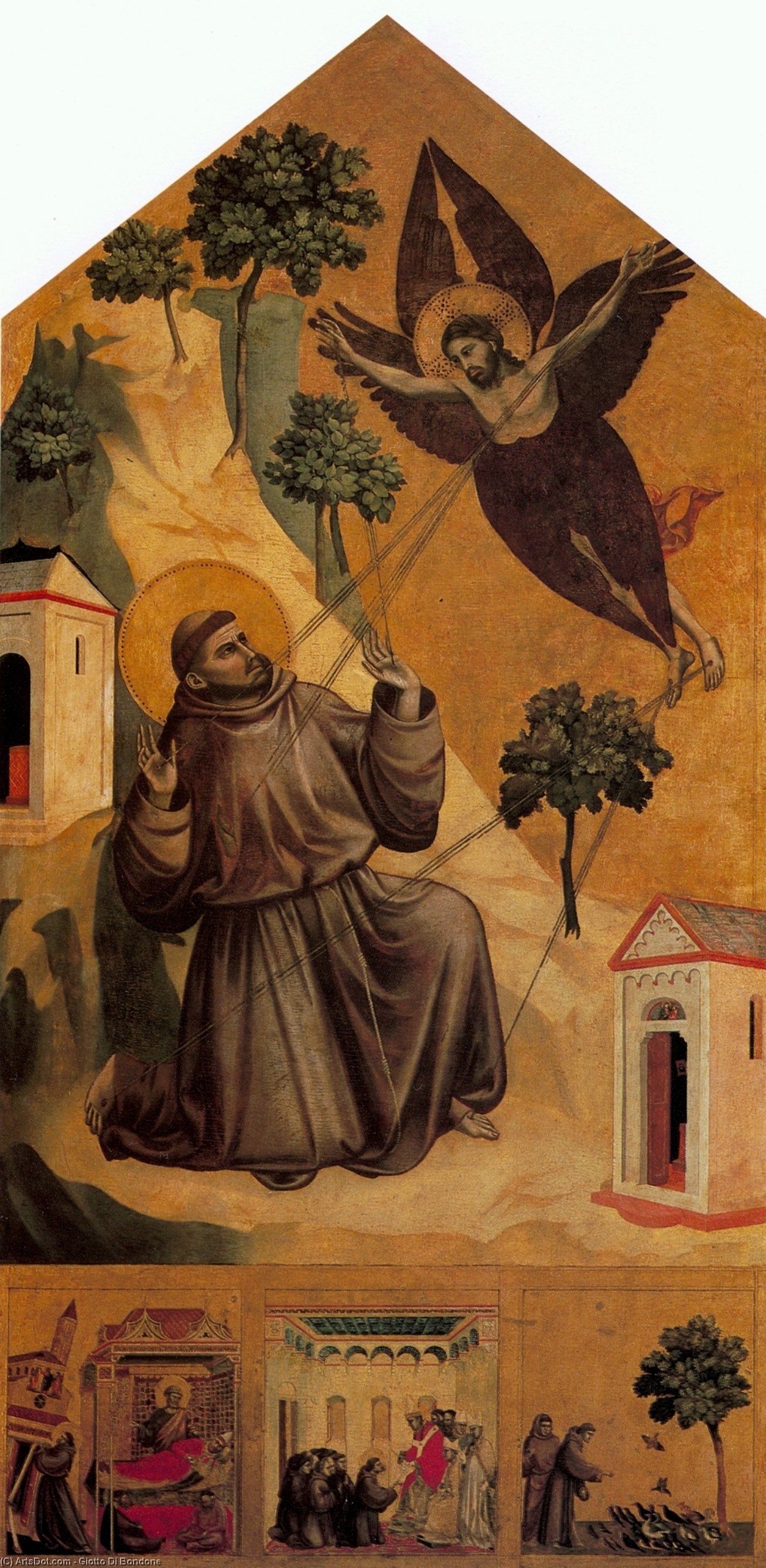
Saint Francis Receiving the Stigmata
“Saint Francis Receiving the Stigmata,” painted around 1295–1300 by Giotto di Bondone, stands as a cornerstone of Proto Renaissance art—a pivotal moment marking the transition from medieval artistic conventions to the burgeoning innovations of the Renaissance. Created for the Church of Saint Francis in Pisa and now housed within the Musée du Louvre in Paris, this tempera on panel artwork transcends mere depiction; it embodies a profound exploration of faith, human emotion, and groundbreaking artistic techniques.
The Scene and Symbolism
- The painting captures a dramatic episode from Saint Francis’ life—his reception of the stigmata from an angel. Set against a backdrop of a building adorned with a cross, symbolizing religious significance, the composition is meticulously crafted to convey spiritual transformation.
- Several figures populate the scene: one positioned on the left and another closer to the right, enriching the narrative’s context and layering visual information.
- A bird soaring above adds dynamism and life to the artwork, while a clock subtly underscores the importance of time within this religious story—a deliberate gesture reflecting medieval preoccupation with divine chronology.
Artistic Style and Influence
Giotto’s style represents a radical departure from Byzantine tradition. He championed naturalism, prioritizing realistic representation over stylized forms, achieving unprecedented spatial depth and conveying palpable human emotion—a breakthrough that profoundly impacted subsequent artists like Masaccio and Brunelleschi.
Historical Context
Painted during the Proto Renaissance, “Saint Francis Receiving the Stigmata” reflects a burgeoning humanist spirit alongside enduring religious devotion. Giotto’s innovations challenged established dogma while simultaneously elevating artistic expression to new heights—a testament to his genius and an indelible contribution to Western art history.
Relevance and Legacy
More than just a devotional image, this painting serves as a powerful emblem of Giotto’s artistic prowess. It exemplifies his ability to communicate complex ideas through visual language, securing its place as an enduring masterpiece—a source of inspiration for artists and scholars alike.
Further Exploration
Interested in delving deeper into Giotto’s oeuvre or the Proto Renaissance movement? Explore Giotto Di Bondone: St. Francis Receiving the Stigmata and The Proto Renaissance Art Movement for invaluable resources.