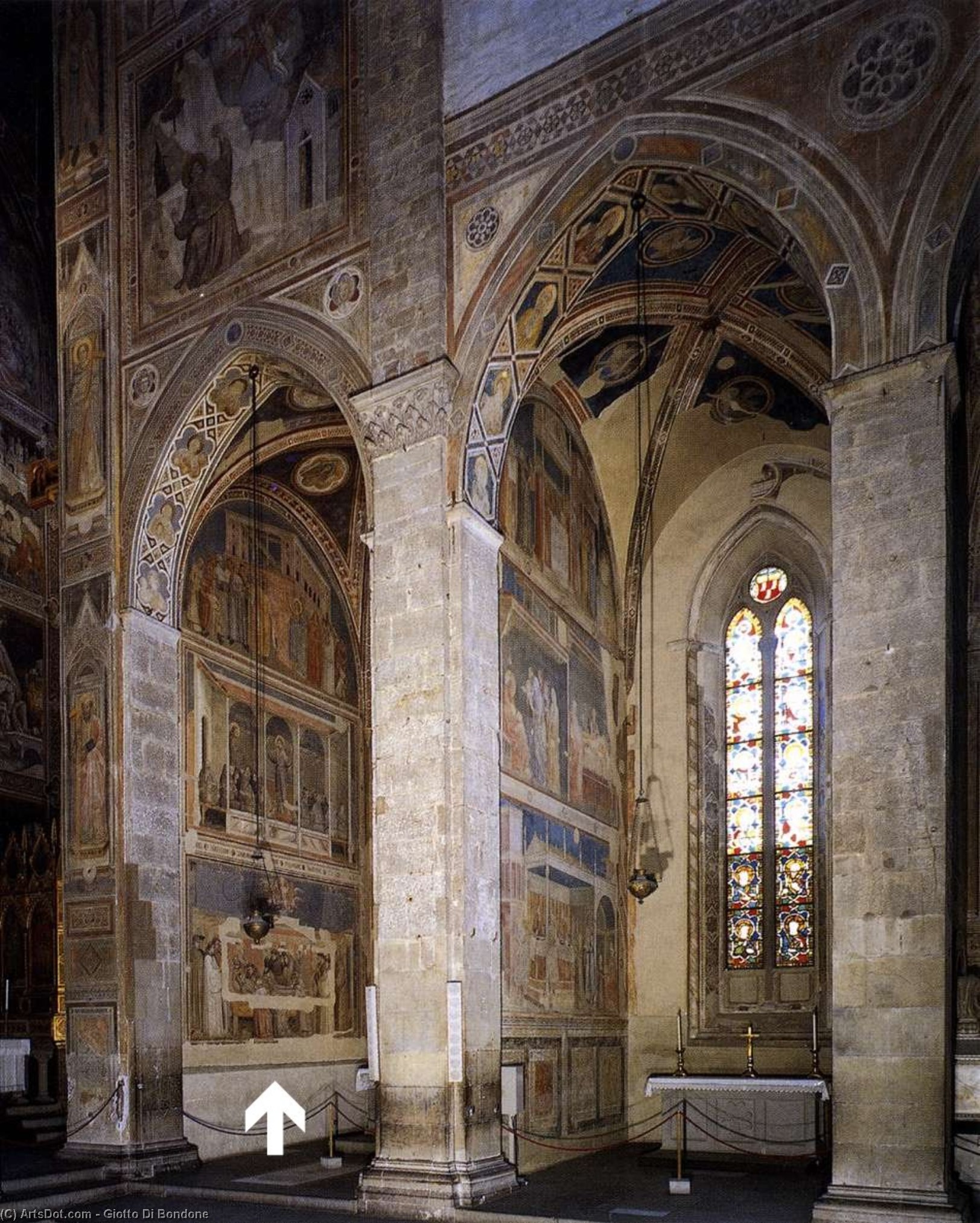
A Glimpse into Florentine Faith: Giotto’s View of the Peruzzi and Bardi Chapels
Within the venerable walls of the Museo dell'Opera di Santa Croce in Florence resides a painting that offers an intimate, almost voyeuristic view into the heart of 14th-century Florentine religious life – Giotto di Bondone’s “View of the Peruzzi and Bardi Chapels (from right).” More than just a depiction of architecture, this fresco is a carefully constructed tableau vivant, capturing not only the physical space of a church but also the everyday rhythms and spiritual aspirations of its inhabitants. Completed around 1320-1325, it stands as a pivotal work in Giotto’s evolution, showcasing his burgeoning mastery of perspective, human emotion, and a newfound realism that would forever alter the course of Western art.
The scene unfolds within a relatively modest church interior, dominated by two imposing arches – the focal point of the composition. These aren't merely architectural elements; they are portals to a world of devotion, adorned with intricate designs and vibrant frescoes that speak to the opulence and piety of the era. Scattered throughout the space are figures engaged in various activities: some stand respectfully before the arches, perhaps contemplating the artwork within; others converse animatedly, suggesting a lively social atmosphere amidst the sacred setting. A simple bench, positioned on the right side of the room, invites rest and reflection, while a clock hanging above it subtly anchors the scene in the realities of earthly time – a testament to Giotto’s commitment to portraying life with remarkable accuracy.
The Revolutionary Vision of Giotto
Giotto's genius lies not simply in his meticulous depiction of detail but in his innovative approach to space and human representation. Unlike the stylized, flattened figures characteristic of Byzantine art, Giotto imbues his subjects with a palpable sense of volume and weight. He employs techniques that create an illusion of depth – converging lines, atmospheric perspective, and carefully rendered drapery – drawing the viewer into the scene and making it feel remarkably real. This shift towards naturalism was revolutionary for its time, paving the way for the Renaissance and profoundly influencing generations of artists to come.
The painting’s historical context is crucial to understanding its significance. Florence in the early 14th century was a vibrant center of commerce, art, and political intrigue. The Peruzzi and Bardi families, prominent banking houses, commissioned these chapels as expressions of their wealth and piety – a desire to demonstrate both their material success and their devotion to God. Giotto’s work reflects this duality, seamlessly blending the grandeur of religious iconography with the everyday realities of Florentine society.
Symbolism and Spiritual Resonance
Beyond its technical brilliance, “View of the Peruzzi and Bardi Chapels” is rich in symbolic meaning. The arches themselves represent a connection between heaven and earth, while the figures within embody various aspects of faith and human experience. The presence of a clock serves as a reminder of mortality and the importance of living a virtuous life. Even the seemingly mundane details – the bench, the conversation among the figures – contribute to the painting’s overall spiritual resonance.
The choice of subjects—the lives of St. Francis and St. John the Baptist—aligns with the patronage of the Bardi family, highlighting their commitment to the Franciscan order. The composition is carefully balanced, creating a sense of harmony and tranquility that reflects the desired atmosphere of a sacred space. Giotto’s ability to capture both the physical beauty of the church and its spiritual essence is what makes this painting such a compelling and enduring masterpiece.
Experience the Masterpiece: A ArtsDot Reproduction
For those seeking to experience the profound beauty and artistic innovation of “View of the Peruzzi and Bardi Chapels (from right),” ArtsDot offers meticulously crafted, hand-painted reproductions that faithfully capture every nuance of Giotto’s original work. These reproductions are created using traditional oil painting techniques, ensuring a stunningly authentic result. Explore our exquisite reproductions today and bring this iconic work of art into your home or office.
To delve deeper into the world of Renaissance art and explore more masterpieces from the Museo dell'Opera di Santa Croce, Florence, Italy, visit Discovering the Masterpieces of Museo dell'Opera di Santa Croce, Florence, Italy.