The Annunciation: A Sienese Dream of Divine Revelation
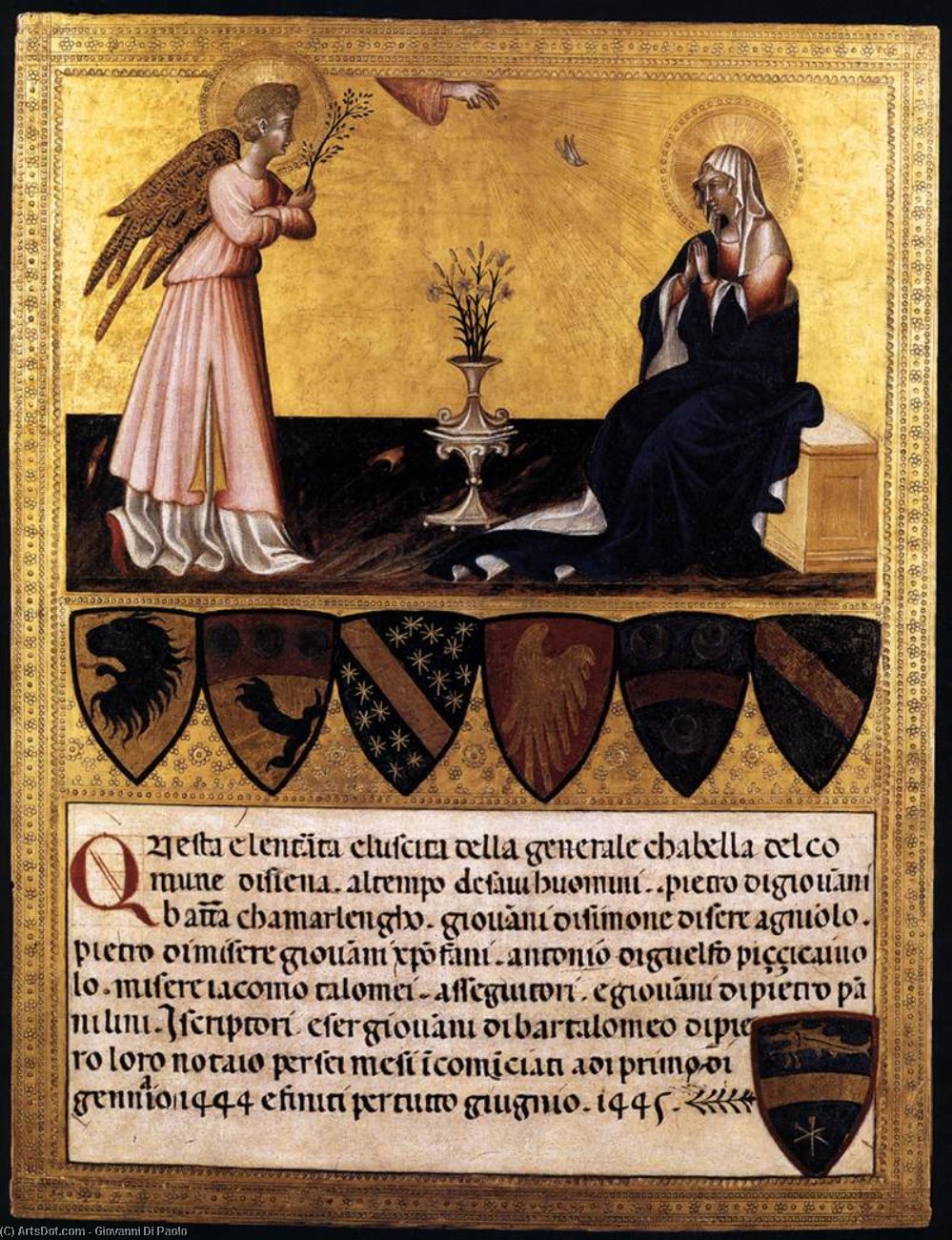
Giovanni di Paolo’s “The Annunciation” is not merely a depiction of a biblical event; it's a window into the vibrant, intensely spiritual world of 15th-century Siena. This captivating painting, measuring a modest 44 x 33 cm, pulsates with an otherworldly beauty—a testament to the artist’s unique blend of Gothic and nascent Renaissance influences. Di Paolo, born around 1403 in Siena, was a master of creating dreamlike scenes, often imbued with a sense of heightened emotion and symbolic richness. Unlike his more rigidly naturalistic contemporaries, he embraced a style characterized by luminous colors, elongated figures, and an almost theatrical quality, reflecting the artistic traditions deeply rooted within his Sienese community.
The scene unfolds with a quiet intensity. Two angels, rendered in delicate detail, flank the central figure of Mary. The angel on the left, holding a vase overflowing with blossoms – a potent symbol of fertility and divine grace – contrasts subtly with the seated angel on the right, suggesting contemplation and the weighty responsibility of delivering this momentous news. The figures themselves are not sharply defined; they possess a certain ethereal quality, as if emerging from a hazy dreamscape. Di Paolo’s meticulous attention to detail is evident in the folds of Mary's garments, the intricate patterns of the background architecture, and the subtle expressions on each figure’s face – conveying both surprise and acceptance.
A Symphony of Color and Light
Di Paolo’s distinctive style hinges heavily on his masterful use of color. He eschewed the cool, muted tones favored by some of his contemporaries, opting instead for a rich palette of reds, blues, and golds—colors that evoke a sense of warmth, spirituality, and even a touch of opulence. The light in the painting is equally arresting; it seems to emanate from an unseen source, bathing the scene in a soft, diffused glow. This deliberate manipulation of light and color contributes significantly to the overall atmosphere of serenity and reverence.
Technically, Di Paolo employed tempera on panel—a medium that allowed for vibrant colors and fine detail. The layering of pigments is remarkably sophisticated, creating an illusion of depth and texture. The artist’s skill in rendering fabrics – particularly Mary's flowing robes – demonstrates a keen understanding of form and drapery, while the architectural background, though somewhat stylized, provides a believable setting for this pivotal event.
Symbolism and Spiritual Resonance
“The Annunciation” is rich with symbolic meaning. The vase of flowers represents not only fertility but also the blossoming of faith and divine grace in Mary’s life. The birds soaring above the figures symbolize hope and ascension, suggesting a connection between earthly events and heavenly realms. Mary's gesture – a slight inclination of her head – conveys humility and acceptance of God’s will.
The painting’s historical context is crucial to understanding its significance. Siena during Di Paolo’s time was a center of religious fervor, deeply influenced by the Dominican Order. The Annunciation itself held immense spiritual importance, representing the beginning of Christ's earthly life and the fulfillment of prophecy. Di Paolo’s interpretation of this event reflects the prevailing theological concerns of his era – emphasizing divine grace, humility, and the transformative power of faith.
A Timeless Masterpiece: Reproduction Possibilities
ArtsDot offers meticulously crafted hand-painted reproductions of Giovanni di Paolo's “The Annunciation,” allowing you to bring this extraordinary work into your home or office. Our skilled artists replicate Di Paolo’s distinctive style with exceptional accuracy, capturing the painting’s luminous colors, intricate details, and evocative atmosphere. Whether you are an art collector, interior designer, or simply someone seeking a piece of timeless beauty, our reproduction provides an authentic and captivating representation of this Sienese masterpiece.
Explore the full artwork database at ArtsDot to discover more about Giovanni di Paolo and his remarkable artistic legacy.