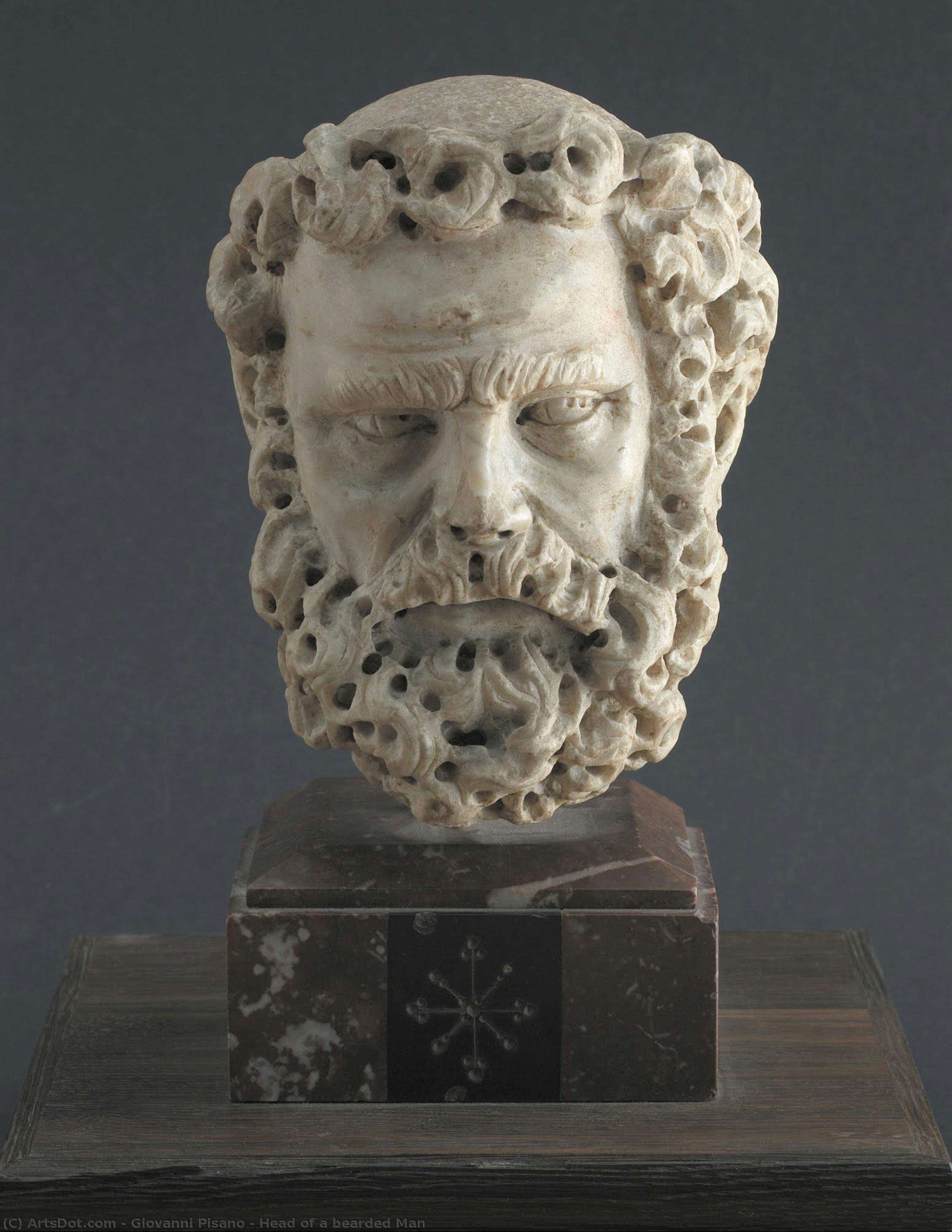
A strikingly detailed marble head by Giovanni Pisano, a pivotal figure in late Gothic Italian sculpture from 1314, showcasing the influence of Roman art and his father Nicola's legacy. Discover this exquisite piece and bring timeless artistry into your space.
A Testament to Late Gothic Innovation: Giovanni Pisano’s ‘Head of a Bearded Man’
This exquisite 1314 marble head, meticulously crafted by Giovanni Pisano, stands as a pivotal example of Italian late Gothic sculpture and a testament to the enduring legacy of his father, Nicola Pisano. Measuring 12 x 17 cm, this intimate portrait transcends mere representation; it embodies the artistic currents of its time – a synthesis of French Gothic sensibilities with the classical echoes of ancient Rome, reflecting Pisano’s profound training within his father's renowned “botecca” workshop. The sculpture’s power resides not just in its technical mastery but also in its evocative portrayal of human dignity and solemnity, qualities that would define Pisano’s artistic trajectory.
- Provenance: Initially believed to be part of a sepulchral monument commissioned for Margaret of Luxembourg in 1311, recent studies firmly link the head to the destroyed monument itself.
- Style & Technique: The work demonstrates Pisano’s evolution from his father's style, showcasing a burgeoning independence while retaining core elements of Nicola’s innovative approach. The carving is characterized by a remarkable attention to detail – particularly evident in the meticulously rendered beard and the subtly expressive eyes that gaze slightly to the left.
- Context: Created during a period of significant artistic transformation in Italy, this piece aligns with Pisano's involvement in monumental projects like the pulpit at the Pisa Baptistery (1302-1310), demonstrating his growing influence and experimentation within the realm of relief sculpture.
The Legacy of Nicola Pisano and French Gothic Influence
Giovanni Pisano’s artistic journey was inextricably linked to that of his father, Nicola Pisano, a sculptor who revolutionized Italian art with his bold departures from traditional Byzantine models. Nicola's embrace of French Gothic sculpture – particularly its emphasis on emotional expression and dynamic composition – profoundly shaped Giovanni’s own approach. This influence is palpably present in the head’s slightly elongated features and the subtly strained expression, hallmarks of the period’s fascination with portraying human emotion through sculpted form. The work reflects a desire to move beyond purely decorative representations towards a more psychologically nuanced depiction of the subject.
- Nicola Pisano's Impact: Nicola’s pioneering use of expressive realism and his incorporation of Roman classical motifs laid the groundwork for Giovanni’s subsequent artistic explorations.
- French Gothic Echoes: The head’s features – notably the prominent nose and slightly melancholic gaze – are reminiscent of French Gothic sculpture, demonstrating Pisano's engagement with international artistic trends.
Symbolism and Emotional Resonance
Beyond its technical brilliance, the ‘Head of a Bearded Man’ carries significant symbolic weight. The depiction of a bearded man, often associated with wisdom, authority, and divine representation, suggests a reverence for the deceased – a common theme in funerary sculpture. The intense gaze and carefully sculpted features invite contemplation on mortality and the enduring nature of memory. The work's inherent solemnity speaks to the profound respect afforded to the departed within the context of 14th-century Italian society.
A Masterpiece for Collection and Interior Design
This hand-painted reproduction captures the essence of Giovanni Pisano’s artistic genius, offering a unique opportunity to own a piece of pivotal late Gothic sculpture. Its compact size (12 x 17 cm) makes it ideally suited for display in a variety of settings – from private collections to interior design projects seeking a touch of historical elegance and profound artistic contemplation. The meticulous detail and vibrant colors of this reproduction ensure that the enduring beauty and emotional power of Pisano’s original work will be faithfully preserved for generations to come.