Đovani Segantini (1858-1899): Majstor alpskih pejzaža! Istražite njegove impresivne simvolističke i divizionističke slike koje prikazuju lepotu prirode i seoskog života. Jedan od najznačajnijih slikara Alpa.
Otkrijte italijanska i evropska remek-dela iz 18-20. veka u Milanskoj Galeriji moderne umetnosti, smeštenoj u veličanstvenoj Vili Reale! Uživajte u radovima Van Goga, Pikasa, Hajezа i mnogih drugih.
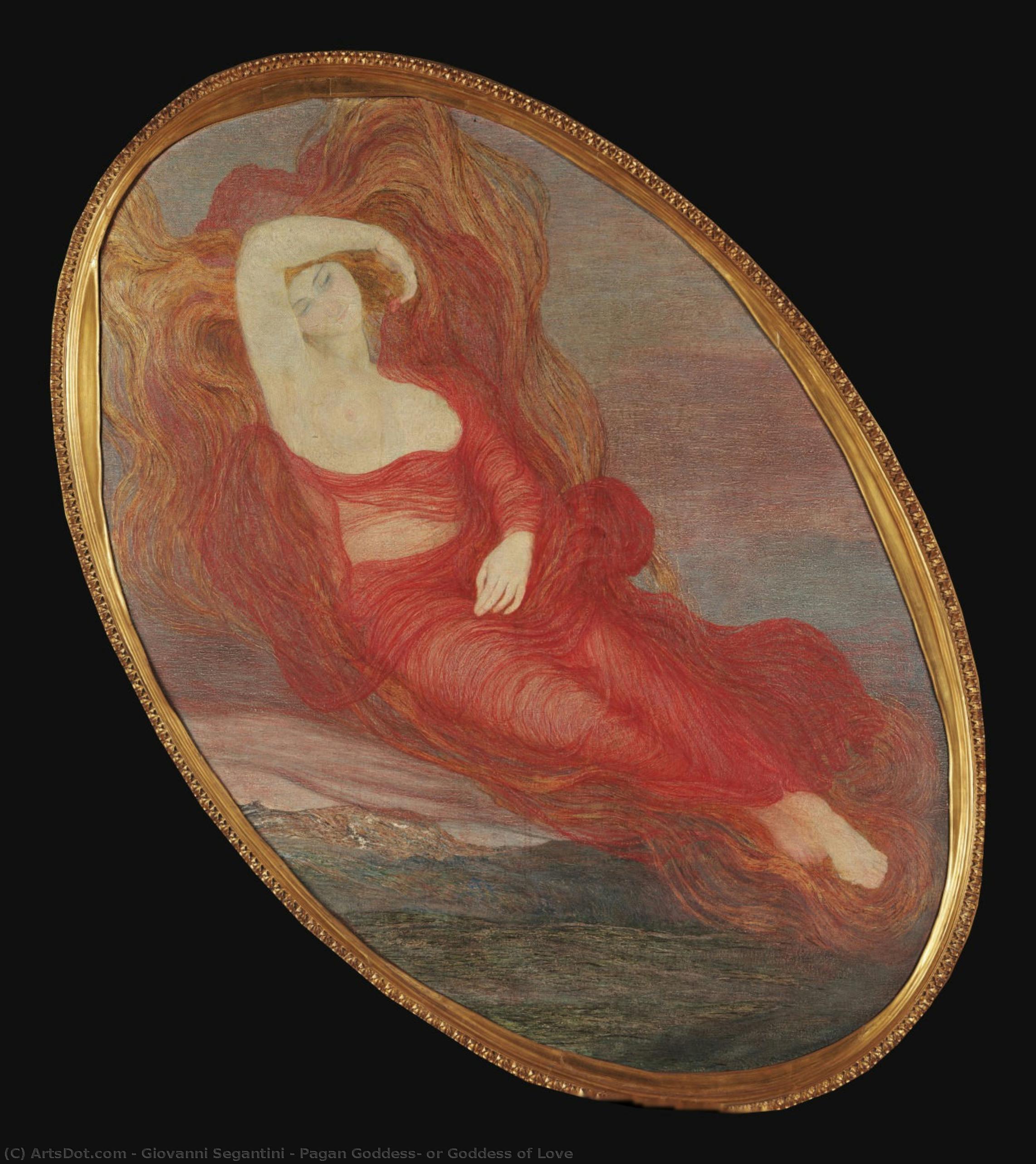
Giovanni Segantini’s “Pagan Goddess, or Goddess of Love”: A Synthesis of Alpine Spirit and Symbolist Reverie
Giovanni Segantini (1858-1899) stands as a singular figure in Italian art history—a painter who wrestled with poverty, defied convention, and ultimately achieved renown for his breathtaking depictions of the Alps. His artistic journey is remarkable not only for its perseverance but also for its distinctive stylistic fusion: Divisionism combined with Symbolist imagery created a visual language unlike any other of his time, resulting in canvases imbued with profound emotional resonance. This monumental canvas, “Pagan Goddess, or Goddess of Love,” commissioned by Leopoldo Albini—a wealthy collector and stockbroker—offers a compelling glimpse into Segantini’s artistic vision and the intellectual currents shaping late nineteenth-century Europe.
A Painter Forged in Adversity
Segantini's formative years were marked by considerable hardship. Born in Graz, Austria (though he later embraced Italian citizenship), his father was a traveling tradesman whose nomadic lifestyle left his mother to shoulder the burdens of raising him alone. Following her untimely death, Segantini abandoned his home and found refuge in Milan’s reformatory—a place where a compassionate chaplain recognized his innate talent for drawing and encouraged its cultivation. Despite lacking formal schooling, he demonstrated extraordinary self-discipline, mastering reading and writing later in life – a testament to his unwavering determination to pursue his artistic ambitions. This early struggle undoubtedly instilled within him a deep appreciation for the beauty of simplicity and an unflinching honesty in portraying the natural world.
Divisionism and Symbolist Influence: A Unique Artistic Approach
Segantini’s stylistic breakthrough arrived through experimentation with Divisionism, pioneered by Gustave Courbet and Félix Emmanuel Bourgeois. This technique involved fracturing an image into numerous small colored patches—known as “divisions”—which were then meticulously blended optically to achieve a luminous effect that surpassed the limitations of traditional oil painting. Unlike Impressionists who sought to capture fleeting moments of light, Divisionist painters aimed for a more contemplative engagement with their subjects, emphasizing texture and layering color to convey mood and emotion. Segantini’s canvases resonate with this ethos, particularly evident in “Pagan Goddess,” where the subtle interplay of hues creates an atmosphere of serene contemplation.
The Canvas: Albini's Vision and Artistic Interpretation
“Pagan Goddess, or Goddess of Love” was conceived by Leopoldo Albini—a prominent Milanese collector who sought to capture the essence of feminine beauty and spiritual grace. The painting depicts a woman reclining on the ground, her arms outstretched in an gesture of repose and acceptance. Her long hair cascades down her back, framing her face as she embodies a figure of pagan mythology or divine femininity – reflecting the Symbolist preoccupation with archetypal imagery and exploring themes of fertility, rebirth, and transcendence. The monumental scale of the canvas—measuring 223 x 250 cm—further amplifies its impact, immersing viewers in a world of Alpine tranquility and symbolic contemplation.
A Legacy of Light and Emotion
Giovanni Segantini’s “Pagan Goddess, or Goddess of Love” remains an enduring masterpiece of Symbolist landscape painting. Its luminous color palette, masterful execution of Divisionism, and evocative depiction of feminine spirituality continue to inspire admiration and fascination. Reproductions crafted with meticulous attention to detail offer a tangible connection to this pivotal moment in artistic history—allowing collectors and interior designers alike to experience the profound beauty and emotional depth of Segantini’s singular vision.