A Visionary Assemblage: The Illusion of Life
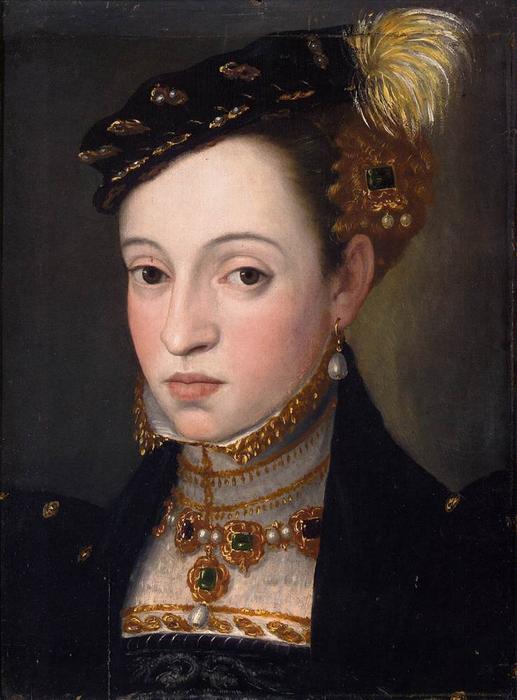
In the annals of the Renaissance, few names evoke as much wonder and delightful confusion as Giuseppe Arcimboldo. His 1563 masterpiece, Bust of a Daughter of Ferdinand I, is not merely a portrait but a profound visual paradox that challenges the very nature of perception. At first glance, the viewer is met with a face composed of an intricate, breathtaking tapestry of the natural world. It is a meticulously crafted illusion where the boundaries between humanity and nature dissolve. Through his unparalleled mastery of trompe l'oeil, Arcimboldo transforms the mundane—fruits, vegetables, flowers, books, and musical instruments—into a singular, regal likeness. This technique, often referred to as a "tronie" or mask portrait, moves beyond traditional realism to create a composite image that breathes with a life of its own, inviting the observer into a state of perpetual discovery.
The subject of this extraordinary work is believed to be Princess Isabella Clara Eugenia, a figure of immense significance within the Habsburg dynasty. Yet, Arcimboldo’s genius lies in his ability to transcend mere physical likeness. He does not simply paint a princess; he constructs an emblem of her very essence. The composition serves as a sophisticated allegory of royal dignity and intellectual prowess. Every element is placed with deliberate intent: the lush fruits and vibrant flowers are not merely decorative but serve as potent symbols of fertility, abundance, and the flourishing prosperity of the Habsburg lineage. To gaze upon this work is to witness a celebration of life’s bounty, distilled into the features of a noblewoman.
Symbolism and the Renaissance Mind
To understand this painting is to step into the intellectual ferment of the 16th century, an era obsessed with humanism, science, and the hidden meanings within the natural world. Arcimboldo’s use of objects functions as a complex language of virtue. While the flora speaks to purity and nobility, the inclusion of books and musical instruments hints at the profound education and cultural refinement expected of a Renaissance princess. This layering of meaning ensures that the artwork remains intellectually stimulating long after the initial shock of its illusion has faded. For the modern collector or interior designer, this piece offers more than just aesthetic beauty; it provides a conversational centerpiece that rewards deep contemplation and reflects a sophisticated appreciation for historical depth.
The emotional impact of the Bust of a Daughter of Ferdinand I is one of profound enchantment. There is a whimsical, almost surreal quality to the work that predates much later art movements, yet it remains anchored in the rigorous craftsmanship of the Mannerist period. The way the light catches the textures of the various organic elements creates a sense of three-dimensionality that feels remarkably modern. Whether displayed in a curated gallery setting or as a striking focal point in a luxurious living space, this reproduction brings with it an aura of mystery and intellectual elegance. It is a testament to a time when art was used to bridge the gap between the tangible world and the infinite possibilities of the human imagination.