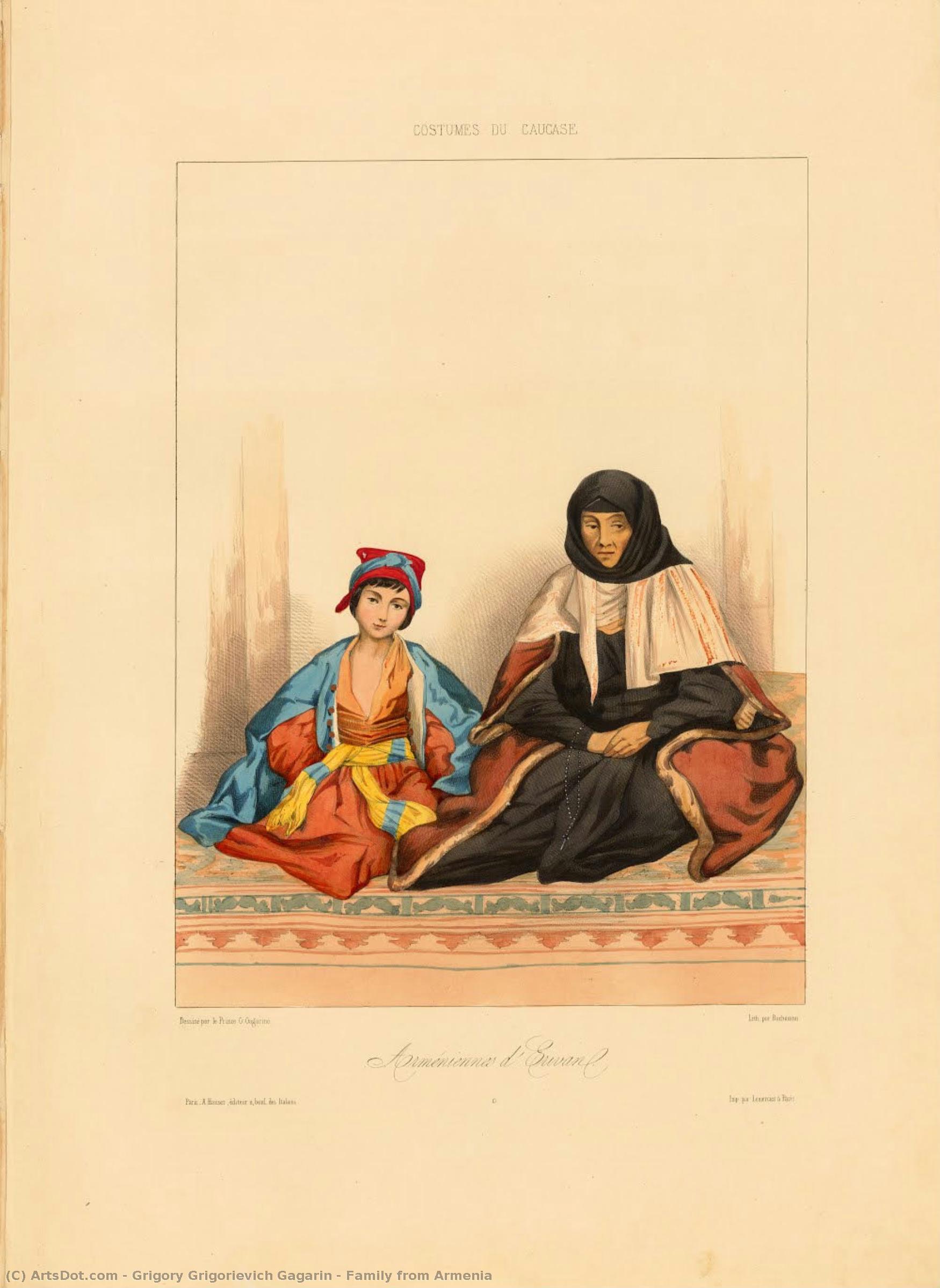
Grigory Gagarin’s “Family from Armenia”: A Reflection of Georgian Identity
Georgian art history is enriched by the legacy of Grigory Gagarin, a Russian painter whose artistic endeavors profoundly impacted Tbilisi and its cultural landscape during the mid-19th century. Born in Saint Petersburg to the noble Rurikid princely family, Gagarin’s formative years instilled within him an appreciation for both aristocratic tradition and burgeoning artistic innovation—a duality that would define his career and ultimately find expression in his monumental fresco adorning the Sioni Cathedral of Tbilisi.
- Subject Matter: The painting depicts a serene tableau of Armenian family life, capturing a woman seated on the floor with her child – an image imbued with tenderness and domestic tranquility.
- Style: Gagarin’s style leans heavily toward Romanticism, characterized by its emphasis on emotion, idealized beauty, and dramatic lighting. This stylistic choice aligns perfectly with the prevailing artistic sensibilities of his time, mirroring the broader movement's fascination with portraying human experience in a deeply expressive manner.
Technique: Fresco – A Monumental Achievement
Gagarin skillfully employed fresco technique—a method involving applying pigment onto wet plaster—to create an enduring artwork that would withstand the passage of time. This painstaking process demanded considerable precision and patience, resulting in a surface texture that possesses remarkable depth and luminosity. The meticulous layering of colors achieved through this technique contributes significantly to the painting’s visual impact and ensures its preservation for generations to come.
Material: The fresco utilizes pigments derived from natural sources—primarily mineral oxides—mixed with binders like lime and mastic resin. This careful selection of materials underscores Gagarin's commitment to artistic integrity and reflects the prevailing practices of Georgian artists during that era.
Historical Context – Tbilisi’s Cultural Renaissance
Gagarin’s involvement in Tbilisi’s cultural revival coincided with a period of significant transformation for Georgia—a nation grappling with shifting political boundaries and seeking to solidify its identity as an independent state. The patronage of Mikhail Vorontsov, Governor-General of Georgia, fueled artistic endeavors like Gagarin's, fostering a vibrant intellectual environment that celebrated Georgian heritage while embracing European influences.
Influence: Gagarin’s work served as inspiration for subsequent artists and architects in Tbilisi, shaping the city’s aesthetic sensibilities and contributing to its reputation as a center of artistic excellence. The Sioni Cathedral itself stands as testament to this legacy—a magnificent edifice adorned with frescoes that embody the spirit of Georgian Romanticism.
Symbolism – Domestic Harmony and Armenian Tradition
Beyond its formal beauty, “Family from Armenia” carries symbolic weight, reflecting broader themes of familial piety, maternal devotion, and the preservation of cultural traditions. The woman’s posture conveys serenity and strength—a visual representation of resilience amidst societal change—while the child symbolizes innocence and continuity.
Comparison: Gagarin drew inspiration from the architectural grandeur of Pompey Theatre, demonstrating his understanding of artistic principles and aiming to create a masterpiece that would resonate with audiences across cultures.
Emotional Impact – A Window into Georgian Soul
The painting’s luminous colors and masterful composition evoke feelings of warmth, compassion, and nostalgia—capturing the essence of Armenian family life and conveying a profound appreciation for Georgian cultural heritage. It serves as a poignant reminder of Tbilisi's artistic past and continues to inspire admiration for Gagarin’s artistic vision.
The Art Palace of Georgia houses a remarkable collection of Gagarin’s sketches and drawings, offering invaluable insight into his creative process and providing further evidence of his enduring contribution to Georgian art history. “Family from Armenia” remains an unforgettable emblem of Tbilisi's cultural identity—a testament to the transformative power of artistic expression.