Subject and Composition
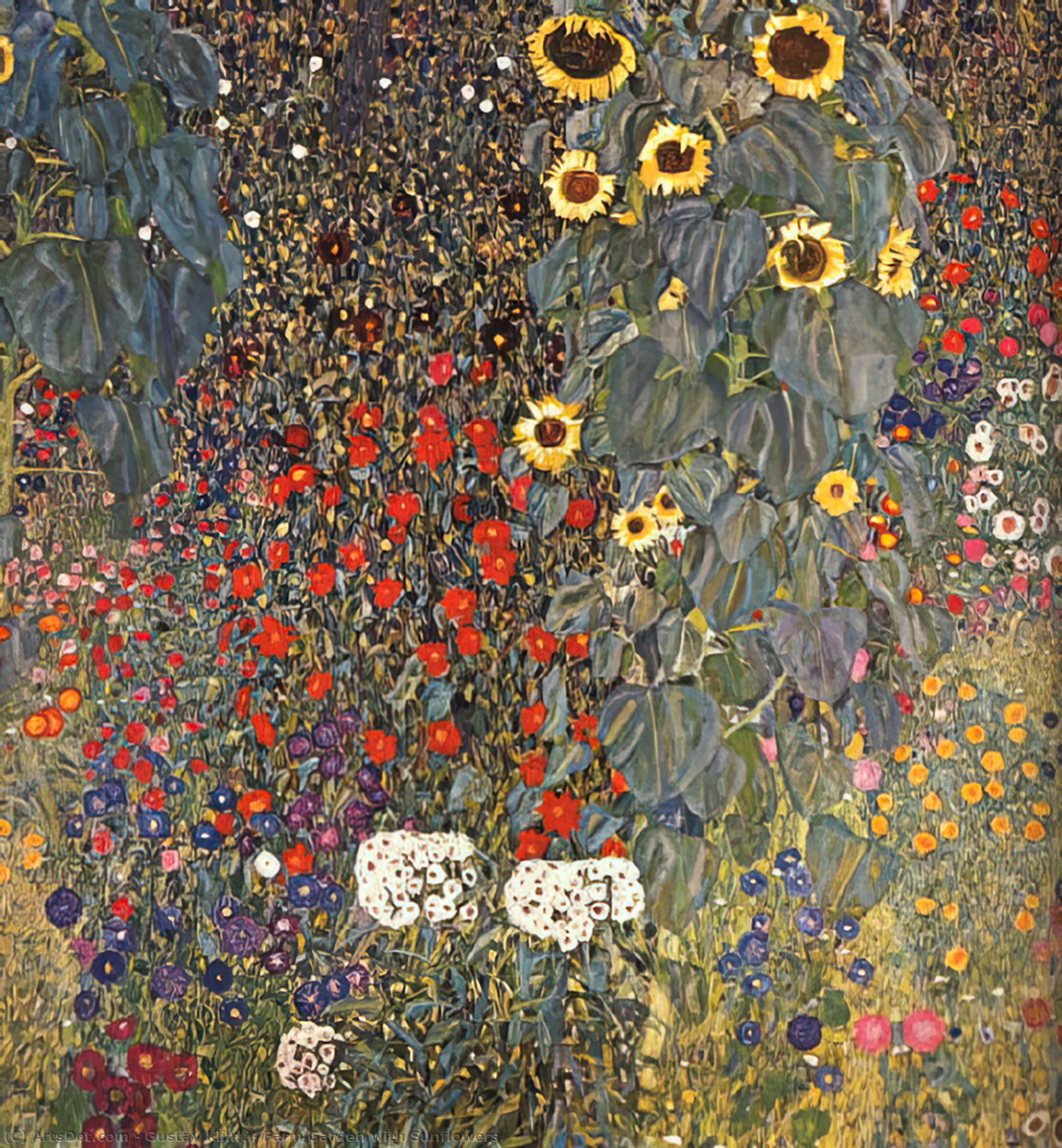
Gustav Klimt's "Farm Garden with Sunflowers," created in 1905, is a captivating landscape painting that transports viewers to a serene and vibrant garden setting. The artwork primarily features sunflowers, strategically positioned throughout the composition to create a visually striking effect. These aren’t just scattered blooms; they are carefully arranged to draw the eye across the canvas, creating depth and visual interest. Smaller flowers intermingle with the sunflowers, adding texture and richness to the scene. A solitary bird perched on one of the branches introduces an element of life and movement, subtly enhancing the natural beauty of the garden.
Style and Technique
"Farm Garden with Sunflowers" exemplifies Klimt's signature Art Nouveau style, characterized by its decorative elements, flowing lines, and symbolic imagery. The painting showcases a blend of Impressionistic brushwork and meticulous detail, typical of Klimt’s approach to capturing the essence of nature. His use of color is particularly noteworthy; vibrant yellows, oranges, and greens dominate the palette, evoking feelings of warmth, vitality, and abundance. Klimt's technique involved layering paint to create a luminous quality, giving the sunflowers an almost ethereal glow. The composition isn’t strictly realistic; rather, it presents an idealized vision of nature, filtered through Klimt’s artistic sensibility.
Historical Context and Symbolism
The painting was created during Klimt's "Golden Phase," a period marked by the extensive use of gold leaf in his artwork. This phase reflects Klimt's fascination with Byzantine mosaics and Japanese art, both of which influenced his decorative style. Sunflowers themselves carry significant symbolic weight within Western culture, representing adoration, longevity, and vitality. In Klimt’s work, they can be interpreted as symbols of life force and the cyclical nature of existence. The inclusion of smaller flowers suggests a broader appreciation for the beauty and diversity of the natural world. The painting emerged during a time of significant social and artistic change in Vienna, reflecting a growing interest in symbolism and psychological exploration.
Emotional Impact and Legacy
"Farm Garden with Sunflowers" evokes a sense of tranquility and joy, inviting viewers to immerse themselves in the beauty of nature. The vibrant colors and harmonious composition create a visually pleasing experience, while the symbolic elements add layers of meaning and interpretation. Klimt’s ability to capture the essence of a fleeting moment—a sun-drenched garden teeming with life—is what makes this painting so enduringly appealing. The artwork stands as a testament to Klimt's artistic genius and his contribution to the Art Nouveau movement, continuing to inspire art enthusiasts and collectors worldwide.