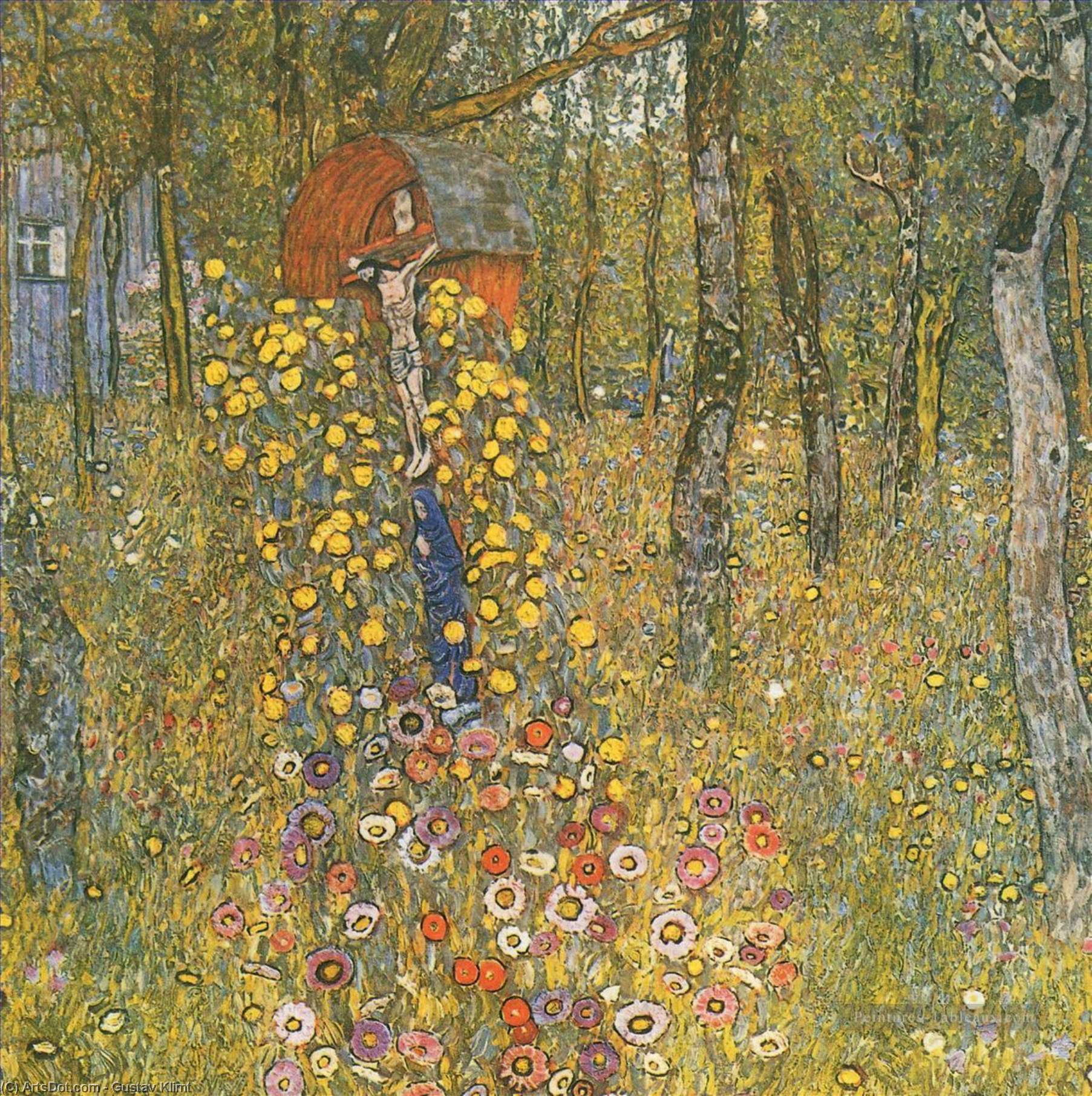
Uronite u čaroban svet Klimtove 'Farm Garden with Crucifix'! Otkrijte simbolicni vrt, živopisne boje i duhovnu kontemplaciju ovog remek-dela Art Nouveau. Istražite detalje i naručite ručno oslikane replike na ArtsDot!
Otkrijte Gustava Klimta (1862-1918), austrijskog majstora Simbolizma i Art Nouveau! Istražite njegovu ikoničnu 'Zlatnu fazu', senzualne portrete i remek-dela poput *Poljupca*. Saznajte više o životu, uticajima i nasleđu ovog genijalnog umetnika.
Farm Garden with Crucifix: A Symphony of Color and Contemplation
Gustav Klimt’s "Farm Garden with Crucifix," painted in 1911, is more than just a landscape; it's an immersive journey into the artist's soul, a visual poem where vibrant nature intertwines with subtle spirituality. This artwork, born from the crucible of the Vienna Secession movement, represents Klimt’s masterful blend of Post-Impressionism’s expressive brushwork and color palettes with the decorative sensibilities that defined his artistic identity. Rejecting academic constraints, Klimt sought to create a "total work of art," integrating all disciplines—and “Farm Garden with Crucifix” stands as a testament to this ambition, meticulously orchestrated to evoke an emotional response rather than merely represent reality. It’s a scene designed not just to be seen, but felt.
A Tapestry of Color and Technique
The canvas explodes with life, dominated by a rich tapestry of warm hues that capture the intensity of summer's bloom. Fiery yellows, oranges, and reds surge from the floral foreground, beautifully counterbalanced by cooler greens and blues in the foliage and sky, creating depth and visual harmony. Klimt’s technique is instantly recognizable – visible brushstrokes dance across the surface; he doesn’t blend colors seamlessly but allows them to interact, resulting in a shimmering, tactile quality that brings the garden vividly to life. This isn't about photographic realism; it's about capturing the *feeling* of summer, the heat radiating from the flowers, the gentle breeze rustling through the leaves. The layering of paint creates a luminous effect, almost as if the garden itself is glowing from within. It’s an impressionistic approach elevated by Klimt’s unique decorative flair, creating something both intensely vibrant and subtly melancholic.
Decoding the Symbolism: Humanity and Nature
At the heart of this floral paradise stands a central figure – likely a woman adorned in blue and red, her posture suggesting deep contemplation. Is she lost in thought? Does she represent humanity’s connection to nature, or perhaps a solitary soul seeking solace within its beauty? The umbrella or parasol she holds adds an air of mystery; it offers protection from the sun but also hints at something unseen, a barrier between the woman and the surrounding world. Perhaps it symbolizes a shield against life's harsh realities, or simply a moment of quiet respite. The crucifix, subtly placed within this vibrant landscape, introduces a layer of spiritual depth. It isn’t overtly religious; rather, it exists as a poignant symbol amidst the natural abundance, prompting reflection on faith and mortality. The juxtaposition of earthly beauty and spiritual presence is central to Klimt's vision here – a reminder that even in the midst of life’s joys, there are deeper questions to ponder.
Historical Context and Lasting Legacy
Painted in 1911, "Farm Garden with Crucifix" emerged during a period of significant social and political upheaval in Europe. Austria-Hungary was facing internal tensions and growing international instability, foreshadowing the devastating First World War. Klimt’s work, often seen as decadent and controversial at the time, reflected this sense of unease while simultaneously offering an escape into beauty and contemplation. The painting's destruction during World War II only adds to its poignant legacy; it serves as a reminder of the fragility of art and the enduring power of human creativity in the face of adversity. Today, "Farm Garden with Crucifix" remains one of Klimt’s most beloved works, captivating viewers with its vibrant colors, intricate details, and profound emotional depth—a testament to his genius and lasting influence on modern art.