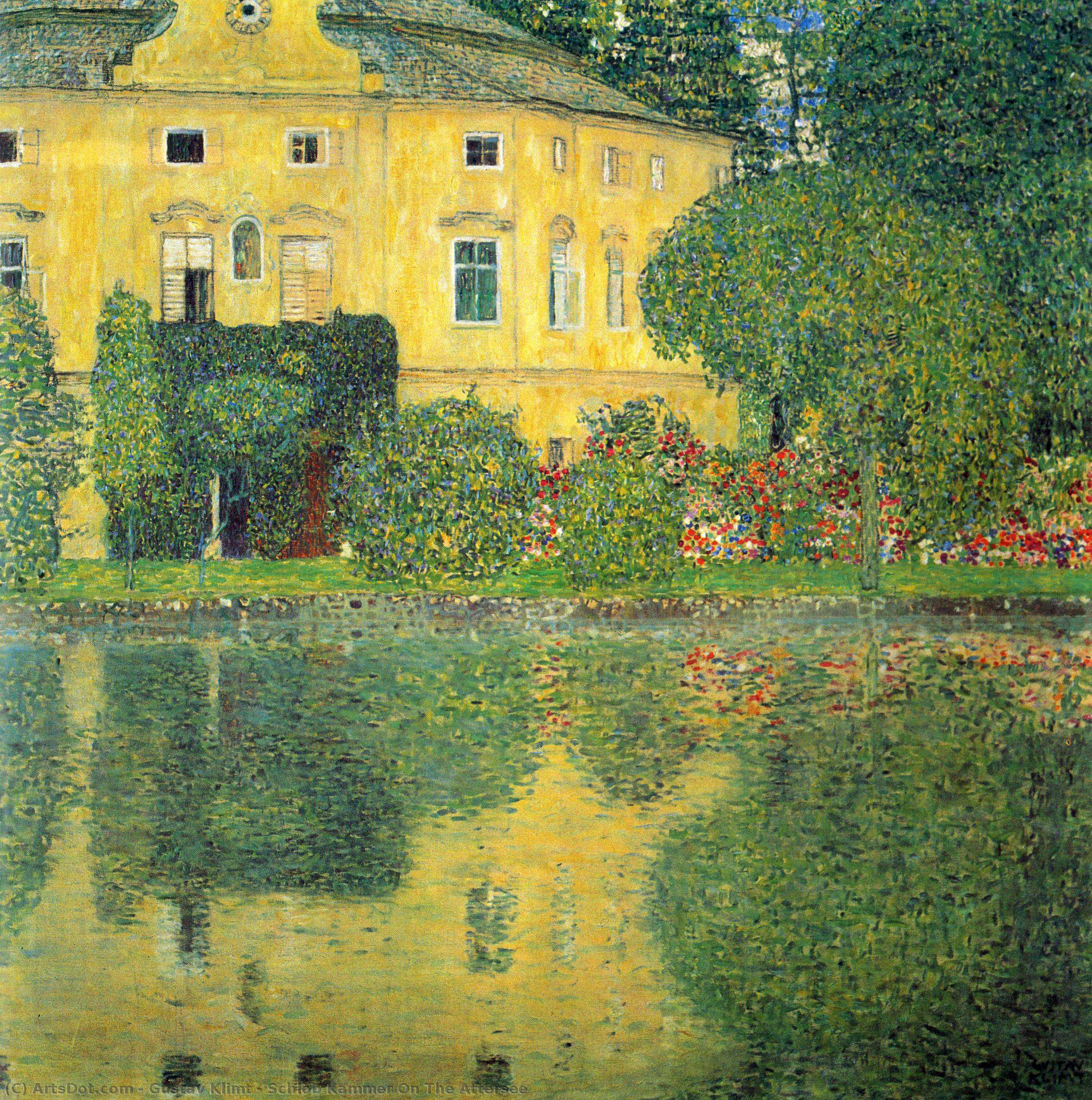
Schlob Kammer On The Attersee: Klimtova spokojna panorama austrijske Šalcakamgut oblasti – umetnost simbolizma i zlatne ere. Čudotvorna kombinacija prirode i arhitekture.
Otkrijte Gustava Klimta (1862-1918), austrijskog majstora Simbolizma i Art Nouveau! Istražite njegovu ikoničnu 'Zlatnu fazu', senzualne portrete i remek-dela poput *Poljupca*. Saznajte više o životu, uticajima i nasleđu ovog genijalnog umetnika.
A Lakeside Reverie: Unveiling Klimt’s ‘Schloss Kammer on the Attersee’
Gustav Климпт's ‘Schlob Kammer on the Attersee’ is more than just a landscape; it’s an immersion into a tranquil world, a distillation of light and color that captures the serene beauty of the Austrian lake district. The painting depicts a charming yellow house with white trim nestled gracefully on the water’s edge, surrounded by lush greenery – a scene designed to evoke feelings of peace and contemplation. Two figures subtly populate the composition—one positioned slightly to the left, another closer to the right—suggesting an intimate connection between human presence and the grandeur of nature. The calm waters mirror the architecture and foliage, creating a harmonious doubling of form that draws the viewer into the heart of the scene. Klimt’s masterful use of color – predominantly ochre, green, and white – contributes to this ethereal atmosphere, minimizing harsh shadows and emphasizing the luminous quality of the light filtering through the trees.
The Salzkammergut & Klimt's Artistic Evolution
This work represents a pivotal moment in Klimt’s artistic journey, born from his summers spent in the Salzkammergut region beginning in 1908. He found inspiration in this picturesque landscape alongside Emilie Flöge, marking a departure from Vienna’s bustling artistic circles and fostering a deeper engagement with natural beauty. Prior to ‘Schloss Kammer,’ Klimt was celebrated for his opulent portraits adorned with gold leaf – a stylistic hallmark of the “Golden Phase” that solidified his reputation as one of Austria's foremost artists. However, recognizing the limitations of this approach, he consciously sought new avenues for expression, gravitating towards landscapes as a means of exploring color, form, and the profound relationship between humanity and the environment. This shift reflects broader trends within European art at the time—a move away from academic conventions toward subjective interpretation and emotional resonance.
Technique & Symbolism: A Synthesis of Observation and Imagination
Klimt’s technique in ‘Schloss Kammer’ exemplifies this innovative spirit. He meticulously studied the lake landscape using a telescope or opera glasses, dissecting it into individual planes before reconstructing them on canvas—a method that resulted in compositions imbued with both precision and subtle distortion. Notably, Klimt minimized harsh shadows and utilized a restrained palette to heighten the painting's luminosity, mirroring the tranquil serenity of its surroundings. The flattened perspective contributes to this dreamlike quality, suggesting an idealized vision of nature untouched by worldly concerns. Furthermore, the house itself—Schloss Kammer—is presented not as a monumental edifice but rather as an organic element seamlessly integrated into the landscape. This deliberate choice speaks to Klimt’s belief that art should transcend mere representation and tap into deeper emotional truths – a core principle of Symbolism and Art Nouveau movements.
An Echo of Modernity: Klimt's Legacy
‘Schloss Kammer on the Attersee’ stands as a testament to Klimt’s artistic genius and his ability to synthesize diverse influences—from traditional landscape painting to the burgeoning aesthetics of Art Nouveau and early modernism. The work foreshadowed many stylistic innovations that would define 20th-century art, particularly its emphasis on subjective experience and the expressive potential of color and form. Today, Klimt’s paintings continue to captivate audiences worldwide, offering a glimpse into a world of beauty, sensuality, and profound emotional depth. A reproduction of ‘Schloss Kammer on the Attersee’ brings this serene vision into any space—creating an atmosphere of tranquility and refined elegance – a timeless masterpiece for those who appreciate art's power to transport and inspire.