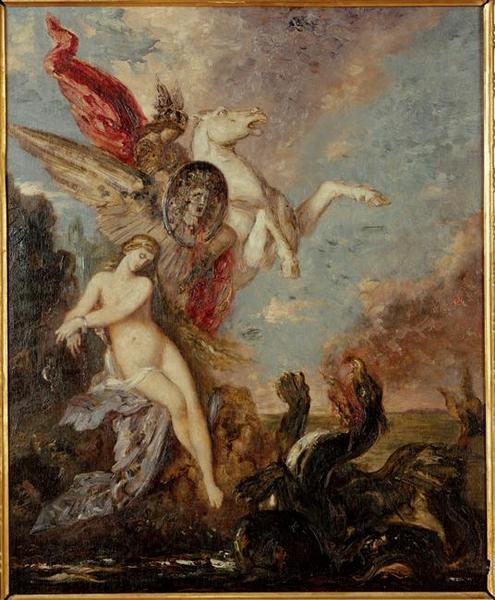
Жртва симбола и визионар слике, Густав Море је био француски ренесансни уметник који је оставио траг у историји сликања. Из познатог музеја Мореа у Парису су му се прецизније прилагодиле техничке карактеристике и стил, док су његове најзначајније слике представљале митове и бибљске приче које су га одликовале. Иновативни и веома емоционални Море је био утицајан на последишње уметнике као што су Ма
Andromède (avec cadre) – A Descent into Mythological Dreamscape
Gustave Moreau’s “Andromède” stands as a cornerstone of Symbolist painting, embodying the movement's fascination with mythology and its exploration of psychological depths. Painted around 1888, this monumental canvas transcends mere representation; it plunges viewers into a richly layered dreamscape populated by fantastical figures and imbued with profound spiritual resonance. The artwork’s enduring appeal lies not only in its exquisite visual beauty but also in its ability to provoke contemplation about themes of sacrifice, desire, and the eternal struggle between light and darkness.
Subject Matter & Narrative
Moreau draws inspiration from Homer's epic poem “Odyssée,” depicting Andromeda, daughter of Cepheus and Cassiopeia, abducted by Perseus, who bravely defends her honor by slaying Medusa—a Gorgon whose gaze turns men to stone—and rescuing Andromeda from the sea monster Cetus. The painting doesn’t chronicle the narrative verbatim but rather captures its essence through symbolic imagery. Andromeda is portrayed as a luminous figure ascending towards heaven, accompanied by two horses – one representing strength and nobility, the other embodying sorrow and vulnerability – symbolizing her unwavering spirit amidst adversity. Above her head floats a bird, likely referencing prophetic visions and divine intervention, furthering the painting’s mystical atmosphere.
Style & Technique: Symbolist Sensibility
Moreau's signature style is characterized by meticulous detail combined with an ethereal palette dominated by muted blues, golds, and reds. He employs tempera on canvas—a technique favored for its luminosity and permanence—allowing him to achieve remarkable textural effects. The artist’s brushstrokes are deliberate and expressive, creating a sense of movement and conveying emotion rather than striving for photographic realism. Moreau's meticulous layering of glazes builds up depth and luminescence, mirroring the hazy quality of dreams and enhancing the painting’s otherworldly ambiance. The use of iridescent pigments contributes to this shimmering visual experience, reinforcing the symbolic nature of the artwork.
Historical Context & Influences
“Andromède” emerged during a period of intense intellectual ferment in Paris—the Symbolist movement—fueled by Nietzsche's proclamation that “God is dead.” Artists like Moreau rejected Naturalism and Impressionism’s focus on observable reality, instead prioritizing subjective experience and exploring the subconscious mind. Moreau was profoundly influenced by Dante Alighieri’s “Divine Comedy,” particularly Beatrice’s ascent into Paradise, which served as a model for his depiction of Andromeda's journey toward salvation. Furthermore, he drew inspiration from medieval illuminated manuscripts and Byzantine iconography—sources rich in symbolism and spiritual contemplation—reflecting the movement’s desire to revive Christian mysticism.
Emotional Impact & Artistic Legacy
Moreau’s “Andromède” transcends its mythological subject matter to communicate a powerful emotional core: resilience in the face of suffering, unwavering faith amidst despair, and the transformative potential of confronting darkness. The painting's luminous colors and intricate detail evoke feelings of wonder and melancholy simultaneously. It invites viewers to contemplate profound questions about human destiny and the enduring power of mythic narratives. Gustave Moreau’s masterpiece continues to inspire artists and collectors alike, cementing its place as a seminal work of Symbolist art—a testament to the artist’s ability to translate inner vision into breathtaking visual splendor.