A Vision of Sappho’s Solitude
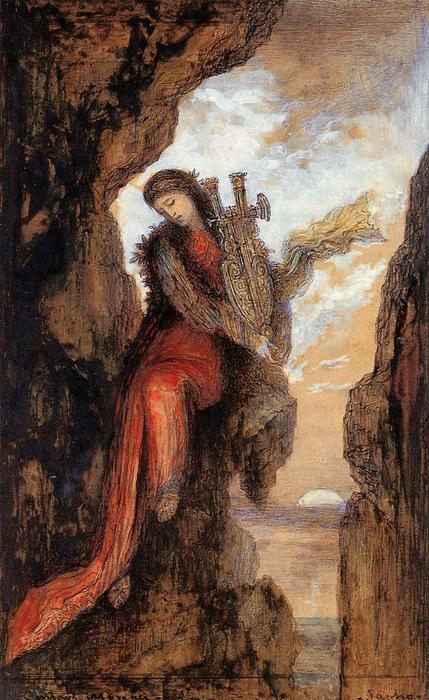
Gustave Moreau's "Sappho on the Cliff," painted in 1872, is not merely a depiction of a woman; it’s an immersion into a world of potent symbolism and deeply felt emotion. This evocative work, born from Moreau’s profound engagement with Symbolist aesthetics, captures a moment of poignant isolation and artistic contemplation. The painting immediately draws the eye to Sappho herself, seated dramatically on the precipice of a rugged cliff – a location that inherently speaks of vulnerability and exposure, yet also offers a breathtaking vista. Her posture, legs dangling over the edge, suggests both defiance and surrender, a classic Symbolist tension between strength and fragility.
- Subject Matter: The central figure is Sappho, the renowned Greek poet, immortalized in a scene that transcends simple portraiture.
- Setting: A dramatic cliffside setting amplifies the emotional weight of the composition.
- Instrument: The presence of an instrument – likely a harp – immediately connects her to the world of music and poetry, reinforcing her identity as a creative spirit.
The Language of Symbolism
Moreau’s artistic vision firmly rooted in the Symbolist movement, rejected the objective realism favored by his contemporaries. Instead, he sought to evoke moods, ideas, and spiritual truths through carefully constructed imagery and rich color palettes. “Sappho on the Cliff” exemplifies this approach. The red of her dress – a bold, almost theatrical choice – isn’t simply a detail; it represents passion, desire, and perhaps even sacrifice, aligning with Sappho's celebrated themes of love and female relationships. The two birds in the sky further contribute to the symbolic weight, often interpreted as messengers or spirits, adding an ethereal dimension to the scene.
The painting’s composition is deliberately unbalanced, creating a sense of unease and drawing the viewer into Sappho's internal state. Moreau masterfully employs chiaroscuro – the dramatic contrast between light and shadow – to heighten this effect, emphasizing certain elements while obscuring others, mirroring the complexities of human emotion and the mysteries of the subconscious.
Technique and Historical Context
Moreau’s technique is characterized by meticulous detail and a rich, almost jewel-like quality. He employed oil paints with a deliberate slowness, building up layers of color to achieve a luminous effect. His training at the École des Beaux-Arts provided him with a solid foundation in traditional academic methods, but he ultimately subverted these conventions, creating a style uniquely his own. “Sappho on the Cliff” was created during a period of significant artistic experimentation in Paris, as Symbolism challenged the established norms of Realism and Impressionism. Moreau’s work aligns with this broader movement's interest in mythology, folklore, and the exploration of subjective experience.
The painting reflects the late 19th-century fascination with ancient Greece and its rich cultural heritage. Sappho herself was a figure of immense importance to the Symbolist movement, representing female creativity, intellectual independence, and unconventional love – themes that resonated deeply with artists seeking to challenge Victorian social constraints.
Emotional Resonance and Artistic Legacy
"Sappho on the Cliff" continues to captivate viewers with its haunting beauty and profound emotional depth. It’s a testament to Moreau's ability to translate complex ideas into a visually arresting image, inviting contemplation about themes of isolation, creativity, and the enduring power of art. This reproduction offers an exceptional opportunity to own a piece of Symbolist history, bringing this evocative vision into your home or office – a reminder of Sappho’s timeless legacy and Moreau's masterful artistic vision.