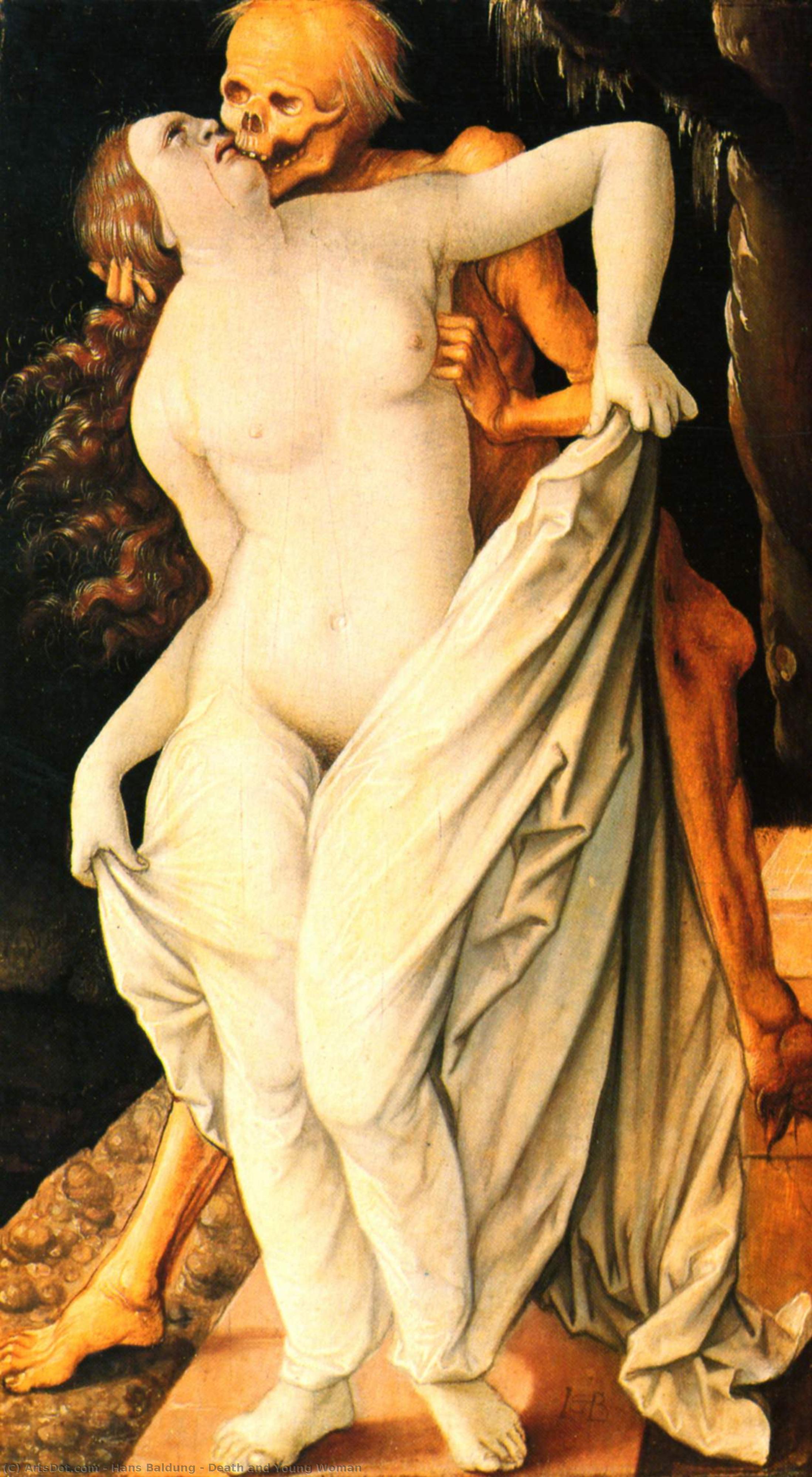
Hans Baldung's "Death and Young Woman" (1517) is a haunting Mannerist painting exploring mortality, beauty, and the inevitability of death. Witness its dramatic chiaroscuro style and unsettling composition.
Hans Baldung's *Death and Young Woman*: A Study in Northern Renaissance Melancholy
Painted in 1520 by the enigmatic Hans Baldung, *Death and Young Woman* is more than just a portrait; it’s a profoundly unsettling meditation on mortality, love, and the precariousness of earthly existence. Executed during a period of immense social and religious upheaval – the early years of the Reformation casting a long shadow across Northern Europe – the painting embodies the anxieties and spiritual uncertainties characteristic of the era. Baldung, trained in the Upper Rhineland and deeply influenced by both late Gothic traditions and the burgeoning Renaissance ideals, masterfully blends these influences to create an image that is simultaneously beautiful and profoundly disturbing.
- Subject Matter: The central figures – a young woman and what appears to be her lover – are posed in a moment of intimate connection, yet this tenderness is immediately undercut by the stark presence of Death.
- Style & Technique: This work firmly establishes Baldung within the Northern Renaissance style, characterized by its meticulous detail, rich color palette (dominated by deep reds, blues, and browns), and a heightened sense of realism. Baldung’s masterful use of oil paint allows for subtle gradations in tone and texture, particularly evident in the rendering of fabrics and skin.
- Composition: The composition is deliberately unsettling. The figures are tightly grouped, creating a claustrophobic atmosphere. The skull figure, positioned on the left, serves as a constant reminder of death’s inevitability, while the obscured figure at the top adds to the sense of unease and mystery.
Symbolism and Allegory: A Dance with Mortality
The painting is laden with symbolic meaning, reflecting the prevalent allegorical traditions of the time. The young woman represents youth and beauty, tragically vulnerable to the forces of death. Her white clothing, a traditional symbol of purity, ironically contrasts sharply with the dark hues surrounding her, suggesting corruption or decay. The presence of Death itself – depicted as a skeletal figure – is not merely a literal representation but an embodiment of spiritual demise. The inclusion of three additional figures adds layers to this complex allegory. The skull represents the finality of death, while the obscured figure may symbolize judgment or divine intervention. The bed in the background further reinforces the theme of rest and transition, hinting at the afterlife.
Historical Context: Painted during a period of intense religious and social change, this work reflects the anxieties surrounding mortality and the questioning of traditional beliefs that characterized the early 16th century. Baldung’s exploration of these themes aligns with the broader artistic trends of the time, which often grappled with questions of faith, sin, and redemption.
Emotional Impact and Artistic Legacy
*Death and Young Woman* is a profoundly moving work that continues to resonate with viewers centuries later. Baldung’s ability to capture both the beauty and terror of human existence – the fleeting nature of youth, the inevitability of death – is truly remarkable. The painting's unsettling atmosphere and complex symbolism invite contemplation on profound questions about life, love, and loss. It stands as a testament to Baldung’s artistic genius and his ability to translate complex ideas into a visually arresting and emotionally powerful image. This piece exemplifies the artist's unique blend of realism and allegory, solidifying his place as one of the most important figures in German Renaissance art.