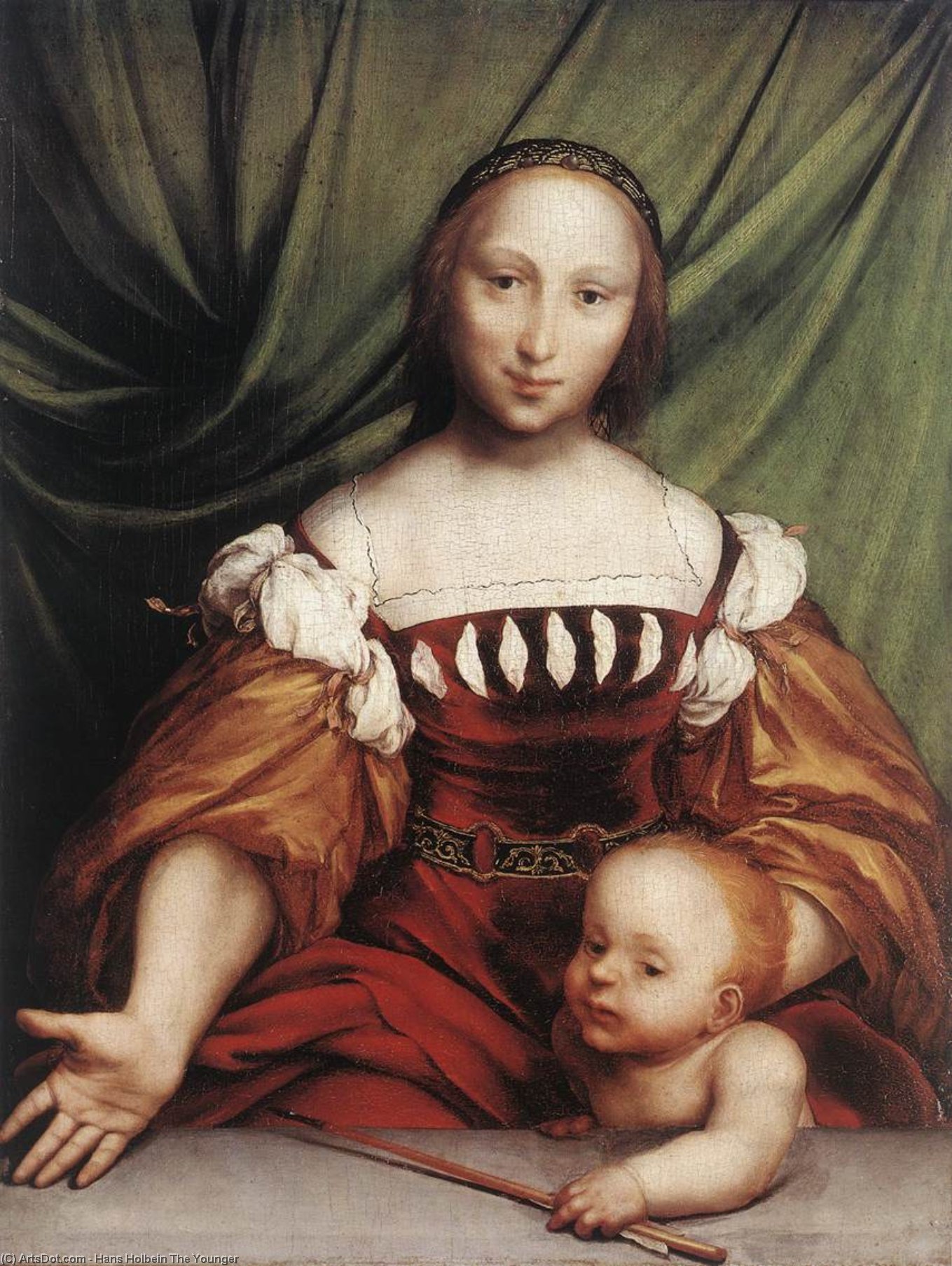
Venus and Amor by Hans Holbein the Younger
Hans Holbein the Younger’s “Venus and Amor” stands as a testament to the artistic fervor of the Northern Renaissance, capturing not merely likeness but profound psychological depth—a hallmark of his oeuvre. Executed around 1524 in oil on panel measuring 34 x 26 cm and currently residing at the Kunstmuseum Basel, Switzerland, this painting transcends mere visual representation; it embodies a masterful fusion of Italian humanist ideals with Northern European artistic sensibilities.
The Artistic Influences: Echoes of Leonardo
Holbein’s creative journey was indelibly shaped by his exposure to the vibrant artistic landscape of Florence during his formative years. Like many artists of his time, he keenly observed and absorbed the stylistic innovations championed by Leonardo da Vinci—most notably in “The Last Supper.” The deliberate positioning of Venus mirrors Jesus’ stance within Leonardo’s masterpiece, reflecting a shared preoccupation with conveying spiritual contemplation and human emotion. Furthermore, Holbein drew inspiration from Leonardo's depictions of Mary, subtly incorporating elements of Madonna portraits into Venus’ facial features, demonstrating the pervasive influence of Italian Renaissance aesthetics on Northern European art.
Compositional Harmony: Mythological Narrative
The painting’s composition is meticulously crafted to narrate a mythological tale with grace and precision. Venus occupies center stage, radiating serenity as she extends her hand towards the viewer—a gesture characteristic of Leonardesque portraiture popular during the 1520s and intended to secure patronage. Behind her stands Amor (Cupid), climbing onto a low parapet adorned with drapery, clutching an arrow poised for release. The crimson hue of Cupid’s hair mirrors the rich fabric sleeves enveloping Venus' upper arms—a deliberate chromatic choice that reinforces visual unity and enhances the painting’s expressive power. This careful arrangement contributes to the overall sense of balance and harmony, guiding the eye across the canvas.
Symbolism and Allusions: Layers of Meaning
Holbein imbued his artwork with layers of symbolism reflecting Renaissance humanist thought. Venus' outstretched hand symbolizes generosity and aspiration—a gesture reminiscent of Leonardo’s portraits aimed at conveying noble character. The inclusion of Amor represents divine love and fertility, mirroring prevalent mythological themes during the period. Beyond these explicit references, Holbein skillfully employs visual cues to communicate unspoken ideas about beauty, desire, and spiritual contemplation.
Provenance and Legacy: A Basel Treasure
“Venus and Amor” initially graced the collection of Basilius Amerbach in 1578 as a gift from his cousin Franz Rechburger—a testament to Holbein’s enduring reputation during his lifetime. Historians have debated the painting's original commission, speculating that it may have begun as a portrait of a lady from the Offenburg family, though definitive evidence remains elusive. Nevertheless, Holbein’s work was celebrated throughout Europe, earning him the moniker “The Apelles of Our Time”—a recognition of his unparalleled skill in capturing human psychology and achieving artistic excellence. His meticulous attention to detail and masterful technique continue to inspire admiration and scholarship today.
Experience the beauty of handmade oil painting reproductions at ArtsDot.com. Visit our website to explore a wide range of art pieces, including works by Hans Holbein the Younger and other renowned artists.