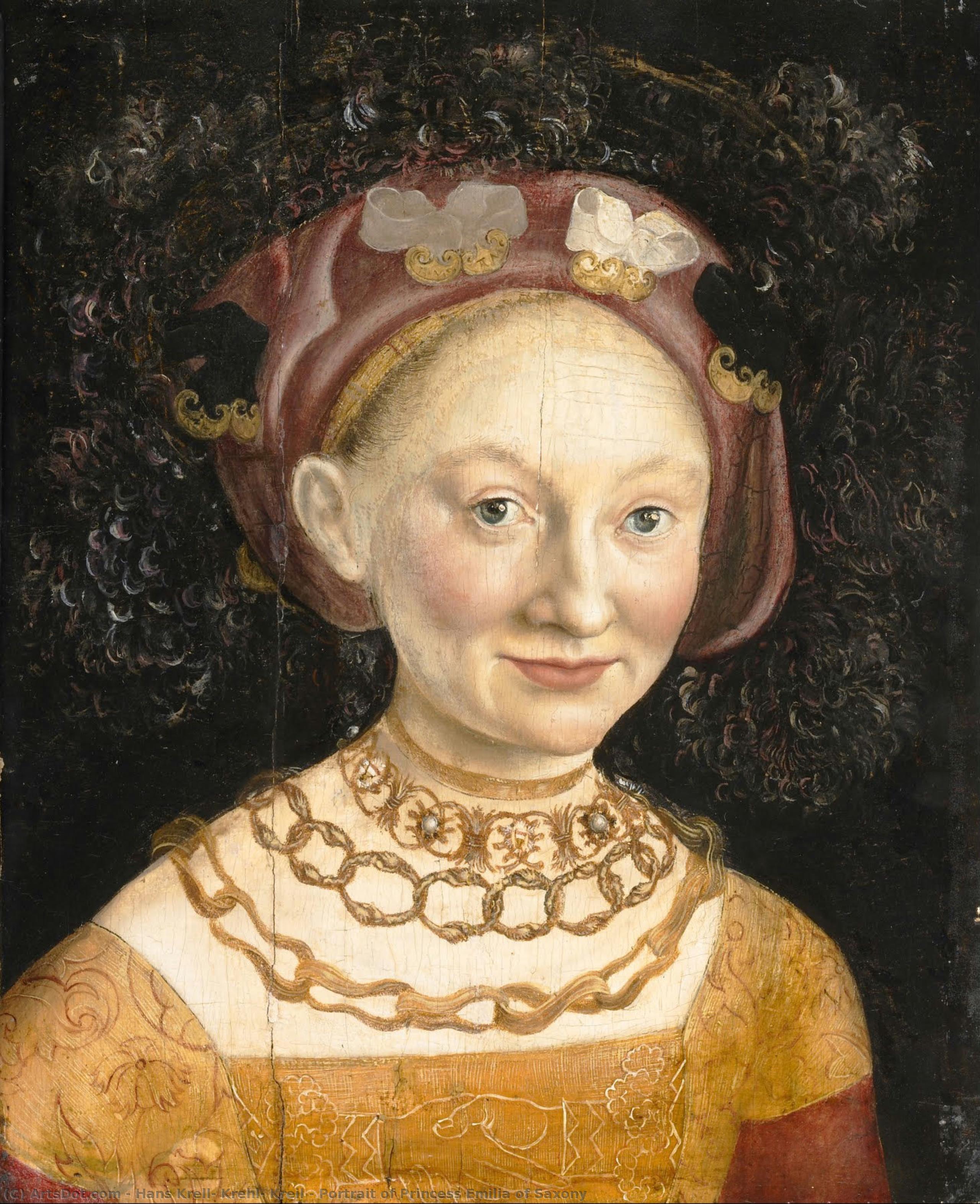
Портрет Принцезе Емилије из Саксоније - Задивљите се ренесантној лепоти овог дивних портрета од Ханса Креља, сликаног 1532. године и чувана у Галерији музеја Ливерпула!
Explore Hans Krell (Krehl/Kreil), a 16th-century German Renaissance painter renowned for royal portraiture & the dramatic 'Battle of Orsha'. Discover his legacy!
Istražite Walker Art Gallery u Liverpoolu! Pre-Rafaeliti, renesansna remek dela i britanska umetnost čekaju vas. Besplatan ulaz i bogata kolekcija za sve uzraste.
A Delicate Emblem of Renaissance Patronage: Hans Krell’s Portrait of Princess Emilia
The painting “Portrait of Princess Emilia of Saxony,” executed by Hans Krell around 1532, stands as a testament to the flourishing artistic spirit of the German Renaissance and exemplifies the meticulous craftsmanship characteristic of the era. Created on wood panel using oil paint, this artwork resides within the esteemed collection of the Walker Art Gallery in Liverpool, United Kingdom, offering visitors an unparalleled opportunity to appreciate its beauty and historical significance.
Subject Matter and Composition: Symbolism Embodied
At first glance, the portrait depicts Princess Emilia of Saxony, a young woman adorned in a vibrant yellow dress accented with a delicate chain around her neck—a subtle symbol of wealth and status prevalent during the period. Her gaze is directed outwards, conveying serenity and confidence, while she wears a hat embellished with butterfly motifs – an element laden with symbolism representing transformation, rebirth, and nobility. The artist skillfully arranges these elements within a balanced composition, reflecting the humanist ideals that underpinned Renaissance art. Two butterflies strategically positioned—one near the upper left corner and another towards the lower right—further amplify this thematic resonance.
Technique and Artistic Style: Precision and Detail
Krell’s mastery of oil paint technique is evident in the luminous quality of the pigments and the subtle gradations of tone achieved across the canvas. The artist demonstrates remarkable attention to detail, meticulously rendering textures – particularly on the dress fabric—and capturing the nuances of Emilia's facial expression with impressive accuracy. This meticulous approach aligns perfectly with the prevailing artistic style of the time, mirroring the stylistic conventions favored by artists like Lucas Cranach the Elder and emphasizing realism alongside idealized beauty. The painting’s execution showcases a dedication to capturing not merely likeness but also conveying an emotional essence—a hallmark of Renaissance portraiture.
Historical Context: Royal Portraiture in Tudor England
Painted during the reign of King Louis II of Hungary, “Portrait of Princess Emilia of Saxony” reflects the patronage system that characterized European courts during the early sixteenth century. Commissions from royalty fueled artistic innovation and ensured the preservation of cultural heritage. The Walker Art Gallery’s acquisition underscores the importance of safeguarding artworks like this—pieces that offer invaluable insights into the social, political, and aesthetic values of their time. Furthermore, research reveals that William Roscoe, a prominent Liverpool lawyer and Radical politician, originally owned the painting, demonstrating its enduring appeal across generations. Roscoe's fascination with art and history speaks to the broader cultural landscape of Elizabethan England—a period marked by intellectual curiosity and artistic experimentation.
Legacy and Interpretation: An Enduring Image
The attribution of “Portrait of Princess Emilia of Saxony” to Hans Krell represents a significant scholarly achievement, correcting an earlier misconception regarding its authorship. X-rays revealed that Krell initially portrayed Emilia wearing a taller bonnet—a stylistic choice reflecting the prevailing fashions of the time. Subsequent revisions underscored the artist’s adaptability and his ability to capture the spirit of his era. Today, this portrait continues to captivate viewers with its exquisite beauty and evocative symbolism—a timeless reminder of the artistic brilliance achieved during the Renaissance.