A Melodic Moment Frozen in Time
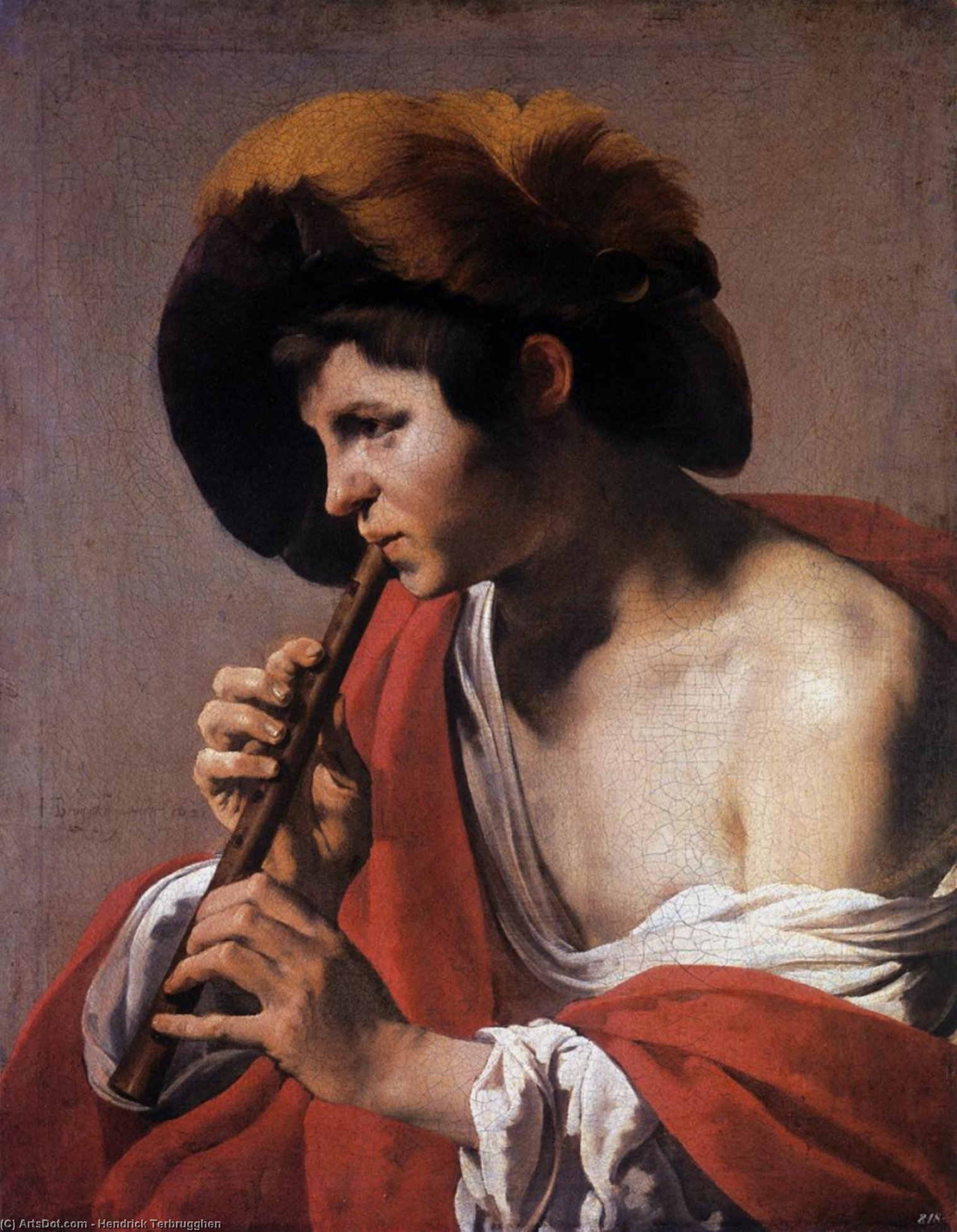
In the quiet intimacy of Hendrick Terbrugghen’s Boy Playing a Recorder, we are invited into a private, sensory experience that transcends the centuries. Painted around 1621, this evocative portrait captures more than just a musician; it captures a fleeting breath of life. The young subject, draped in a striking red jacket that commands the viewer's attention, is lost in the act of creation. As his fingers find their places upon the recorder, there is a profound sense of focus that pulls the observer into his world. This is not merely a depiction of a boy at play, but a masterful study of concentration and the ephemeral nature of sound.
The composition is anchored by the dramatic interplay of light and shadow, a hallmark of the Utrecht Caravaggisti style. Terbrugghen utilizes a technique reminiscent of Caravaggio, where light does not merely illuminate but sculpts the form of the boy against a somber, atmospheric background. This chiaroscuro effect lends a sculptural weight to the figure, making the vibrant crimson of his attire feel almost tactile. The subtle presence of a clock hanging upon the wall in the background serves as a poignant memento mori, a gentle reminder that while music is transient and time marches forward, the beauty of this captured moment remains eternal.
Mastery of the Dutch Golden Age
To behold this work is to witness the pinnacle of the Dutch Golden Age. Terbrugghen, a master of light, brings a unique warmth to his subjects that distinguishes him from his more austere contemporaries. The texture of the boy's clothing, the soft glow on his skin, and the delicate rendering of the musical instrument all speak to a technical virtuosity that continues to inspire collectors and decorators alike. For the interior designer, this piece offers a sophisticated focal point; its rich palette and classical composition allow it to anchor a room with an air of historical prestige and quiet elegance.
The emotional resonance of the painting lies in its ability to evoke nostalgia and peace. There is a rhythmic quality to the brushwork that mirrors the melody being played, creating a visual harmony that settles the soul. Whether displayed in a sunlit gallery or a moody, library-style study, a high-quality reproduction of this masterpiece brings with it the spirit of 17th-century mastery. It serves as a testament to the enduring power of art to capture the delicate balance between the passing of time and the immortality of beauty.