A Burst of Moroccan Light: Henri Matisse’s “Moroccan Landscape”
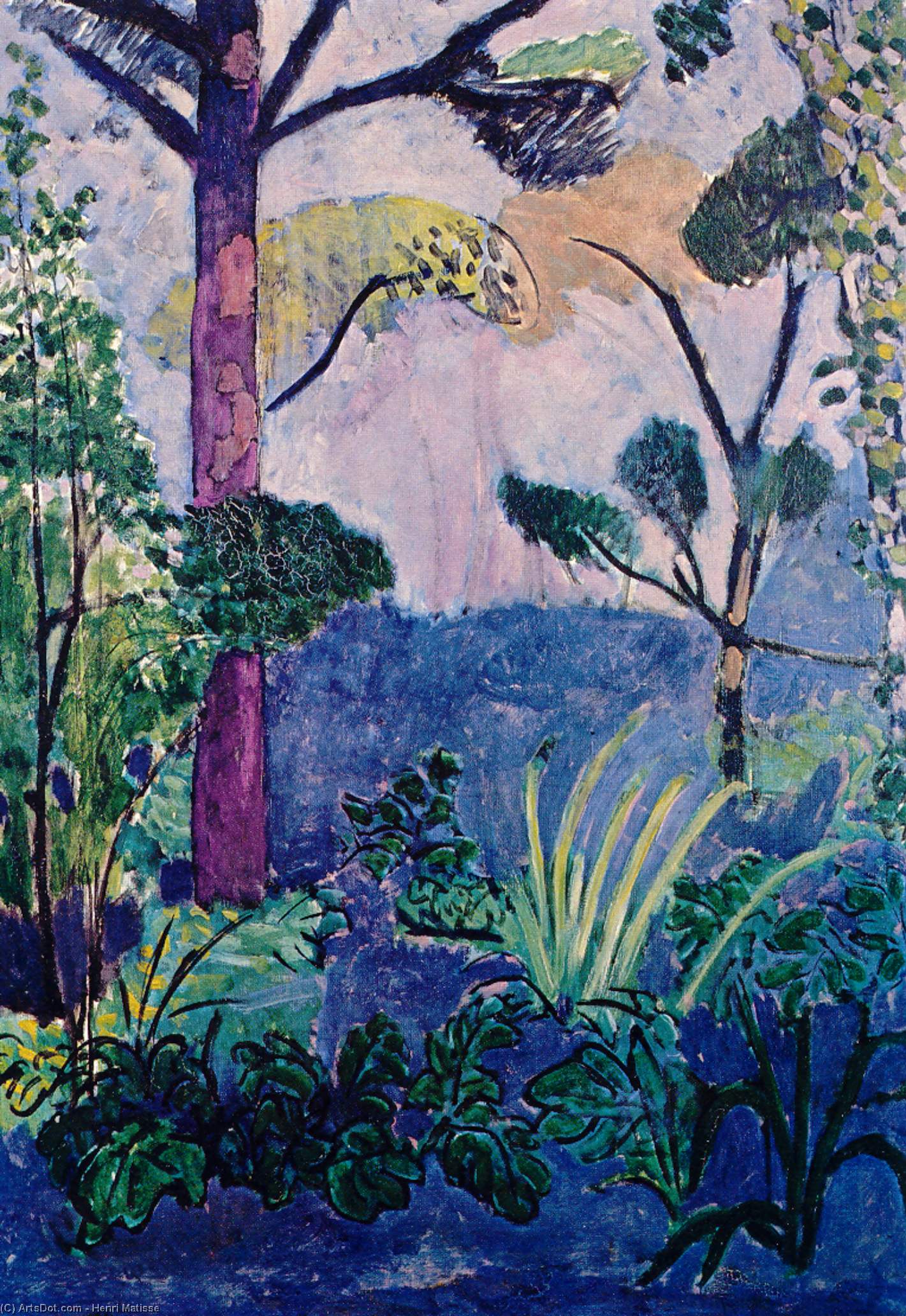
Henri Matisse's "Moroccan Landscape," painted in 1913 during his transformative sojourn to North Africa, isn’t merely a depiction of a landscape; it’s an explosion of color and emotion—a pivotal moment in the development of Fauvism. This painting transcends simple representation, plunging the viewer into a vibrant, almost hallucinatory world where traditional notions of perspective and realism dissolve, yielding instead to Matisse's intensely personal vision. The work captures not just what he *saw* in Morocco, but what he *felt*, imbuing the scene with an energy that vibrates long after the eye moves on.
Matisse’s decision to travel to Morocco in 1912-13 was a deliberate act of artistic liberation. He sought inspiration beyond the confines of Parisian art circles, drawn by the exoticism and vibrant culture of the region. This journey proved profoundly influential, shifting his palette and approach to color dramatically. The landscape before him—the rugged terrain, the intense sunlight, and the rich hues of the local flora and architecture—became a catalyst for a radical reimagining of painting itself. The work stands as a testament to this transformative experience, a visual record of Matisse’s immersion in a world utterly unlike his own.
Fauvist Color and Dynamic Form
“Moroccan Landscape” is a quintessential example of Fauvist style, a movement characterized by its audacious use of color—colors deliberately divorced from naturalistic representation. Matisse employs a dazzling array of blues, greens, yellows, and oranges, not to mimic reality but to convey mood and feeling. These hues aren’t blended softly; instead, they are applied in bold, arbitrary strokes, creating an immediate sense of energy and movement. The undulating shapes that define the trees and vegetation seem to ripple across the canvas, mirroring the dynamism of the Moroccan landscape itself.
The composition is remarkably fluid, eschewing rigid lines and traditional perspective. Instead, Matisse utilizes loose brushstrokes and overlapping forms to create a sense of depth and atmosphere. The large tree in the foreground acts as a powerful anchor, its vibrant green leaves drawing the eye while simultaneously contributing to the overall feeling of exuberance. Notice how the colors intensify towards the center of the painting, creating a focal point that draws the viewer into the heart of this intensely colored world.
The Artist and His Context
Henri Matisse (1869-1954) was already an established artist by the time he arrived in Morocco, having made significant contributions to French art. However, his encounter with North Africa proved to be a watershed moment, fundamentally altering his artistic trajectory. Born in Le Cateau-Cambrésis, France, Matisse initially studied law before dedicating himself to painting. His early works were influenced by classical masters like Jean-Baptiste-Siméon Chardin and Antoine Watteau, but he gradually developed a distinctive style marked by bold color and simplified forms.
The Moroccan period was particularly crucial for Matisse’s development of Fauvism. He was deeply affected by the vibrant colors and decorative patterns he encountered in Islamic art and architecture, which inspired him to experiment with new ways of using color to express emotion. His time in Morocco allowed him to break free from the constraints of academic tradition and embrace a more intuitive and expressive approach to painting. The influence of this period can be seen throughout his later work, where he continued to explore the possibilities of color and form.
Symbolism and Emotional Resonance
Beyond its purely visual qualities, “Moroccan Landscape” is rich in symbolic meaning. The intense colors evoke a sense of joy, vitality, and perhaps even a hint of delirium—a reflection of Matisse’s own heightened emotional state during his travels. The landscape itself can be interpreted as a metaphor for the transformative power of art—a space where reality is reshaped by imagination and emotion. The painting isn't simply about depicting a place; it’s about conveying an experience, a feeling, a state of being.
Consider the interplay between light and shadow, the way Matisse uses color to create a sense of depth and atmosphere. The bright yellows and oranges suggest the intensity of the Moroccan sun, while the blues and greens evoke the coolness of the shade. The overall effect is one of vibrant energy and emotional resonance—a painting that invites the viewer to lose themselves in its dazzling colors and dynamic forms. It’s a testament to Matisse's genius: a work that speaks directly to the soul.