A Moment of Serenity: Henri Matisse’s “Odalisque with Gray Pants”
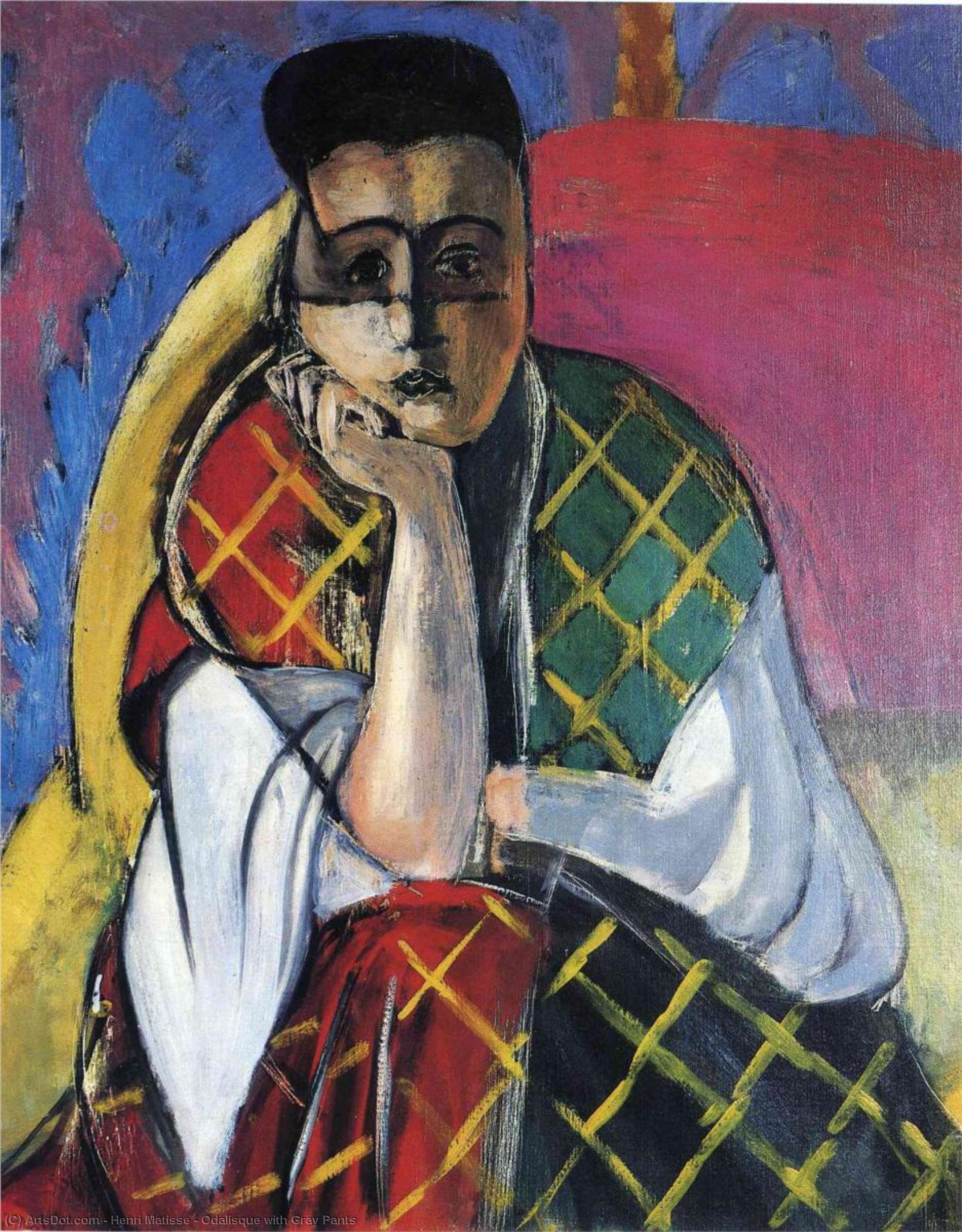
Henri Matisse's "Odalisque with Gray Pants," painted in 1927, isn’t merely a depiction of a reclining figure; it’s an immersion into a world of carefully constructed color and rhythm. This captivating work, measuring just 65 x 54 centimeters, embodies the heart of Fauvism – a movement Matisse himself spearheaded – where vibrant hues are deployed not to represent reality, but to evoke feeling and create a powerful visual experience. The painting immediately draws the eye with its bold palette: a symphony of reds, greens, blues, and yellows that dance across the canvas in an almost joyful disregard for naturalistic representation. Yet, beneath this exuberant surface lies a profound sense of stillness and contemplation, embodied by the central figure’s serene expression and relaxed posture.
At first glance, the subject appears to be an odalisque – a female attendant or concubine from the Ottoman Empire, a popular motif in 19th-century French art. However, Matisse subtly subverts this traditional portrayal. The woman is not presented as overtly sensual or exotic; instead, she’s rendered with a quiet dignity and a sense of inner peace. Her gray pants, a striking detail against the vibrant background, contribute to this feeling of understated elegance. They are painted with smooth, flowing lines, suggesting both comfort and a certain formality – a deliberate choice that elevates the figure beyond a simple decorative element. This seemingly small detail is crucial; it’s not just clothing but a gesture towards a more considered, less immediately alluring presentation, reflecting Matisse's desire to explore psychological states rather than simply physical beauty.
The Fauvist Palette and Dynamic Composition
Matisse’s genius lies in his masterful manipulation of color. He abandoned traditional techniques of shading and perspective, opting instead for flat planes of color and simplified forms. This approach, characteristic of Fauvism, creates an immediate and arresting visual impact. The background is a riot of patterned fabrics – reds, blues, yellows – arranged in a dynamic composition that seems to ripple outwards from the central figure. These patterns aren’t merely decorative; they contribute to the overall sense of movement and energy within the painting. Imagine the luxurious textures of silk and velvet, rendered with bold strokes, creating an almost tactile experience for the viewer. The colors themselves seem to vibrate with life, unburdened by any attempt at realistic representation.
Notice how Matisse uses contrasting colors to draw attention to specific areas. The red cushion beneath the odalisque provides a focal point, while the muted tones of her skin and clothing allow her to recede slightly into the background. This careful balancing act creates a harmonious composition that is both visually stimulating and emotionally resonant. The inclusion of two secondary figures – one standing near the left edge and another further back on the right – adds depth and context without disrupting the primary focus on the central figure, suggesting a private moment within a larger, implied setting. It’s as if we are privileged witnesses to a fleeting, intimate scene.
Symbolism and Emotional Resonance
The “Odalisque with Gray Pants” transcends a simple portrait; it's an exploration of stillness, contemplation, and perhaps even solitude. The gray pants themselves hold symbolic weight – they represent restraint, dignity, and a deliberate rejection of overt sensuality. They are a visual declaration of inner peace, suggesting a woman who has found contentment within herself. The setting, though exotic in its inspiration, is ultimately domestic; it’s a space for quiet reflection, far removed from the bustling world outside. Matisse wasn't interested in telling a story but in conveying an atmosphere – one of serenity and grace.
Matisse was deeply influenced by Japanese prints (Ukiyo-e), particularly their flattened perspectives and bold use of color. This influence is evident in the painting’s simplified forms and dynamic composition, creating a sense of visual harmony that is both modern and timeless. The work invites us to slow down, to appreciate the beauty of simplicity, and to find solace in moments of quiet contemplation – a message as relevant today as it was in 1927.
Reproductions Available at ArtsDot
For those seeking to experience the captivating beauty of “Odalisque with Gray Pants” firsthand, ArtsDot offers meticulously crafted, hand-painted oil painting reproductions. Each reproduction is created by skilled artists who have painstakingly studied Matisse’s original work, ensuring that every brushstroke and color nuance is faithfully reproduced. These aren't simply prints; they are authentic works of art, capturing the essence and spirit of this iconic masterpiece.
Other Notable Works by Henri Matisse
Museums and Collections
The Baltimore Museum of Art, located in Baltimore, Maryland, is one of the premier art museums in the United States. Established in 1914, it has a vast collection of modern and contemporary art from around the world. The Baltimore Museum of Art is committed to presenting diverse exhibitions that reflect its mission to inspire creativity, foster empathy, and promote understanding through the power of art.
movement: Fauvism
topics: Odalisque, Nude, Interior, Color, Harmony, Cushion, Figures, Morocco, Symbolism, Japanese Prints (Ukiyo-e)
creative_period: Mature Period
corpus_context: Impressionism, Cubism, Classical draughtsmanship, Color theory exploration, Experimentation with color, Simplified forms & balance, Series of odalisque paintings, Exotic allure of Morocco