A Symphony of Color: Exploring Henri Matisse’s Untitled (5123)
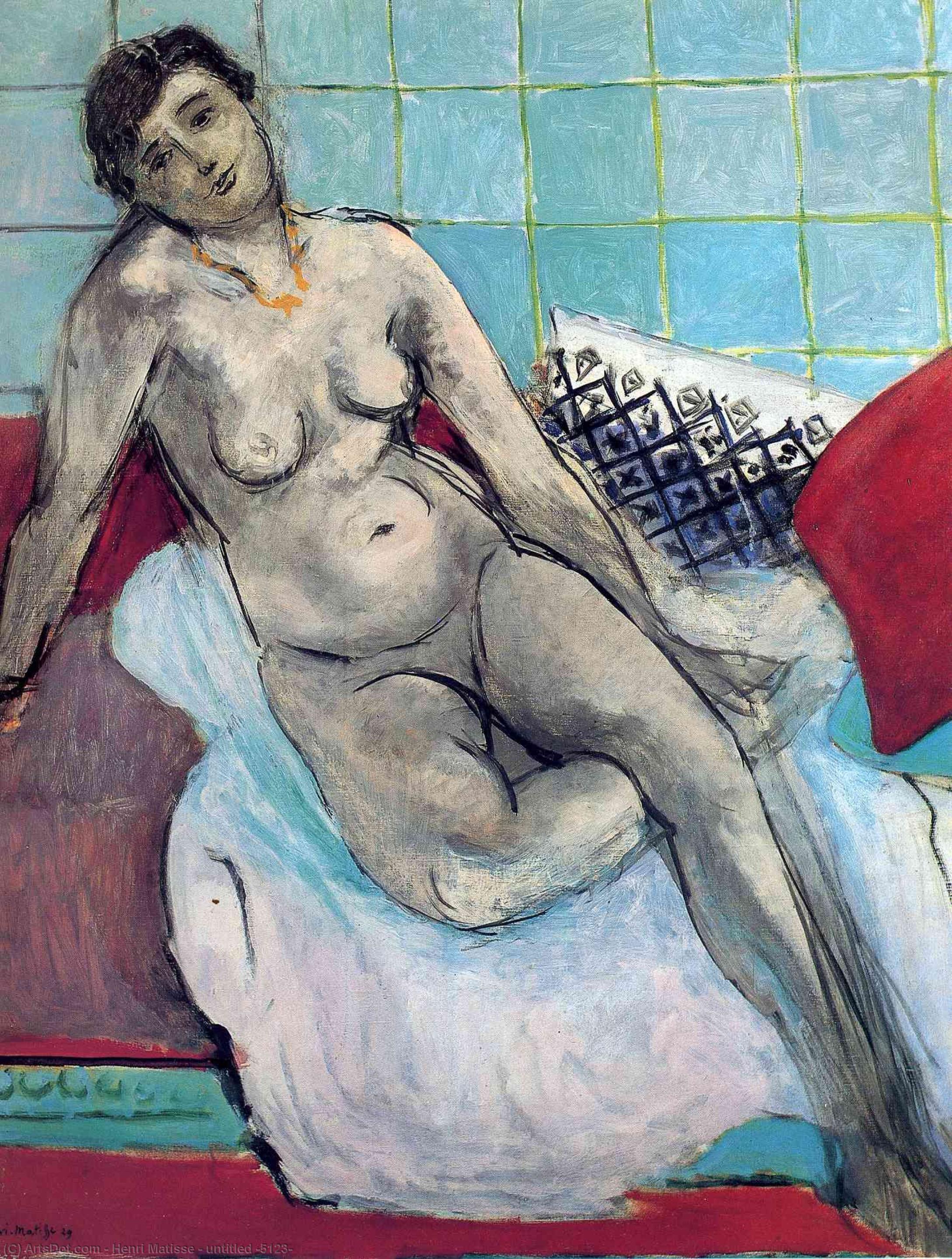
The painting “untitled (5123)” by Henri Matisse, a deceptively simple composition featuring a woman reclining gracefully against a vibrant azure backdrop, transcends mere representation; it embodies the core tenets of Matisse's revolutionary approach to art. Created sometime between 1909 and 1914—a period marked by Matisse’s fervent embrace of Fauvist principles—this artwork exemplifies his masterful manipulation of color as expressive tool, pushing boundaries against academic conventions that dominated the artistic landscape of its time.
- Subject Matter: The central figure is a woman in repose, positioned on her side with one arm extended outwards, conveying an aura of tranquility and vulnerability. Her posture speaks to themes of femininity and contemplation—elements frequently explored by Matisse throughout his oeuvre.
- Style & Technique: Matisse’s Fauvist style prioritizes color above all else, rejecting naturalistic representation in favor of bold hues that prioritize emotional impact. The painting utilizes thick, impasto brushstrokes – a technique where pigment is applied thickly onto the canvas—creating textural surfaces that amplify the vibrancy of the blues and contribute to an overall sense of dynamism.
The historical context surrounding “untitled (5123)” illuminates Matisse’s artistic rebellion. Following the Impressionists' focus on capturing fleeting moments of light, Fauvism emerged as a reaction against perceived limitations, asserting that color could convey emotion and psychological states more effectively than traditional realism. Matisse deliberately distanced himself from academic expectations, rejecting meticulous detail in favor of simplified forms and expressive coloration—a bold stance that positioned him at the forefront of artistic innovation.
- Symbolism: While devoid of overt narrative elements, the painting’s color palette carries significant symbolic weight. The dominant blue hue evokes feelings of serenity, depth, and introspection – mirroring Matisse's own preoccupation with capturing inner states through visual language. It also subtly references the Mediterranean landscape, a region that profoundly influenced Matisse’s artistic vision.
- Emotional Impact: “untitled (5123)” succeeds in conveying a palpable sense of calm and repose. The artist skillfully utilizes color to create an immersive experience for the viewer, inviting contemplation and fostering an appreciation for beauty—a hallmark of Matisse's enduring legacy as one of the most influential painters of the twentieth century.
Ultimately, “untitled (5123)” stands as a testament to Matisse’s unwavering commitment to artistic experimentation and his profound understanding of color’s transformative power. Its reproduction offers an opportunity to engage with a seminal work that continues to inspire artists and collectors alike—a captivating glimpse into the heart of Fauvist aesthetics and the enduring beauty of Matisse's vision.