A Moment Frozen in Roman Light
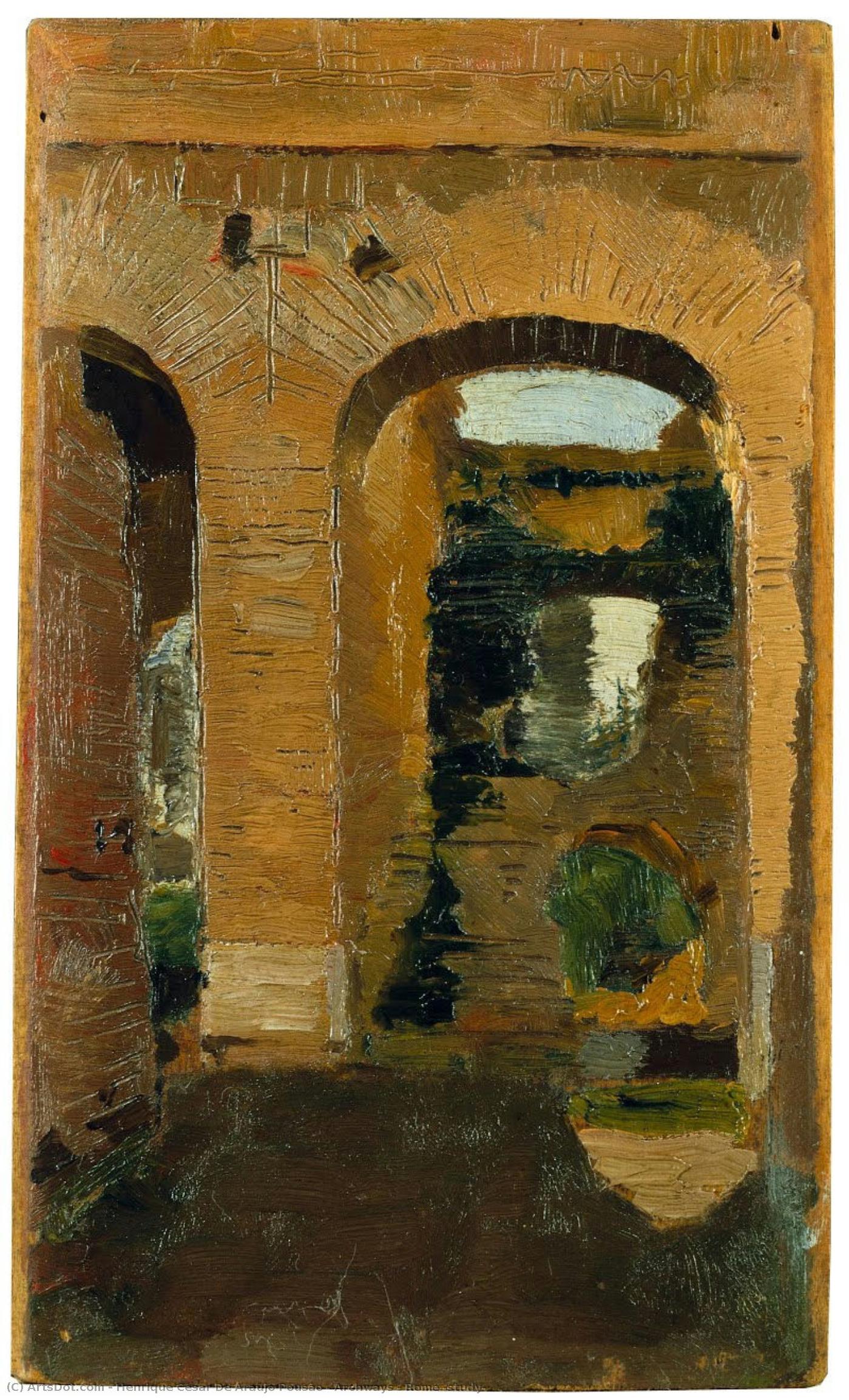
In the delicate, intimate scale of Archways - Rome (study), we encounter a fleeting glimpse into the soul of late nineteenth-century Italy through the eyes of the Portuguese master Henrique César de Araújo Pousão. This small-scale study, dating from 1882, serves as more than just a preparatory sketch; it is a profound meditation on light, shadow, and the enduring weight of history. The composition centers on a weathered brick archway, its dual openings acting as windows into a verdant, sun-dappled world. Through these apertures, glimpses of lush foliage emerge, suggesting a hidden garden or a distant landscape breathing softly behind the ancient masonry. A solitary bench sits nestled near the center, an inviting element that introduces a poignant sense of human presence—or perhaps, more poignantly, a quiet absence. It is a place designed for rest, for contemplation, and for the slow passage of time.
The technique employed in this work reveals Pousão’s sophisticated command over the Naturalist movement, infused with the burgeoning spirit of Impressionism. His brushwork is purposeful yet fluid, capturing the rugged texture of the brickwork and the soft, organic silhouettes of the distant trees with remarkable sensitivity. One can observe his unique mastery of tonal balance; much like his celebrated Parisian works, Pousão utilizes deep, resonant shadows to provide structure, allowing the light to dance across the surfaces with a luminous quality. The interplay between the heavy, grounded architecture and the ethereal, light-filled background creates a rhythmic tension that draws the viewer’s eye deeper into the frame, making the small 16 x 9 cm surface feel unexpectedly expansive.
Historical Resonance and Aesthetic Allure
To understand this piece is to understand the brief but brilliant trajectory of Henrique César de Araújo Pousão. As a painter who bridged the gap between academic rigor and the experimental freedom of the Impressionists, Pousão captured the essence of his surroundings with an almost spiritual clarity. This Roman study reflects a period of intense creative evolution, where his focus shifted toward more expressive, atmospheric qualities. For the discerning collector or interior designer, this artwork offers a sophisticated touch of classical elegance paired with a modern, emotive sensibility. It is a piece that does not merely decorate a wall but invites conversation, acting as a quiet anchor in a contemporary room.
Integrating a high-quality reproduction of such a masterpiece into a curated space allows for the infusion of historical depth and tranquility. The muted earth tones and the nostalgic atmosphere of the Roman landscape harmonize beautifully with both minimalist modern settings and more traditional, opulent decors. Whether placed in a sunlit study or a quiet reading nook, Archways - Rome (study) serves as a window into a bygone era, offering a sense of peace and a timeless connection to the beauty of the natural and man-made worlds intertwined.