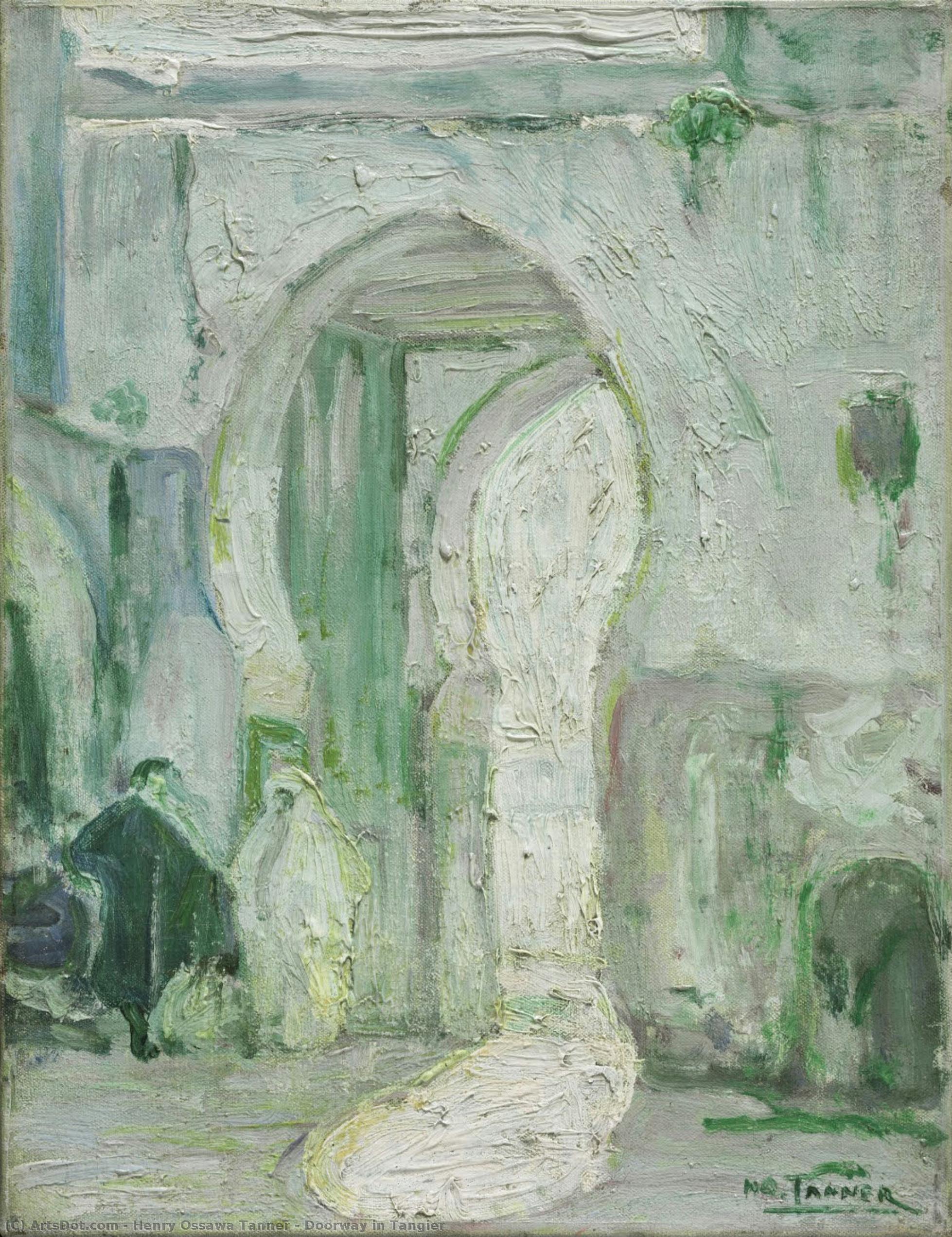
Henry Ossawa Tanner’s "Doorway in Tangier" (1912) captures a serene Impressionistic meditation on faith and light within a Moroccan doorway. This evocative painting, rich in muted greens and browns, invites contemplation of transition and revelation – discover this timeless masterpiece.
Doorway in Tangier: A Meditation on Faith and Light
The painting “Doorway in Tangier,” created by Henry Ossawa Tanner in 1912, stands as a testament to the artist’s profound engagement with biblical themes and his masterful command of Impressionistic technique. More than just a depiction of an architectural detail—a simple arched doorway nestled within the bustling Moroccan city—it embodies a deeper exploration of spirituality and the transformative power of encountering the divine amidst everyday life. Tanner, deeply rooted in the African Methodist Episcopal Church’s fervent belief system, sought to convey not merely what he saw but what he felt, channeling his spiritual convictions into a visual narrative that resonates with timeless beauty.
- Subject Matter: The artwork centers on a doorway within Tangier’s Kasbah Palace, capturing a moment of quiet contemplation against the backdrop of urban activity. Tanner deliberately eschewed grand narratives, opting instead for a scene imbued with subtle emotion and symbolic resonance.
- Style & Technique: Tanner employed Impressionistic principles—characterized by loose brushstrokes, dappled light, and an emphasis on capturing fleeting sensations—to render the doorway and its surroundings. The artist skillfully utilized color palettes dominated by muted greens and browns, mirroring the earthy tones of Morocco and creating a harmonious visual experience.
- Historical Context: Painted during Tanner’s extended stay in Paris, “Doorway in Tangier” reflects the broader artistic currents of the era—a movement that prioritized capturing subjective perception over objective representation. Furthermore, it speaks to the burgeoning interest in biblical iconography within American art circles at the turn of the century.
Symbolism & Emotional Impact: The arched doorway itself serves as a powerful symbol of transition and revelation – mirroring the journey toward enlightenment that is central to Christian faith. Tanner’s deliberate use of light—a dominant element throughout the composition—represents divine illumination, guiding the viewer's gaze inward and fostering contemplation. The inclusion of figures standing near the entrance suggests anticipation and curiosity, capturing the human desire for connection with something greater than oneself. It’s a painting that invites viewers to consider how faith can permeate even the most mundane aspects of existence.
Provenance & Reproduction: Originally housed in the Philadelphia Art Museum, “Doorway in Tangier” has since been reproduced extensively, allowing art enthusiasts worldwide to appreciate Tanner's artistic vision. High-quality reproductions capture the painting’s luminous quality and textural richness, faithfully conveying its emotional depth and spiritual significance. Collectors recognize it as a cornerstone of American Impressionism—a masterpiece that exemplifies Tanner’s ability to transform biblical narratives into emotionally evocative visual experiences.