A Study in Quiet Authority: Unveiling Ramsay’s Masterpiece
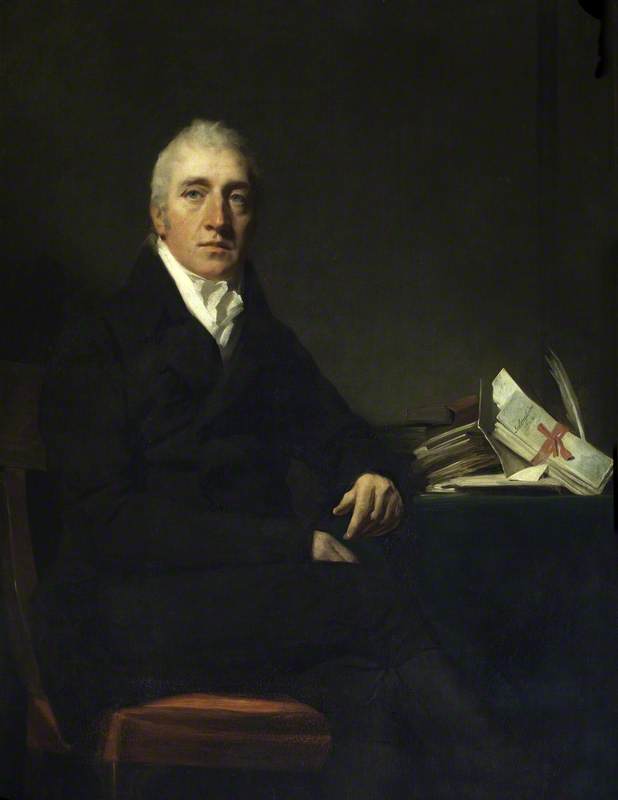
Henry Raeburn’s 1810 portrait of Thomas Williamson Ramsay is more than a simple likeness; it’s a meticulously crafted tableau of intellect, status, and the measured dignity of the Scottish Enlightenment. The painting immediately commands attention with its stark simplicity – a seated gentleman against a backdrop of profound darkness, an arrangement that forces the viewer to fully absorb every detail of his subject's presence. It’s a deliberate choice by Raeburn, designed not merely to depict Ramsay but to evoke a sense of contemplative seriousness, a man deeply engaged in thought and surrounded by the symbols of his learned pursuits.
The composition is remarkably restrained, prioritizing clarity and directness over elaborate flourishes. Ramsay occupies the majority of the frame, his posture conveying an air of controlled composure. His hands, clasped gently before him, subtly suggest both authority and a willingness to engage in reasoned discourse. The inclusion of the table laden with books – meticulously rendered with varying textures and shades of brown – is crucial; it’s not just furniture but a visual shorthand for Ramsay's intellectual life, his dedication to scholarship, and perhaps even a subtle nod to the humanist ideals prevalent at the time. The cup on the table adds a touch of domesticity, grounding the portrait in a recognizable reality while simultaneously reinforcing the subject’s refined tastes.
Color, Light, and Shadow: A Neoclassical Palette
Raeburn's masterful use of color is deeply rooted in the principles of Neoclassicism. The dominant palette – muted grays, browns, whites, and blacks – creates a sense of gravitas and timelessness. The subtle variations within these tones are expertly employed to build depth and dimension, avoiding any hint of superficial brightness. Notice how the lighter highlights accentuate Ramsay’s face and clothing, drawing the viewer's eye directly to his features while leaving much of the background shrouded in shadow. This chiaroscuro effect – a dramatic contrast between light and dark – is not merely an aesthetic choice; it serves to emphasize the subject’s importance and create a sense of three-dimensionality, as if Ramsay were emerging from the darkness himself.
The careful rendering of textures further enhances the painting's realism. The woven fabric of Ramsay’s suit, the smooth skin of his face, and the rough surfaces of the books are all depicted with remarkable attention to detail. This tactile quality invites the viewer to almost reach out and touch the canvas, adding a layer of immersive engagement.
A Window into the Enlightenment
Beyond its technical brilliance, Ramsay’s portrait offers a fascinating glimpse into the intellectual landscape of 18th-century Scotland. Thomas Williamson Ramsay himself was a prominent figure in Scottish society – a lawyer and judge known for his legal acumen and commitment to justice. The painting reflects not only his individual character but also the broader values of the Enlightenment, emphasizing reason, learning, and civic responsibility. Raeburn’s decision to portray Ramsay in such a formal and dignified manner underscores the importance placed on intellectual pursuits during this period.
The portrait was created during a time when Scottish art was gaining international recognition, largely thanks to artists like Raeburn who were successfully navigating the established artistic circles of London. It’s a testament to Ramsay's skill and influence that he could capture such a nuanced portrayal of his subject – a man of both intellect and quiet authority.
Reproductions: Bringing Ramsay’s Vision to Life
Today, high-quality reproductions of this iconic portrait offer art enthusiasts and collectors the opportunity to experience Raeburn's masterpiece firsthand. Whether displayed in a formal study or a contemporary living space, this painting continues to resonate with its timeless elegance and profound sense of intellectual depth. The meticulous detail and masterful use of light and shadow are faithfully reproduced, allowing viewers to appreciate the artistry and skill that went into creating this enduring work of art.