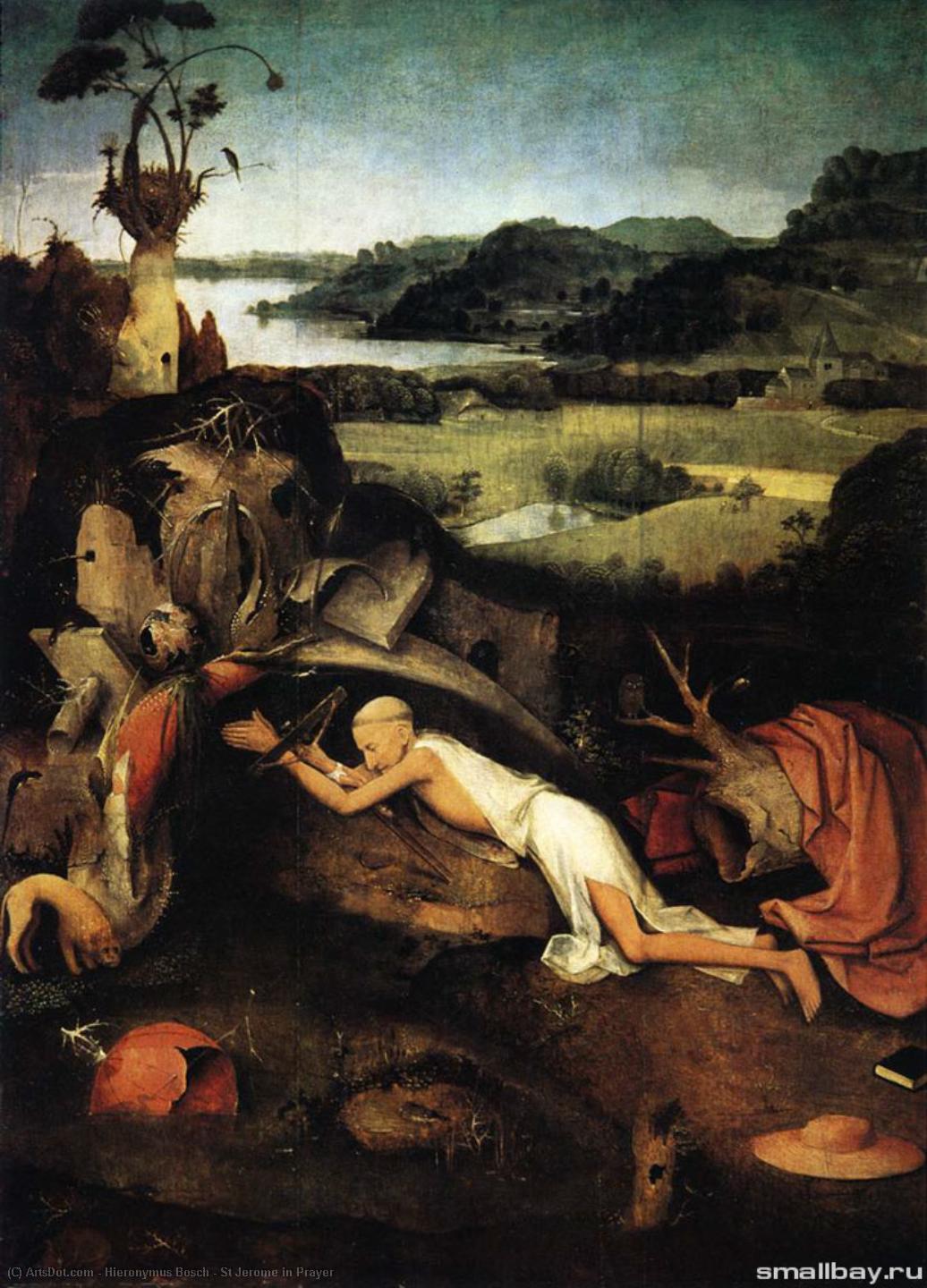
St Jerome in Prayer
The painting “St Jerome in Prayer” by Hieronymus Bosch stands as a haunting testament to the anxieties of the Renaissance mind—a visual distillation of theological contemplation intertwined with unsettling psychological depth. Completed around 1505, this oil on oak wood masterpiece resides within the Museo delle Belle Arti di Gand, Belgium, offering visitors a glimpse into the visionary world of one of art history’s most enigmatic figures. Dendrochronological analysis has confirmed its date, placing it firmly within Bosch's prolific late period—a time marked by increasingly elaborate and symbolically charged compositions reflecting his profound engagement with religious dogma and human vulnerability.
- Composition & Perspective: Bosch abandons traditional linear perspective, favoring a flattened space that contributes to an atmosphere of unease and disorientation. Layers of figures and landscape elements converge towards a central point—Saint Jerome himself—creating a dynamic yet claustrophobic visual experience. Diagonal lines dominate the scene, propelling the eye across the canvas and emphasizing instability.
- Color Palette & Lighting: The painting’s color scheme is dominated by earthy greens and browns punctuated by stark whites and muted yellows. Bosch employs dramatic chiaroscuro—the interplay of light and shadow—to heighten emotional impact and sculpt forms with meticulous detail. This technique amplifies the sense of morbidity inherent in the depiction, casting Jerome and his surroundings into deep darkness while highlighting areas of luminous illumination.
- Style & Technique: “St Jerome in Prayer” exemplifies Mannerism, characterized by elongated figures, distorted proportions, and exaggerated emotional expression—a stylistic departure from the idealized realism prevalent during Bosch’s formative years. The artist's brushwork is visible throughout the canvas, creating a textured surface that conveys both precision and spontaneity. Bosch meticulously renders textures – animal fur, foliage, stone – demonstrating mastery of oil paint application.
- Symbolism & Narrative: At its core, the painting recounts Saint Jerome’s legendary penance—his forced consumption of wild deer to demonstrate repentance for his sins. The inclusion of animals—a dead deer, a hare, and birds—serves as potent symbols of temptation and suffering, mirroring Jerome's internal struggle. Recurring motifs like the crucifix and the desolate landscape underscore themes of faith, mortality, and spiritual isolation.
- Emotional Impact: Bosch’s masterful depiction transcends mere representation; it aims to provoke contemplation on the human condition—the confrontation with death, the battle against evil, and the yearning for divine grace. The painting's unsettling beauty compels viewers to confront uncomfortable truths about existence, cementing Bosch’s legacy as a pioneer of psychological realism within the Renaissance tradition.
The Museo delle Belle Arti di Gand houses this remarkable artwork, allowing audiences worldwide to appreciate Bosch’s unparalleled ability to convey profound spiritual and emotional complexities through visual artistry. Its enduring fascination stems from its masterful blend of meticulous technique, symbolic richness, and unsettling aesthetic qualities—a testament to the artist's genius and his lasting influence on subsequent generations of painters.