A Window into Bosch’s Twisted Vision
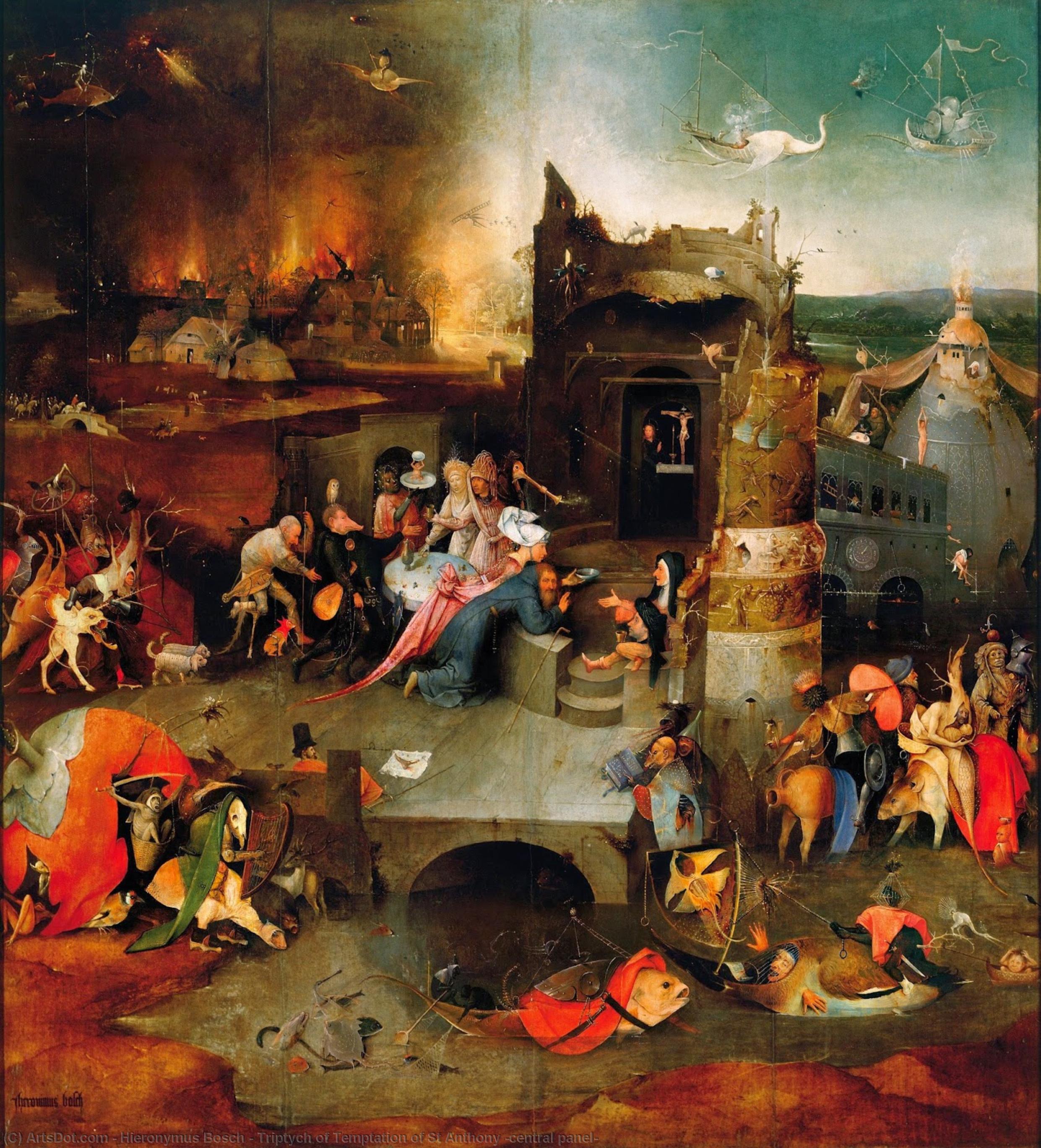
Hieronymus Bosch's *Triptych of Temptation of St Anthony*, housed in the Museo Nacional de Arte Antiga in Lisbon, Portugal, stands as a monumental achievement of Early Netherlandish painting—a visual testament to psychological torment and moral ambiguity. Completed around 1505, this oil painting on wood panels transcends mere depiction; it plunges viewers into a hallucinatory landscape populated by grotesque figures and unsettling symbolism, cementing Bosch’s reputation as one of the most innovative artists of his era. Its enduring fascination stems from Bosch's masterful blend of religious allegory and satirical commentary, prompting ongoing debate about its interpretation and artistic significance.
The Narrative Core: Saint Anthony’s Struggle
At its heart lies the story of Saint Anthony the Great—a figure revered for his ascetic devotion and unwavering faith—who endured a harrowing ordeal orchestrated by demonic forces. Bosch's depiction captures this internal battle with breathtaking precision, portraying St. Anthony as a solitary man besieged by temptations designed to undermine his spiritual resolve. The central panel showcases him confronting a cacophony of devils—some grotesque, others subtly menacing—each attempting to lure him away from God’s path. This confrontation isn’t merely physical; it represents the ceaseless struggle against inner darkness and sinful desires—a theme prevalent throughout Bosch's oeuvre.
Compositional Complexity: A Landscape of Madness
Bosch’s genius resides not only in his narrative but also in his masterful compositional technique. The triptych unfolds as a meticulously crafted panorama, dominated by a ruined castle-like structure that serves as the backdrop for St. Anthony’s torment. Scattered throughout the scene are numerous birds—some soaring majestically overhead, others fluttering nervously around St. Anthony—adding to the atmosphere of unease and disorientation. Furthermore, symbolic animals like a dog on the right side and a horse towards the bottom right corner contribute to the intricate tapestry of imagery. The artist’s use of perspective creates depth and reinforces the feeling that St. Anthony is trapped within a claustrophobic space mirroring his psychological state.
Symbolism Unleashed: Decoding Bosch's Visual Language
The painting overflows with symbolism—each element meticulously chosen to convey profound moral messages. Devils appear in various forms, embodying vices such as lust, pride, and avarice. The ruined castle symbolizes decay and corruption, reflecting the spiritual wasteland inhabited by St. Anthony’s adversaries. Notably, a woman kneeling at a parapet offers a bowl of wine to St. Anthony—a gesture laden with erotic connotations that underscores the temptation to abandon piety for sensual pleasure. Bosch's meticulous attention to detail—from the grotesque faces of the devils to the unsettling postures of the figures—further amplifies the painting’s disturbing impact, inviting viewers to confront uncomfortable truths about human nature.
A Legacy of Innovation: Bosch and the Antwerp School
Bosch’s *Triptych of Temptation of St Anthony* represents a pivotal moment in artistic history, marking a decisive break from traditional conventions and establishing Bosch as a pioneer of the Antwerp school—a movement characterized by its bold experimentation with color and perspective. His innovative techniques foreshadowed developments in Renaissance art, influencing artists like Quentin Matsys and shaping the visual landscape of Northern Europe. Today, reproductions of this masterpiece continue to captivate audiences worldwide, offering a glimpse into Bosch’s singular vision and cementing his place as one of the most enduring figures in Western artistic tradition. For those seeking to explore more works by Bosch,
Triptych of Temptation of St Anthony (detail) (33) and
Triptych of Temptation of St Anthony (detail) (14) are available on ArtsDot. Additionally, the
Museo Nacional de Arte Antiga in Lisbon is home to many other significant works of art, including pieces by artists like
Quentin Matsys, who was a contemporary and fellow artist of Bosch.
ArtsDot.com offers high-quality, handmade oil painting reproductions of famous artworks, including those by Hieronymus Bosch. Visit our website to explore more masterpieces and learn about the artists behind them.