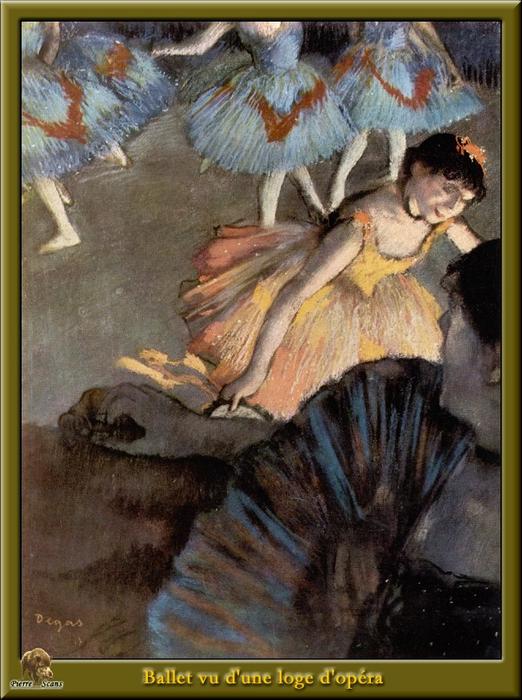
Discover Edgar Degas’ ‘A Ballet Seen From The Opera Box.’ Impressionistic beauty, dancer detail, & a glimpse into Victorian life. A captivating artwork for collectors.
Едгар Дегас: Револуционарни француски сликар познат по својим запањујућим балетним дијалозима и париским сценама, као иновативним техникама — исти мајстор модерне уметности.
A Glimpse into a World of Ballet and Observation
Edgar Degas’ *A Ballet Seen From The Opera Box* (1885) offers an intimate and subtly dramatic view into the Parisian ballet world. More than just a depiction of dancers onstage, this painting is a study in perspective, social observation, and the fleeting beauty of performance. It invites us to share in the experience of witnessing art, filtered through the lens of privileged spectatorship.
Decoding Degas’ Impressionistic Style
Degas, though often associated with the Impressionist movement, preferred to be called a realist – and this distinction is key to understanding his work. He wasn't interested in capturing light *en plein air* like Monet or Renoir; instead, he brought an Impressionistic sensibility—loose brushwork, emphasis on atmosphere, and the depiction of momentary effects—to rigorously observed subjects. In *A Ballet Seen From The Opera Box*, this manifests as a slightly hazy quality, with blurred figures onstage contrasted against the more defined forms in the foreground. The composition isn’t about precise representation but rather conveying an impression – a feeling of being present in that opera box, experiencing the performance secondhand.
Subject and Composition: A Study in Contrasts
The painting centers on a young girl, likely a student or aspiring dancer herself, seated with a guardian—perhaps her father—in an opulent opera box. Her yellow dress provides a focal point, drawing our eye amidst the muted tones of the surrounding interior. Behind them, the stage comes alive with dancing figures, rendered as suggestions of movement rather than sharply defined forms. This deliberate contrast between foreground and background creates depth and emphasizes the act of *watching*. The asymmetrical composition—the weight given to the lower half with the figures in the box—further enhances this sense of observation. Degas frequently explored these themes of spectatorship, as seen in works like *The Orchestra of the Opera* and paintings depicting audiences at racecourses.
Historical Context: Ballet and Parisian Society
Nineteenth-century Paris was captivated by ballet. The Opéra Garnier, a symbol of Parisian grandeur, became a social hub where high society gathered to see and be seen. Degas’s fascination with the ballet stemmed from more than just aesthetic appreciation; he was intrigued by the dancers themselves – their discipline, their vulnerability, and their place within this complex social hierarchy. His paintings offer a glimpse behind the scenes, revealing both the glamour and the often-harsh realities of a dancer's life. The opera box itself signifies status and privilege, highlighting the societal dynamics at play.
Symbolism and Emotional Resonance
While not overtly symbolic, *A Ballet Seen From The Opera Box* subtly explores themes of innocence, mentorship, and the transmission of culture. The young girl’s rapt attention suggests a budding passion for dance, while her guardian represents guidance and protection. The blurred figures onstage can be interpreted as representing aspiration – the dream of becoming one of those dancers. The overall mood is one of quiet contemplation and subtle drama. It's not a scene of high action or overt emotion; rather, it’s a moment captured in time—a fleeting impression of beauty, observation, and the magic of performance. The painting evokes a sense of nostalgia and invites viewers to reflect on their own experiences with art and spectacle.
For Collectors & Interior Designers
This artwork, or a high-quality reproduction, would be an exquisite addition to any collection. Its muted color palette—ochre, pinks, blues, and browns—lends itself well to a variety of interior styles, from traditional to contemporary. The painting’s focus on observation and atmosphere makes it particularly suitable for spaces designed for relaxation and contemplation – libraries, studies, or living rooms. Its sophisticated composition and subtle emotional depth will undoubtedly spark conversation and inspire appreciation for the artistry of Edgar Degas.