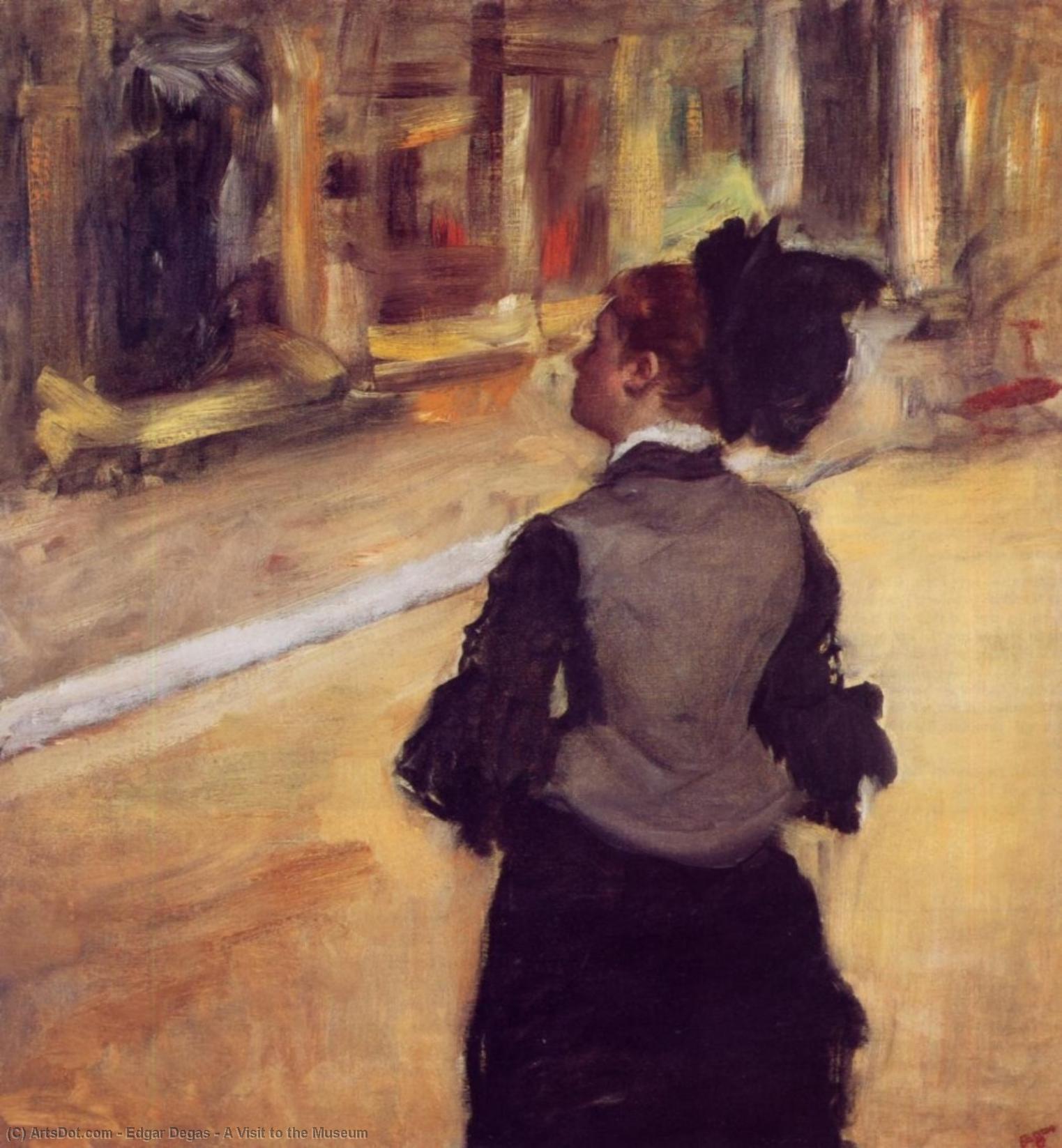
A Visit to the Museum
Edgar Degas’s
A Visit to the Museum is a captivating work of art that showcases the artist’s unique style and composition. Created in the late 19th century, this piece is a prime example of Impressionism, a movement that emphasized capturing moments of modern life.
Style and Composition
The painting features two women visiting a museum, lost in thought as they observe the artwork on display. The brushstrokes are loose and expressive, conveying a sense of spontaneity and movement. The use of light and color is substantial, creating a visual rhythm that guides the viewer’s eye through the canvas. Degas's focus on the figure's placement and the encompassing environment is a testament to his ability to capture a fleeting moment with enduring resonance.
- The painting features two women visiting a museum, lost in thought as they observe the artwork on display.
- Loose brushstrokes convey spontaneity and movement.
- Substantial use of light and color creates visual rhythm.
- Degas’s attention to figure placement and environment captures a moment's essence.
Elements and Symbolism
The painting is characterized by its use of everyday life elements, such as the women’s attire and the museum setting. The
Musée des Beaux-Arts Carcassonne, France is a notable example of a museum that features European art from the 17th century to the present day. The artwork on display in the background of
A Visit to the Museum is abstracted, conveying the impression of art and artifacts without delving into detail.
- The painting’s composition utilizes cropped figures, emphasizing candidness.
- Soft brushstrokes evoke atmosphere and movement.
- Light and shadow reflect the transient museum experience.
Impressionism is a style that Degas championed, and
A Visit to the Museum exemplifies this movement beautifully. For more information on Degas and his works, visit
https://ArtsDot.com. To learn more about the history of painting, visit
https://en.wikipedia.org/wiki/History_of_painting.
The
Great Arabesque by Degas is another notable work that showcases the artist’s innovative approach to capturing movement and light. For handmade oil paintings reproductions of Degas’s works, visit
https://ArtsDot.com.
Photo Description: The painting portrays a woman standing on a street corner. She appears to be gazing intently at something distant—perhaps a train or another captivating object—demonstrating the artist’s masterful depiction of everyday life and capturing a moment brimming with emotion.
Size: Unknown
Date: Unknown
About Edgar Degas
Born Hilaire-Germain-Edgar De Gas in Paris, 1834, the artist known to us as Edgar Degas was a figure of fascinating contradictions. He wasn’t simply an Impressionist, despite often being grouped with Monet, Renoir, and others who redefined painting in the late 19th century. In fact, he actively resisted that label, identifying instead as a realist—a commitment rooted in his meticulous observation of the world around him and a dedication to portraying it with unflinching honesty. Degas’s early life was comfortably bourgeois; his father was a banker, and his mother came from a Creole family in New Orleans. This background afforded him access to education and artistic training, though he often chafed against academic constraints.
He initially enrolled at the Lycée Louis-le-Grand, but his true education began when he started copying works in the Louvre, a practice that honed his skills and ignited a lifelong passion for art. This formative experience instilled in him a profound respect for tradition while simultaneously fueling his desire to explore new artistic horizons.