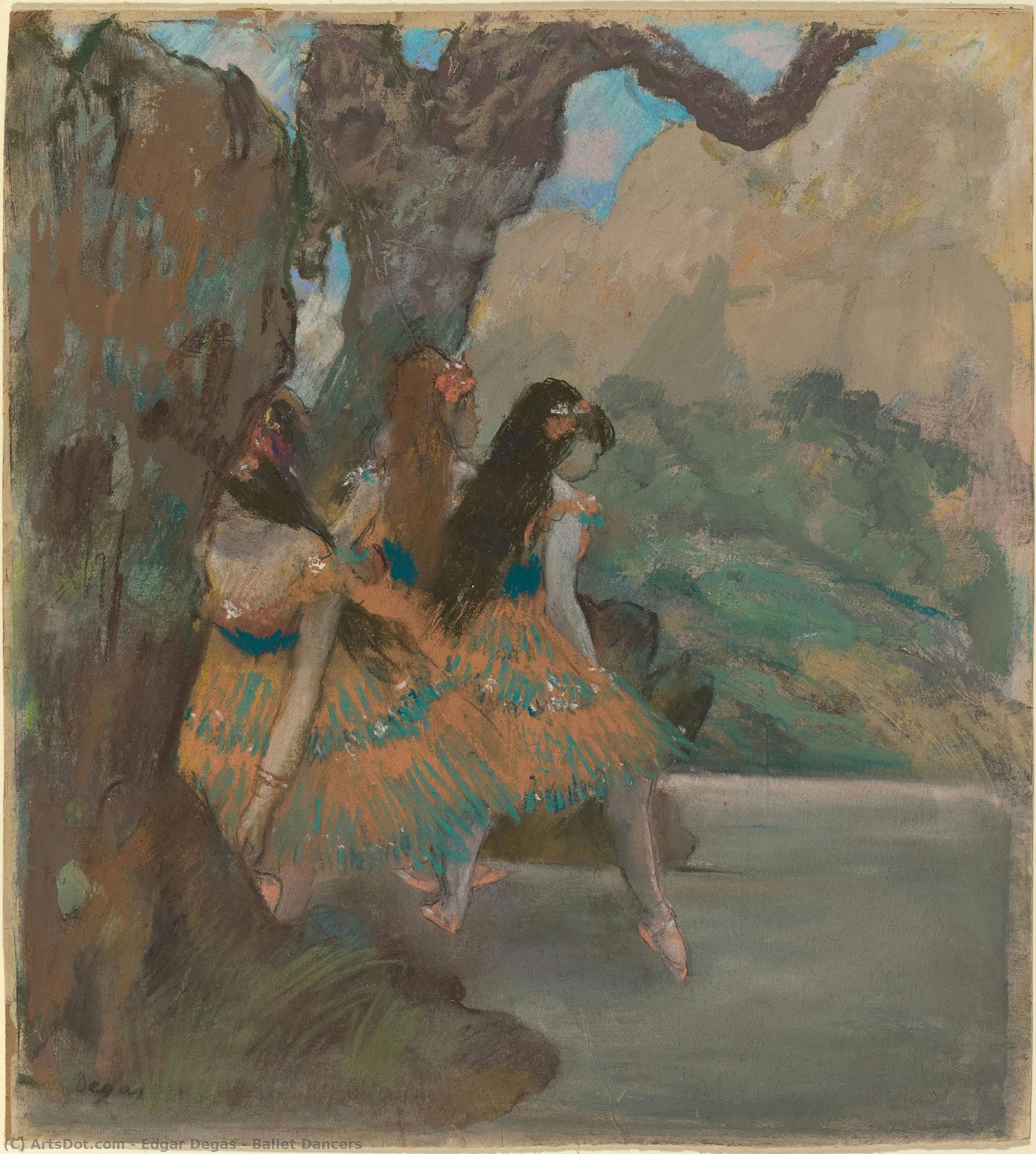
Edgar Degas’s "Ballet Dancers" (1877) captures a candid moment of three ballerinas strolling outdoors in gouache on paper, showcasing the artist's realist style and capturing movement with remarkable detail. Discover this beautiful artwork and bring it into your space.
A Moment Frozen in Grace: Edgar Degas's "Ballet Dancers"
Edgar Degas’s “Ballet Dancers,” painted in 1877, is more than just a depiction of three women strolling along a path; it’s a profound meditation on movement, observation, and the fleeting beauty of everyday life. This gouache on paper work, measuring 46 x 43 cm, offers an intimate glimpse into the world of the Parisian ballet, revealing Degas's unique approach to capturing not just appearances but the very essence of performance.
- Subject Matter: The painting centers around three women – likely ballerinas – engaged in a casual moment away from the stage. Their relaxed posture and shared walk suggest camaraderie and respite, hinting at the demanding world of professional dance.
- Composition: Degas masterfully employs a slightly off-kilter composition, characteristic of his work, creating a sense of dynamism and unease. The figures are positioned close together, almost merging into one another, emphasizing their shared experience.
The Realist's Eye: Degas’s Technique
Degas deliberately resisted the label of Impressionism, preferring to be recognized as a realist. “Ballet Dancers” exemplifies this commitment. Unlike the shimmering effects sought by many Impressionists, Degas utilizes gouache – an opaque watercolor – to build up layers of color and create a remarkably detailed and almost sculptural representation of his subjects. The use of muted tones—primarily browns, grays, and subtle blues—contributes to the painting’s quiet intensity and avoids the bright, vibrant palette often associated with Impressionism.
- Gouache Technique: Degas's skillful manipulation of gouache allows for precise control over color and tone, creating a sense of depth and solidity. The technique lends itself particularly well to capturing the textures of fabric and the subtle nuances of human form.
- Line and Form: Noticeable are Degas’s strong lines that define the figures' bodies and clothing, contributing to the painting’s overall structural quality. He wasn’t interested in simply recording a visual impression; he was actively shaping his subject matter on the paper.
Historical Context & Symbolism
Painted during a pivotal moment in artistic history – the late 19th century – “Ballet Dancers” reflects the growing interest in depicting modern life, particularly within urban settings. Degas’s fascination with the ballet stemmed from his desire to capture the discipline and athleticism of these performers. The presence of the tree in the background adds a layer of symbolic richness, perhaps representing both the fleeting nature of beauty and the connection between the dancers and the natural world. The solitary figure on the right remains ambiguous, possibly an observer or another dancer, further enhancing the painting’s sense of mystery.
- The Ballet as Subject: Degas's choice to portray ballet dancers was revolutionary at the time, elevating a working-class activity to the level of fine art.
- Social Commentary: The scene subtly hints at the social dynamics within the ballet world – the camaraderie and shared experience amongst performers.
Emotional Impact & Artistic Legacy
"Ballet Dancers" resonates with a quiet elegance and a profound sense of observation. It’s a painting that invites contemplation, prompting us to consider not just the physical beauty of the figures but also their emotional state and the unspoken narratives surrounding them. Degas's work continues to captivate viewers today, solidifying his place as one of the most innovative and influential artists of the 19th century. This hand-painted reproduction offers a unique opportunity to own a piece of art history, bringing this evocative scene into your home or office.