A Portrait of Quiet Contemplation: Examining Degas’s “Standing Man in a Bowler Hat”
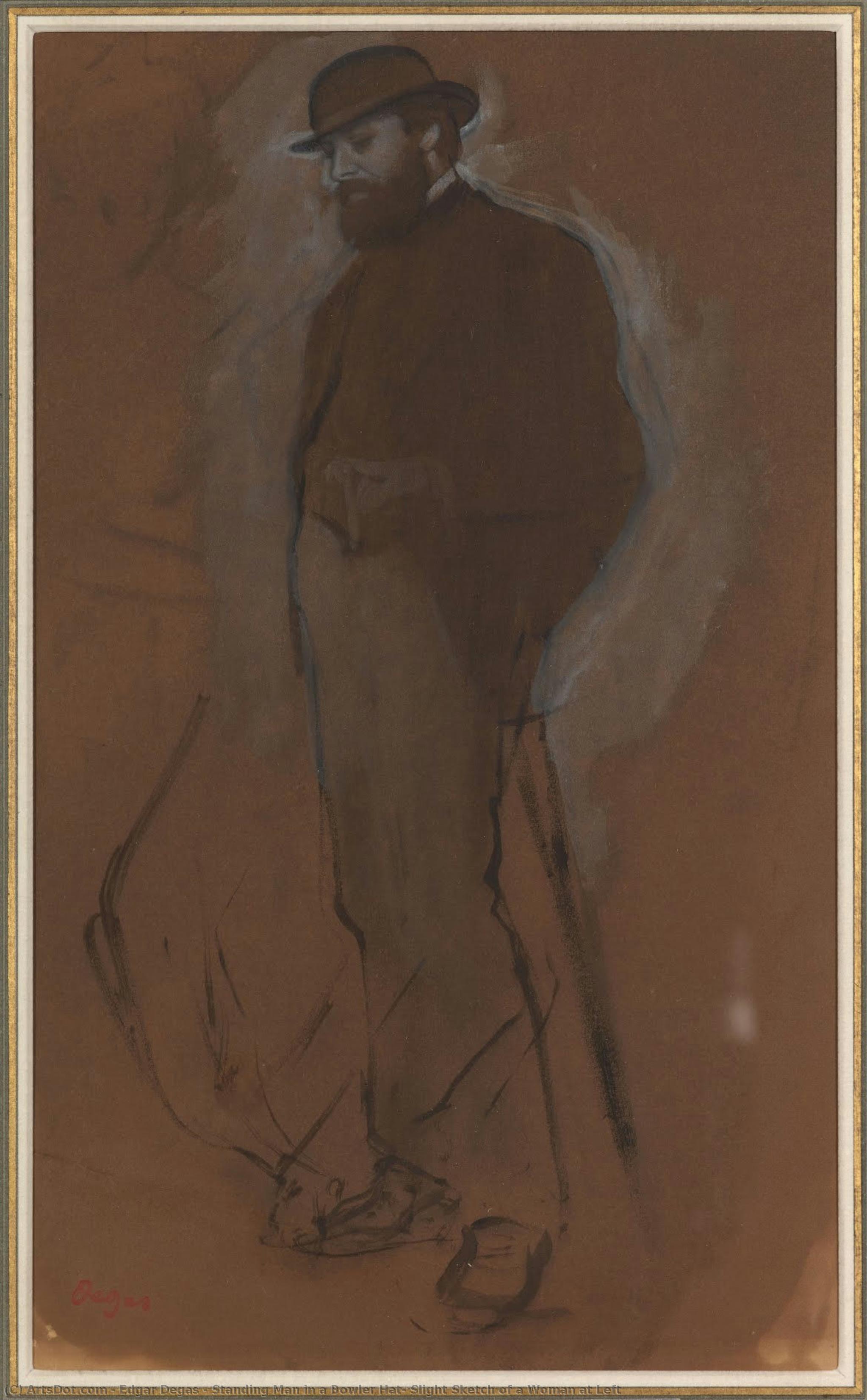
The painting "Standing Man in a Bowler Hat," executed by Edgar Degas around 1870, presents an arresting glimpse into the artist's distinctive approach to portraiture—one that prioritizes psychological nuance over mere likeness. More than just capturing a physical form, Degas delves beneath the surface, inviting viewers to consider the man’s inner state as much as his outward appearance. This subtle sketch of a woman at left serves as an intriguing counterpoint, hinting at relationships and unspoken narratives within the frame.
- Subject Matter: The central figure is undeniably captivating—a gentleman dressed in a bowler hat, positioned squarely in the middle of the canvas. His gaze downward suggests introspection; he’s not actively engaging with his surroundings but rather absorbed in thought. This posture speaks volumes about the artist's intention to portray not just what is seen, but what is felt.
- Style and Technique: Degas firmly rejected the Impressionist label, championing realism despite his exposure to influential artistic movements. His technique—characterized by loose brushstrokes and tonal variations—creates a textured surface that captures the ephemeral quality of light and shadow. Unlike polished Impressionistic canvases, this piece retains an immediacy born from careful observation.
The historical context surrounding “Standing Man in a Bowler Hat” is crucial to understanding its significance. Degas was operating within the burgeoning artistic landscape of Paris during the Belle Époque—a period marked by optimism and social change. Artists like Degas were experimenting with new ways of representing human experience, moving away from idealized depictions towards more honest portrayals of everyday life. The inclusion of a woman in the periphery adds another layer of complexity. While seemingly incidental, she embodies the anxieties and aspirations of women during this era—a silent witness to the man’s contemplation.
- Symbolism: The bowler hat itself is noteworthy; it represents practicality and social status—characteristics that align with Degas's broader artistic vision. Its placement directs the viewer's eye downwards, mirroring the subject’s gaze and reinforcing the theme of inward reflection.
Ultimately, “Standing Man in a Bowler Hat” resonates deeply with viewers due to its ability to evoke emotion. The painting isn’t merely aesthetically pleasing; it prompts contemplation about identity, solitude, and the complexities of human consciousness. It's a testament to Degas’s skill as an artist—his capacity to distill profound psychological insight into a deceptively simple composition. A reproduction offers a chance to appreciate this masterpiece in its entirety, bringing its quiet beauty and contemplative spirit into any interior space.