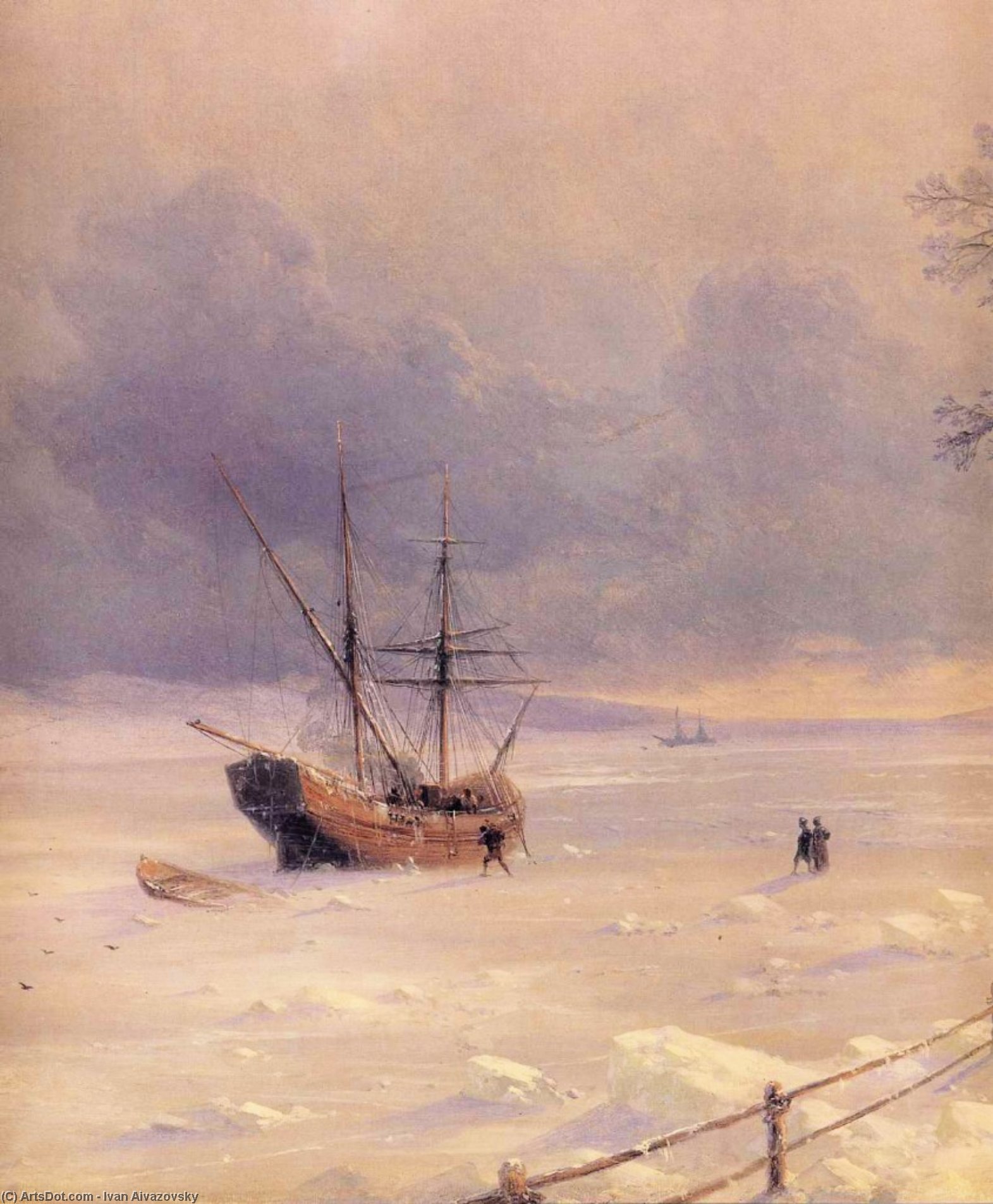
Frozen Bosphorus Under Snow: A Romantic Vision of Winter's Grip
Ivan Aivazovsky’s "Frozen Bosphorus Under Snow," created in 1874, is a captivating example of Romanticism art, showcasing the artist's remarkable ability to capture the raw beauty and power of nature. This oil on canvas piece, measuring 80 x 130 cm, transports viewers to a serene yet formidable winter landscape along the Bosphorus Strait.
Composition and Artistic Technique
The painting depicts a large sailing ship partially embedded in snow and ice within the frozen waters of the Bosphorus. Two smaller boats add depth and scale to the composition. Aivazovsky masterfully employs a muted color palette dominated by browns, grays, and blues, creating a somber and melancholic atmosphere that reflects the harshness of winter. The use of soft, blurred lines suggests a hazy or misty environment, further enhancing the sense of isolation and vastness. His technique involves loose brushwork, contributing to the overall impression of coldness and texture. The lighting is diffused and gentle, lacking strong highlights, which amplifies the painting's gloomy mood. Perspective is somewhat flattened, emphasizing the expansive landscape without a clear vanishing point.
Historical Context and Romanticism
Aivazovsky (1817-1900), a renowned Russian artist of Armenian descent, was celebrated for his marine paintings. "Frozen Bosphorus Under Snow" exemplifies the tenets of Romanticism, an artistic movement that prioritized emotion, imagination, and dramatic landscapes over strict realism. This period in art history emphasized subjective experience and the sublime power of nature. Aivazovsky’s work resonated deeply with audiences across Europe, earning him widespread acclaim and numerous solo exhibitions. The painting reflects a time when maritime travel was perilous and winter conditions presented significant challenges, highlighting humanity's vulnerability against the forces of nature.
Symbolism and Emotional Impact
The artwork is rich in symbolism. The ship represents human endeavor and resilience struggling against an unforgiving environment. Its partial entrapment within the ice suggests a sense of fragility and the potential for disaster. The vast expanse of snow and ice symbolizes the overwhelming power of nature, while the muted colors evoke feelings of solitude, melancholy, and awe. Aivazovsky’s skillful rendering of light and shadow creates an emotional depth that invites contemplation on themes of perseverance, isolation, and the sublime beauty found even in harsh conditions. The painting's overall effect is one of quiet drama—a powerful testament to nature's dominance and humanity's enduring spirit.
Related Works and Artistic Legacy
Aivazovsky’s influence can be seen in other artists who explored winter landscapes, such as Claude Monet with his "Snow Effect, The Street in Argentuil," which captures the serene atmosphere of a snowy street. Other notable Romantic artists also depicted maritime scenes, but Aivazovsky's unique ability to convey both the beauty and the danger of the sea set him apart. His legacy continues to inspire artists and captivate audiences with his evocative depictions of marine life and dramatic weather conditions.