Jakob van Ruisdal (1628-1682) je bio najznačajniji holandski slikar pejzaža Zlatnog doba. Istražite njegova dela: dramatična neba, mirne seoske scene, gradske prikaze i vodopade. Uticao na engleske romantike i druge pokrete.
Откријте сјајан свет уметности у ДИА! Истражите светиште репродукција познатих дела Дијега Ривере и других маестрија, одражавајући богато наслеђе Дејтроита и културну разноликости.
Откријте сјајан свет уметности у ДИА! Истражите светиште репродукција познатих дела Дијега Ривере и других маестрија, одражавајући богато наслеђе Дејтроита и културну разноликости.
ДИА, Детройтски институт умет
Introduction
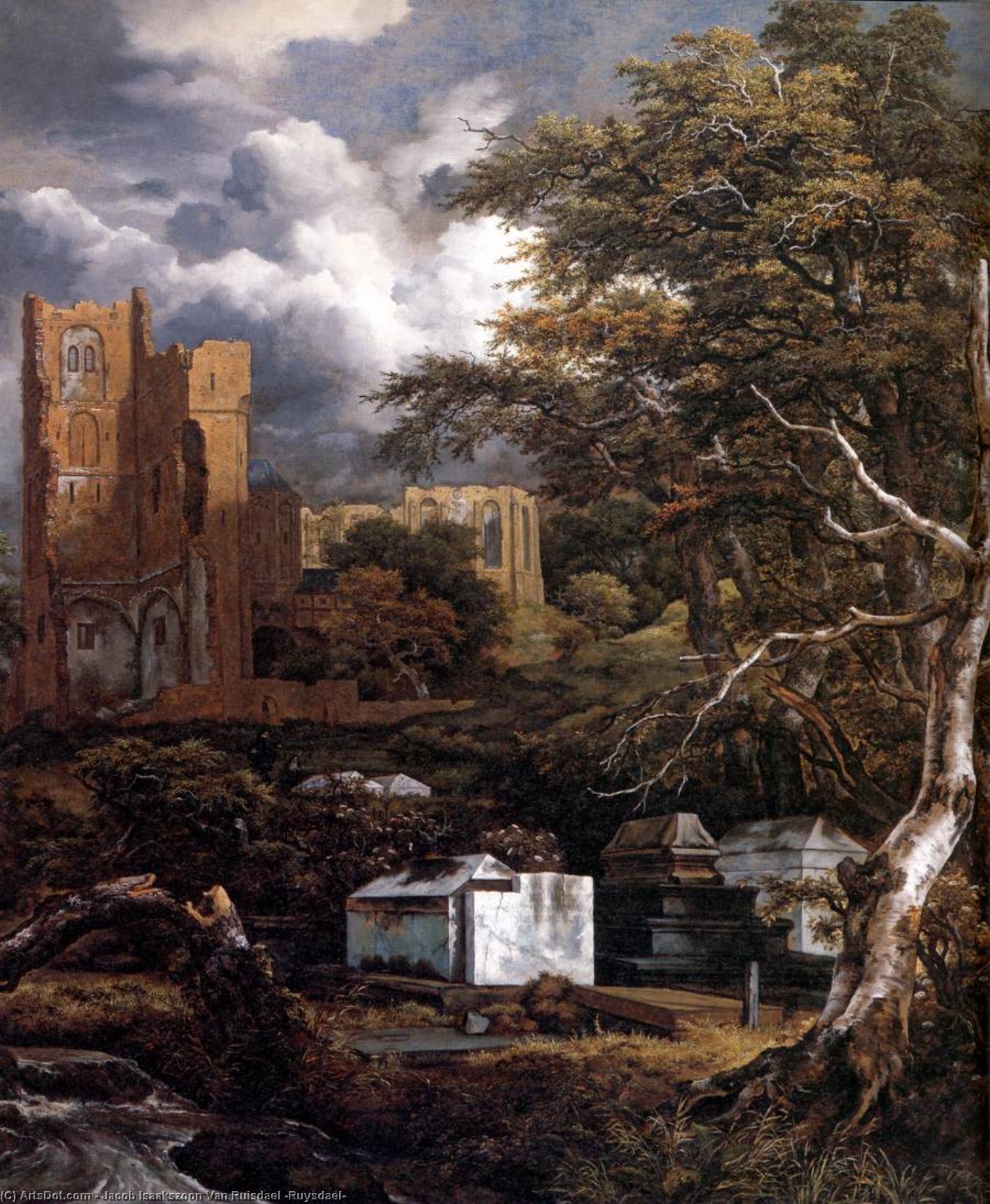
Jacob Isaakszoon van Ruisdael, a prominent Dutch Golden Age painter, is renowned for his landscapes and marines. His painting,
The Jewish Cemetery (Detail), is an exceptional example of his work, which can be found at the Institute of Arts in Detroit, United States.
Background
The Jewish Cemetery (Detail) is a part of
The Jewish Cemetery, a larger painting by van Ruisdael that depicts the Beth Haim cemetery in Ouderkerk aan de Amstel, Amsterdam. The painting was created during the 1650s when van Ruisdael was in his mid-twenties and is considered one of his masterpieces.
Symbolism
Van Ruisdael's
The Jewish Cemetery (Detail) is a moralizing landscape, painted with a deliberate allegorical program. The painting features tomb monuments commemorating leaders of Amsterdam's large Jewish Portuguese community in the 17th century. The central elements of the painting differ from what one would see in Ouderkerk, as Ruisdael made adjustments to achieve compositional and allegorical intent. The picture's physical dimensions are twice that of typical landscape paintings from the 17th century, emphasizing its importance. The central building's foundations are overrun by leafy foliage arising from decaying wood in the foreground, symbolizing death and the transience of all earthly things.
Acquisition
The Detroit Institute of Arts acquired
The Jewish Cemetery (Detail) in 1926 from Julius H. Haass, given in memory of his brother. The painting was previously cataloged in England in 1835 and disappeared from public display for many years before emerging at various auctions in London and Berlin.
Conclusion
Jacob Isaakszoon van Ruisdael's
The Jewish Cemetery (Detail) is a remarkable example of his work, showcasing his mastery of allegorical landscape painting. The painting's symbolism and compositional intent make it an essential piece in the study of Dutch Golden Age art.
If you are interested in learning more about Jacob Isaakszoon van Ruisdael or other artists, visit our website at
ArtsDot.com. We offer a wide range of hand-made oil painting reproductions that capture the essence and beauty of classic art pieces.
- Discover: Our collection of Dutch Golden Age paintings.
- Explore: The works of Jacob Isaakszoon van Ruisdael and other famous artists.
- Experience: High-quality hand-made oil painting reproductions delivered to your doorstep.
Visit us today and immerse yourself in the world of classic art.