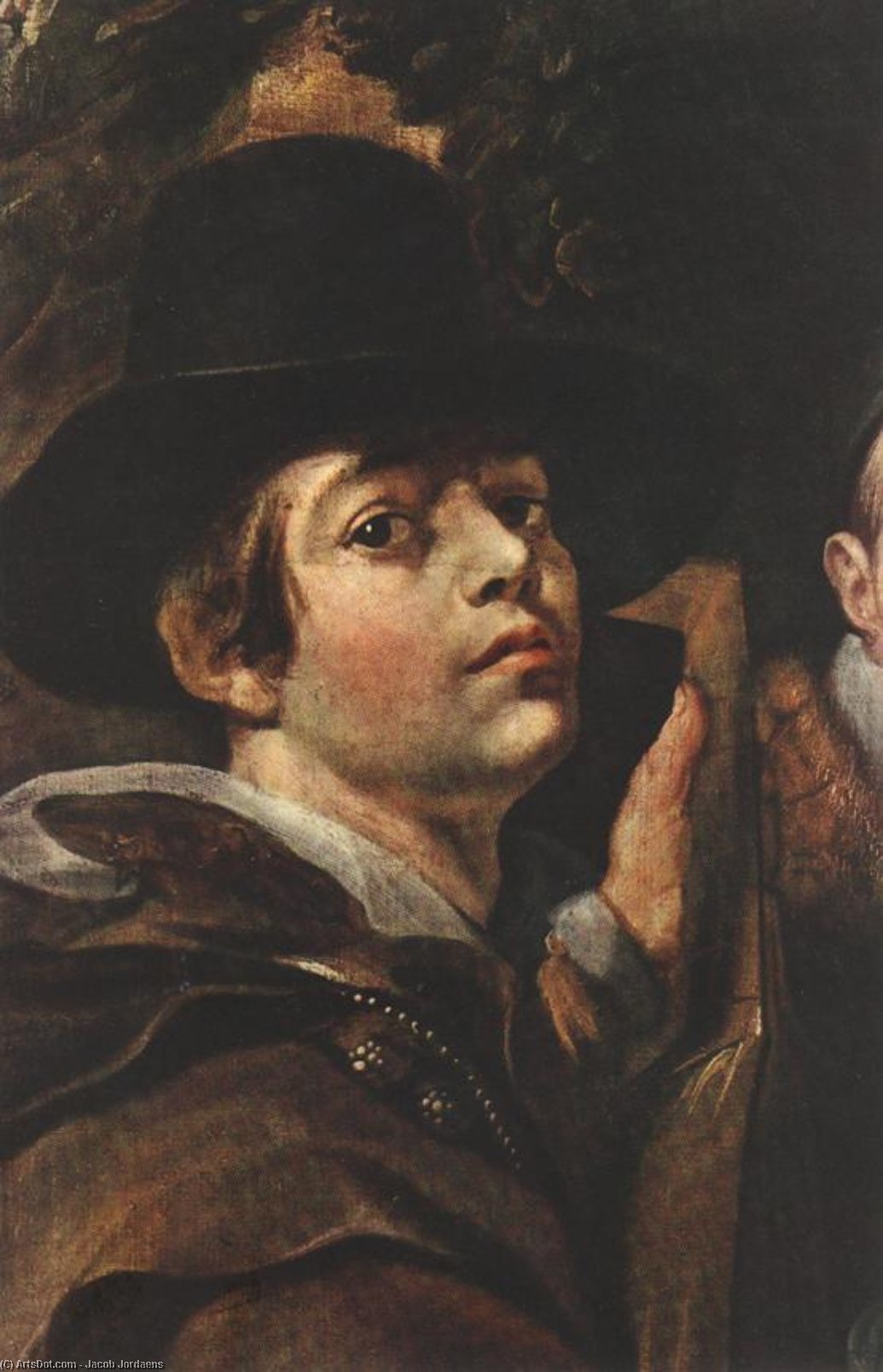
A Window into Domestic Tranquility
In the heart of the Flemish Baroque era, few works capture the profound intimacy of human connection as tenderly as Jacob Jordaens’ Self-Portrait among Parents, Brothers and Sisters. Created in 1615, this masterpiece serves as much more than a mere biographical record; it is a soulful exploration of identity woven into the fabric of familial love. As we gaze upon this detail, we are drawn into a moment of quiet contemplation, where the artist’s youthful face, framed by a dark, wide-brimmed hat, seems to drift between the physical presence of his kin and an internal world of thought. The painting transcends the traditional boundaries of portraiture, offering a window into a domestic life that is both grounded in reality and elevated by a sense of humanist dignity.
The emotional resonance of the piece lies in its ability to make the viewer feel like an unobserved guest at a private gathering. There is a palpable sense of melancholy mixed with peace, as Jordaens captures not just the likenesses of his family, but the very atmosphere of their shared existence. For the collector or the lover of fine art, this work offers a rare opportunity to possess a fragment of history that celebrates the enduring strength of ancestral bonds and the quiet beauty found in everyday moments.
Mastery of Light and Earthy Realism
Technically, the painting is a triumph of the Antwerp School’s distinctive approach to the Baroque aesthetic. Eschewing the overly polished and often artificial grandeur seen in Italian contemporaries, Jordaens embraced an earthy realism that feels strikingly modern. His training under masters like Adam van Noort allowed him to manipulate oil paint with extraordinary precision, creating textures that invite the eye to linger. One can almost feel the weight of the heavy black fabric of his hat and the crispness of the white collar against his skin.
The use of light is particularly masterful; a soft, naturalistic glow illuminates the subject's countenance, casting gentle shadows that lend a three-dimensional depth to the composition. This interplay of chiaroscuro does not merely serve a decorative purpose but acts as a psychological tool, highlighting the introspective gaze of the young artist. For interior designers seeking to add character to a space, such a painting provides a sophisticated focal point, bringing a sense of warmth, depth, and historical weight to any room.
A Legacy of Flemish Humanism
To understand this work is to understand the spirit of 17th-century Flanders. During this period, there was a burgeoning movement toward portraying the "honest" life—celebrating the virtues of stability, family, and the joys of the common man. Jordaens, a native of Antwerp, remained deeply rooted in his local culture, and this painting reflects that devotion. By placing himself within a tableau of parents and siblings, he elevates the domestic sphere to a subject worthy of high art, challenging the era's preference for distant mythological or religious allegories.
The symbolism within the larger composition—often featuring elements like dogs to represent loyalty or shared meals to signify prosperity—reinforces a narrative of continuity and devotion. Owning a reproduction of such a significant work allows one to surround themselves with the values of the Flemish Masters: a profound respect for heritage, an appreciation for the tactile beauty of the natural world, and a celebration of the human spirit in all its quiet, contemplative glory.