A Masterpiece of Flemish Warmth and Devotion
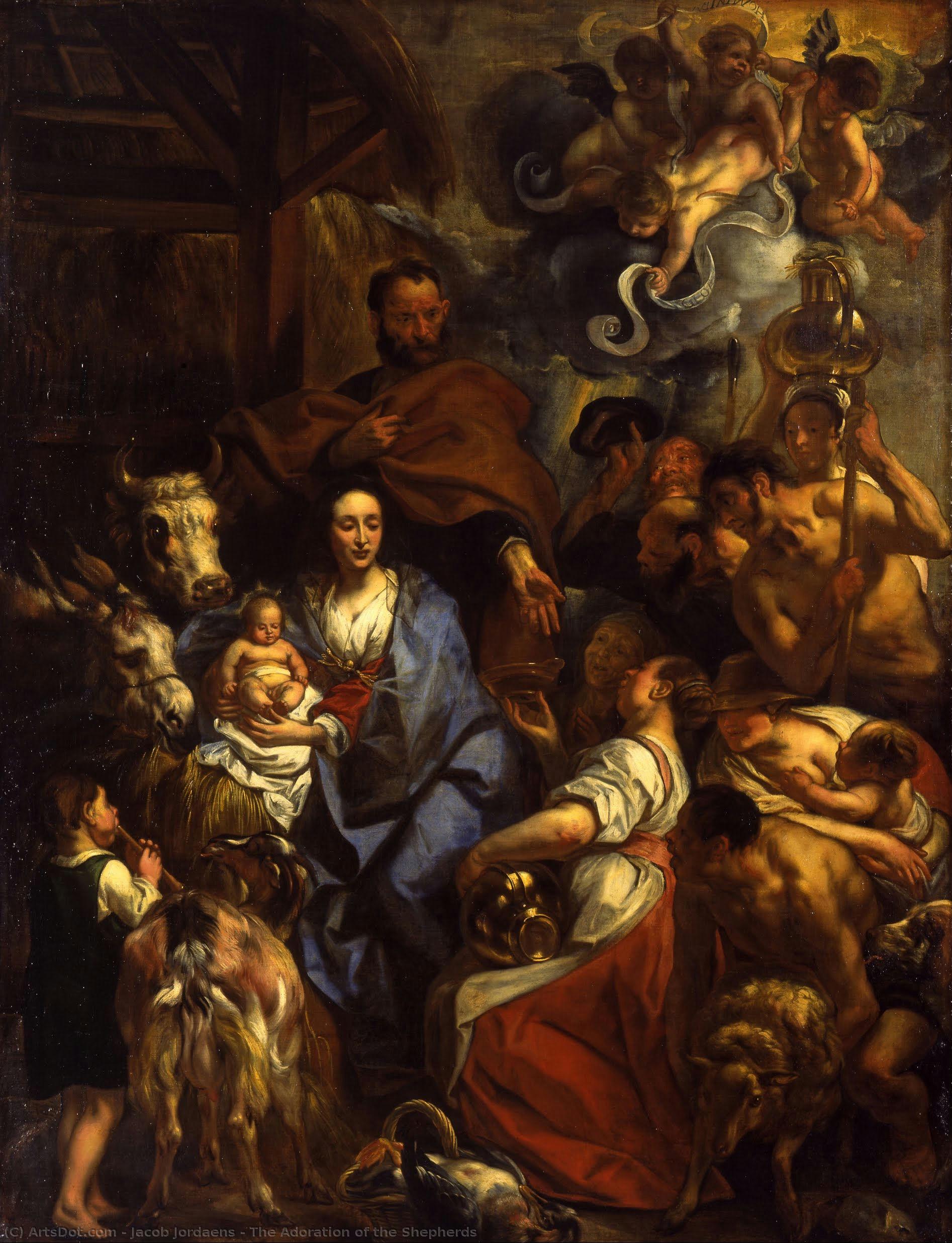
In the grand tradition of the Flemish Baroque, Jacob Jordaens’ The Adoration of the Shepherds stands as a profound testament to the beauty found in the humble and the earthly. This sweeping composition invites the viewer into a sacred moment that feels remarkably intimate, stripping away the distant divinity often found in Renaissance works to replace it with a palpable, breathing reality. At the heart of this celestial encounter is Mary, cradling the infant Jesus with a tenderness that anchors the entire scene. Surrounded by a diverse gathering of shepherds and onlookers, the painting captures the precise moment where the divine intersects with the everyday, creating a narrative that is as much about human connection as it is about religious awe.
Jordaens, a master who found his greatest inspiration in the vibrant life of Antwerp, utilizes a robust and earthy palette to bring this biblical event to life. The technique is characterized by a rich, tactile quality; one can almost feel the coarse wool of the sheep, the sturdy presence of the horses, and the weathered skin of the shepherds. Unlike the ethereal, light-filled canvases of some of his contemporaries, Jordaens employs a dramatic use of chiaroscuro, where deep shadows and warm, golden highlights dance across the figures. This interplay of light does more than just define form; it directs the eye through the complex arrangement of bodies, leading the observer from the periphery of the crowd toward the luminous center of the Christ child.
Symbolism and the Beauty of the Mundane
Every element within this expansive canvas serves a purpose beyond mere decoration. The inclusion of animals—the watchful sheep and the sturdy horse—serves to ground the miraculous event in the natural world, reminding the viewer that the Nativity is an event rooted in the cycle of life and the stewardship of the earth. There is a profound symbolism in the way Jordaens integrates these creatures; they are not mere background elements but silent witnesses to the miracle. The presence of the clock-like detail in the upper reaches of the composition subtly hints at the intersection of eternal time with the fleeting moments of human history, suggesting that this singular night has implications that stretch far beyond the immediate scene.
For the discerning collector or interior designer, this painting offers more than just a historical window; it provides a commanding presence capable of transforming a space. The sheer scale of the work—measuring an impressive 205 x 269 cm—allows for a breathtaking display of detail that rewards prolonged contemplation. Whether placed in a formal gallery setting or used as a focal point in a richly textured room, a high-quality reproduction of this masterpiece brings with it an atmosphere of timelessness and quiet grandeur. It is a piece that speaks to the soul, evoking emotions of peace, reverence, and a deep appreciation for the enduring power of light and shadow.