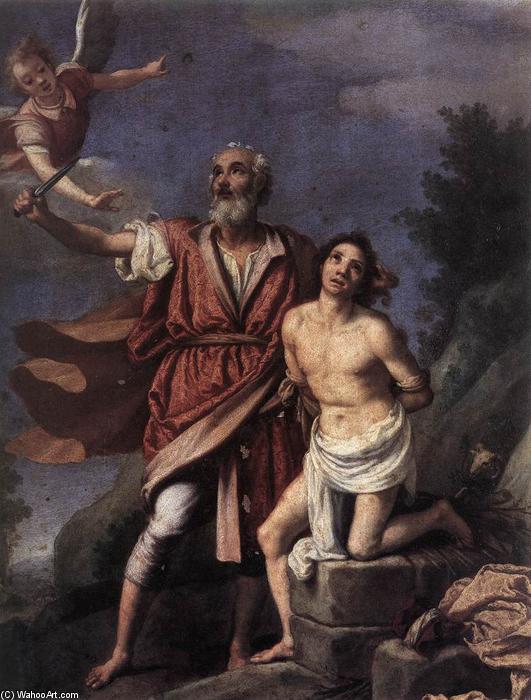
The Sacrifice of Isaac by Jacopo da Empoli
Jacopo Chimenti – later known as Jacopo da Empoli – stands as a pivotal figure in the artistic landscape of Florence during the transitional era between High Renaissance idealism and Mannerist subjectivity. Born in 1551, he inherited an artistic lineage marked by tradition yet propelled forward by innovation, immersing himself in the stylistic currents shaping Italy’s cultural identity.
His formative years witnessed the gradual decline of classical harmony and proportion, replaced by a preoccupation with emotion and distortion – hallmarks of Mannerism. This pivotal shift positioned Empoli at the forefront of artistic experimentation, fostering collaborations that bridged these distinct aesthetic approaches. His early apprenticeship under Maso da San Friano instilled in him a mastery of draughtsmanship and established a foundation for his subsequent explorations.
The masterpiece examined here, “Sacrifice of Isaac,” exemplifies Empoli’s signature style: a deliberate restraint combined with meticulous detail. Executed around 1615-1620 on canvas using oil paint, the artwork embodies the spirit of the Baroque period while retaining an intellectual rigor characteristic of Empoli's artistic vision.
Stylistic Analysis and Technique
Empoli’s approach to painting is defined by “chiaroscuro,” a technique championed by Leonardo da Vinci and perfected by Caravaggio. This masterful manipulation of light and shadow creates dramatic depth and volume, drawing the viewer’s eye into the scene's emotional core. Observe how Empoli utilizes subtle gradations of tone to illuminate Abraham and Isaac, highlighting their figures against the enveloping darkness of the background – a deliberate choice that amplifies the narrative tension.
The artist’s meticulous attention to detail extends beyond mere representation; it reflects a profound understanding of artistic principles. The rendering of drapery folds, facial expressions, and anatomical precision demonstrates Empoli's commitment to achieving realism while simultaneously conveying psychological nuance. This careful craftsmanship elevates “Sacrifice of Isaac” beyond a simple depiction of biblical scripture.
Historical Context and Symbolism
"Sacrifice of Isaac" resides within the broader context of the Counter-Reformation, a period marked by fervent religious fervor and artistic patronage aimed at reaffirming Catholic dogma. Commissioned during this era, the painting reflects the Baroque preoccupation with dramatic narrative and emotional intensity – themes central to conveying spiritual truths.
The scene itself draws upon biblical symbolism—the ram representing Isaac’s substitution—underscoring the core theological message of obedience and divine mercy. The angel's intervention serves as a visual reminder of God's compassion, mediating between Abraham’s unwavering faith and the agonizing dilemma posed by sacrifice. Empoli skillfully incorporates these symbolic elements to enrich the artwork’s narrative power.
Emotional Impact and Artistic Legacy
"Sacrifice of Isaac" transcends its historical context, resonating with viewers across centuries due to its profound exploration of human emotion—fear, compassion, and unwavering devotion. Empoli's masterful use of color contributes to this emotive effect, emphasizing the solemn atmosphere and highlighting the central figures against a muted backdrop.
The painting’s enduring popularity testifies to Empoli’s artistic genius and his ability to capture timeless themes that continue to inspire contemplation. Whether appreciated by art historians or cherished as a decorative masterpiece, “Sacrifice of Isaac” remains a testament to Jacopo da Empoli's skill and artistry—a cornerstone of Florentine Baroque painting.