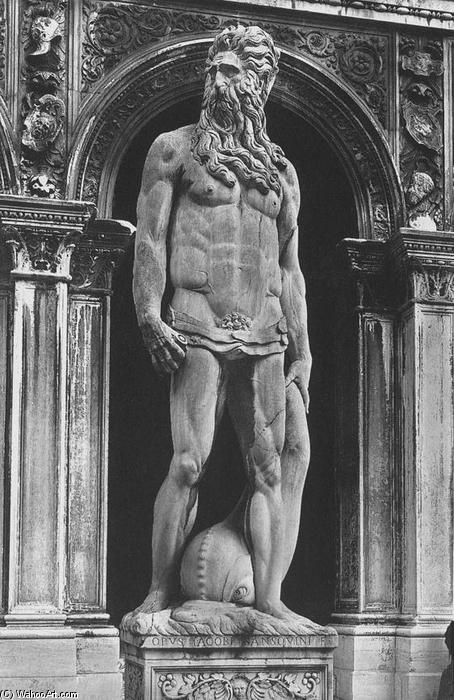
Đakopo Sansovino (1486-1570): Florentinski vajar i arhitekta venecijanskog renesansa. Majstor klasicizma, poznat po bogatim detaljima u delima kao što su Biblioteka Marciana i projektima Trga Svetog Marka.
Istaknuti umetnički objekti i bogata istorija Četvrte Venecije čeka posetioce Palazzu Ducale! Poslikajte si Đačkog palača za živo slikarsko dela Titijana i Veroneza – putovanje kroz srpsku kulturu i umetnost.
Đački palata Venecija, Italijanska umetnost istorije Četvrte Venecije, Tintijanova umetnost, Veroneze majstorstva, Renesans arhitektura, St Markova tržnja Muzej, srpska umetnost kultura
Ita
Jacopo Sansovino’s Neptune: A Testament to Neoclassical Grandeur
Jacopo Sansovino's monumental 1554 sculpture of Neptune stands as a cornerstone of Venetian Renaissance art, embodying the ideals of classical beauty and masterful craftsmanship. Commissioned for Piazza San Marco, Venice, this colossal marble statue captures the essence of Roman mythology—specifically, Poseidon—the god of the sea—a figure revered throughout antiquity for his dominion over turbulent waters and divine authority.
- Subject Matter & Mythology: The sculpture portrays Neptune in a commanding pose, seated upon a throne adorned with intricate carvings reflecting classical motifs. His muscular physique meticulously rendered demonstrates Sansovino’s dedication to anatomical realism—a hallmark of Neoclassical style—drawing inspiration from Greek sculptural traditions.
- Style & Technique: Sansovino's approach aligns perfectly with the Neoclassical movement, prioritizing clarity and balance alongside meticulous detail. Photographically documented by Giovanni Battista Brustamante, the statue’s surface showcases a remarkable level of polish achieved through painstaking carving and polishing—a testament to the sculptor’s skill and patience.
- Architectural Context: Neptune resides within an ornate archway and columns designed by Sansovino himself, further enhancing its grandeur. This architectural setting underscores the sculpture's significance as part of a larger artistic project intended to elevate Piazza San Marco into a symbol of Venetian prestige and civic pride.
The statue’s symbolism extends beyond mere representation; it embodies strength, control, and the unpredictable power of the ocean—qualities that resonated deeply with Renaissance patrons who sought to convey notions of divine majesty and imperial grandeur. Sansovino skillfully utilizes light and shadow to accentuate the texture of the marble, creating a dramatic interplay that draws attention to Neptune’s musculature and drapery.
- Material & Composition: Crafted from Carrara marble—renowned for its purity and translucency—the sculpture exemplifies the artistic standards of its time. Sansovino's masterful composition emphasizes frontal perspective, presenting Neptune as a focal point within the architectural framework—a deliberate choice to convey stability and dignity.
- Emotional Impact: Viewing Neptune evokes a profound sense of awe and reverence—a reflection of the sculpture’s monumental scale and its connection to enduring mythological narratives. It serves as an inspiring reminder of the artistic achievements of the Renaissance, inviting contemplation on themes of power, beauty, and timeless grandeur.
Sansovino's Neptune remains a captivating exemplar of Neoclassical sculpture—a masterpiece that continues to inspire admiration for its technical brilliance and symbolic depth. Its presence in Piazza San Marco solidified Venice’s position as a cultural epicenter during the Renaissance, ensuring its legacy would endure for centuries to come.