A Venetian Masterpiece of Divine Encounter
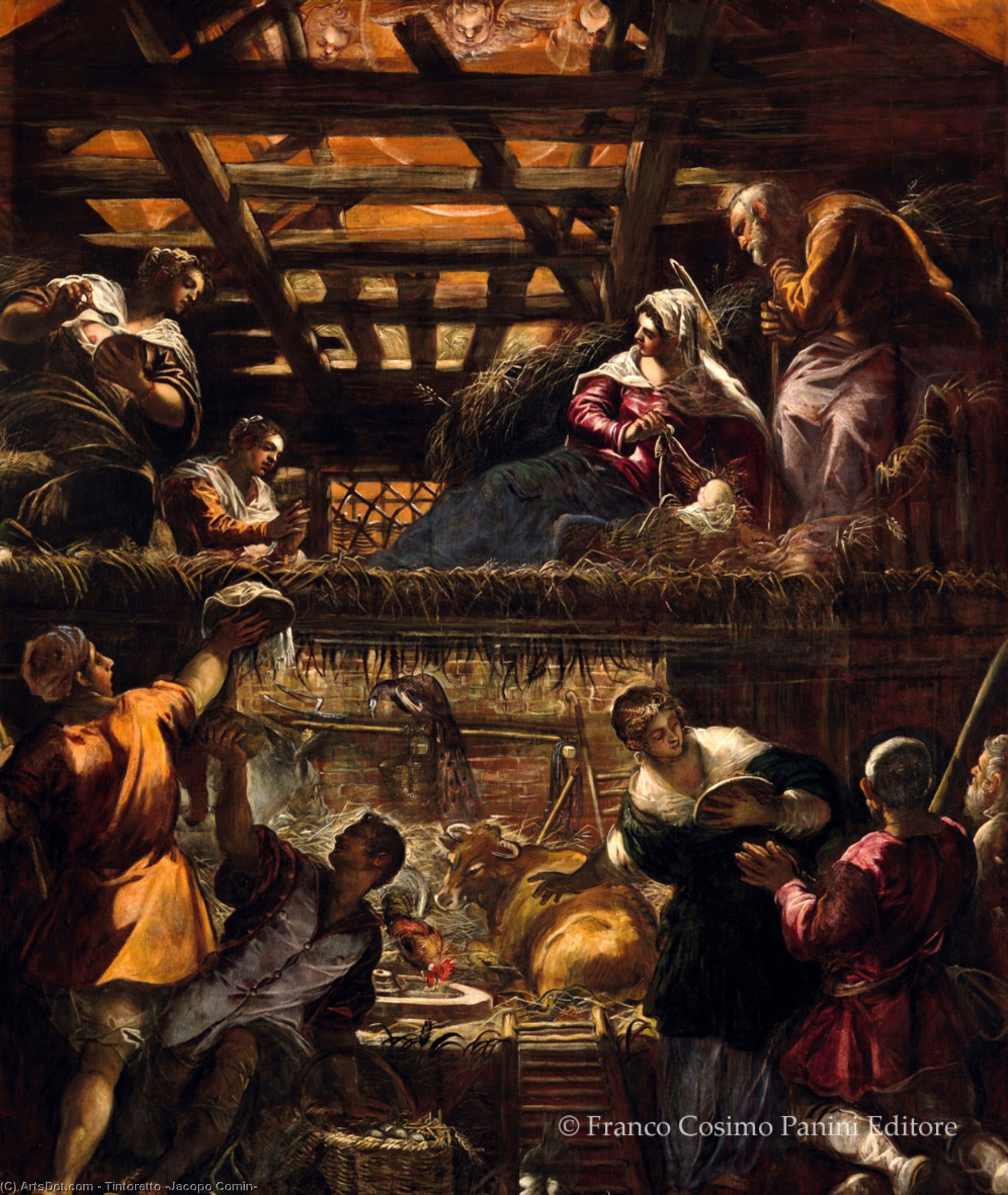
Jacopo Tintoretto’s *The Adoration of the Shepherds*, completed in 1578, is a monumental work – measuring an impressive 542 x 455 cm – that embodies the dramatic intensity and innovative spirit of late Renaissance Venetian painting. Housed within the Scuola Grande di San Rocco in Venice, Italy, this oil on canvas isn’t merely a depiction of a biblical scene; it's a powerful emotional experience rendered with breathtaking skill.
Decoding the Composition
The painting bursts with activity surrounding the central figures of Mary and the infant Jesus. Shepherds, bathed in divine light, kneel in reverence, their faces reflecting awe and humility. Joseph stands slightly apart, a quiet observer to this miraculous event. The inclusion of cattle – one prominently centered, another to the right – adds an earthy realism to the sacred scene, grounding it within a tangible world. Tintoretto masterfully arranges figures across multiple planes, creating depth and drawing the viewer into the heart of the narrative. It’s not a static tableau but a dynamic moment captured in time.
Tintoretto's "Furious" Style
Jacopo Comin, known as “Il Furioso” (The Furious), earned his nickname for his energetic and seemingly unrestrained painting technique. This is vividly apparent in *The Adoration of the Shepherds*. His brushwork is bold and swift, eschewing the meticulous detail favored by some contemporaries. Instead, he prioritizes dramatic effect through expressive gestures, dynamic poses, and a masterful use of light and shadow – a hallmark of his style. While sometimes criticized for its perceived roughness, this very quality contributes to the painting’s raw emotional power.
Historical & Artistic Context
Tintoretto worked during a period of artistic transition in Venice, bridging the High Renaissance with the emerging Baroque style. He was deeply influenced by Titian and Michelangelo, yet forged his own unique path. *The Adoration of the Shepherds* reflects this synthesis – the classical grace inherited from earlier masters combined with a newfound emphasis on drama, movement, and psychological intensity. The painting was created for a religious confraternity, reflecting the importance of devotional art in 16th-century Venice.
Symbolism & Spiritual Resonance
Beyond its narrative content, *The Adoration of the Shepherds* is rich in symbolism. The light emanating from Christ represents divine grace illuminating humanity. The shepherds themselves symbolize the humble and marginalized finding acceptance through faith. Even the animals contribute to the symbolic weight – representing innocence and the natural world acknowledging the divine birth.
The painting serves as a powerful reminder of hope, redemption, and the transformative power of belief.
Emotional Impact & Legacy
*The Adoration of the Shepherds* is not simply a beautiful image; it’s an emotionally charged experience. The dramatic lighting, dynamic composition, and expressive figures evoke feelings of awe, reverence, and profound spiritual connection.
Tintoretto's ability to convey such intense emotion through paint cemented his place as one of the most important artists of the Venetian Renaissance. His influence can be seen in the works of later masters, solidifying his enduring legacy.
Exploring Further Works
- The Circumcision (440 x 482 cm, Scuola Grande di San Rocco, Venice, Italy)
- The Flight into Egypt (detail) (Scuola Grande di San Rocco, Venice, Italy)
- Allegory of Faith (90 x 190 cm, Scuola Grande di San Rocco, Venice, Italy)
For those seeking to bring the beauty and drama of Tintoretto’s work into their own spaces, high-quality handmade oil painting reproductions are available, offering a tangible connection to this artistic genius.