A Portrait of Faith and Justice: Exploring Jacopo Zucchi’s “Age of Silver”
The Florentine Baroque, burgeoning under the patronage of Ferdinando I de' Medici, witnessed an explosion of artistic innovation—a deliberate rejection of Renaissance ideals in favor of dramatic expression and psychological complexity. Among the luminaries shaping this transformative era was Jacopo Zucchi (c. 1540 – 1596), whose masterpiece “Age of Silver,” completed around 1576-1581, exemplifies the stylistic hallmarks of Mannerism while simultaneously resonating with profound theological significance. This monumental oil on panel painting transcends mere visual representation; it’s a carefully constructed meditation on faith, justice, and the human condition—a testament to Zucchi's mastery of disegno and his unwavering commitment to conveying emotion through meticulous observation.
The Style of Mannerism: Distortion and Illusion
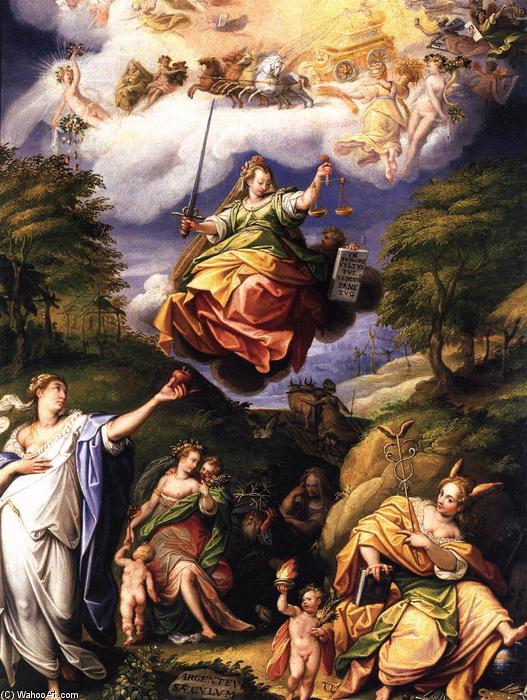
Zucchi’s approach distinguishes itself sharply from the serene beauty championed by Raphael and Michelangelo. Mannerism deliberately eschewed idealized proportions and harmonious compositions, prioritizing unsettling perspectives and exaggerated gestures to heighten emotional impact. “Age of Silver” embodies this aesthetic ethos perfectly. Figures are positioned in asymmetrical poses—a woman dominating the central frame—creating a dynamic tension that draws the viewer’s eye across the canvas. The artist employs subtle distortions of form, subtly elongating limbs and flattening planes, generating an illusionistic depth that defies conventional realism. These stylistic choices weren't merely decorative; they served to express inner turmoil and intellectual contemplation—themes prevalent in humanist thought during Zucchi’s time.
Symbolism Embedded in Composition
The painting’s iconography is rich with symbolic references rooted in Christian theology. At the heart of the scene stands a woman holding scales, representing justice and divine judgment. This figure isn't merely depicted statically; she exudes authority and compassion simultaneously—a deliberate juxtaposition designed to convey the multifaceted nature of righteousness. Surrounding her are angelic figures ascending towards heaven, symbolizing spiritual aspiration and transcendence. The inclusion of illuminated books suggests contemplation and erudition – virtues valued by humanist scholars like Zucchi himself. Each element contributes to a narrative that speaks to the moral dilemmas faced by humanity and underscores the importance of ethical conduct in pursuit of salvation.
Technique: Precision and Atmospheric Depth
Zucchi’s technical prowess is evident throughout “Age of Silver.” He meticulously renders textures with remarkable accuracy, capturing the sheen of fabric and the subtle nuances of skin tones—a hallmark of Florentine painting during this period. However, unlike his predecessors who prioritized meticulous detail above all else, Zucchi skillfully manipulates atmospheric perspective to create a palpable sense of depth and luminosity. Softly diffused light illuminates the figures and drapery, enhancing their sculptural qualities and fostering an immersive experience for the viewer. This masterful blending of observation and illusion underscores Zucchi’s dedication to capturing not just what is seen but also how it feels—a crucial element in conveying the painting's emotional resonance.
Historical Context: Medici Patronage and Spiritual Renewal
“Age of Silver” was commissioned by Ferdinando I de' Medici, ruler of Florence and a fervent supporter of humanist scholarship and artistic innovation. The Medicis’ patronage fueled a period of intellectual ferment—a renewed interest in classical learning alongside a burgeoning devotion to Christian piety. Zucchi’s painting reflects this cultural climate, articulating the anxieties and aspirations of his era through its symbolic language and dramatic visual style. It stands as a powerful emblem of Florentine Baroque art—a testament to the enduring legacy of Mannerism and its capacity to inspire contemplation on matters of faith and morality.
- Artist: Jacopo Zucchi
- Year Created: 1576-1581
- Medium: Oil on Panel
- Dimensions: 50 x 39 cm