The
Altarpiece of the Virgin is a stunning oil painting created by
Jacques Daret in 1433. This masterpiece is housed in the
Musée du Petit Palais in Paris, France, and is considered one of the most significant works of Gothic art. The painting's intricate details and harmonious composition make it a must-see for art enthusiasts.
Composition and Symbolism
The
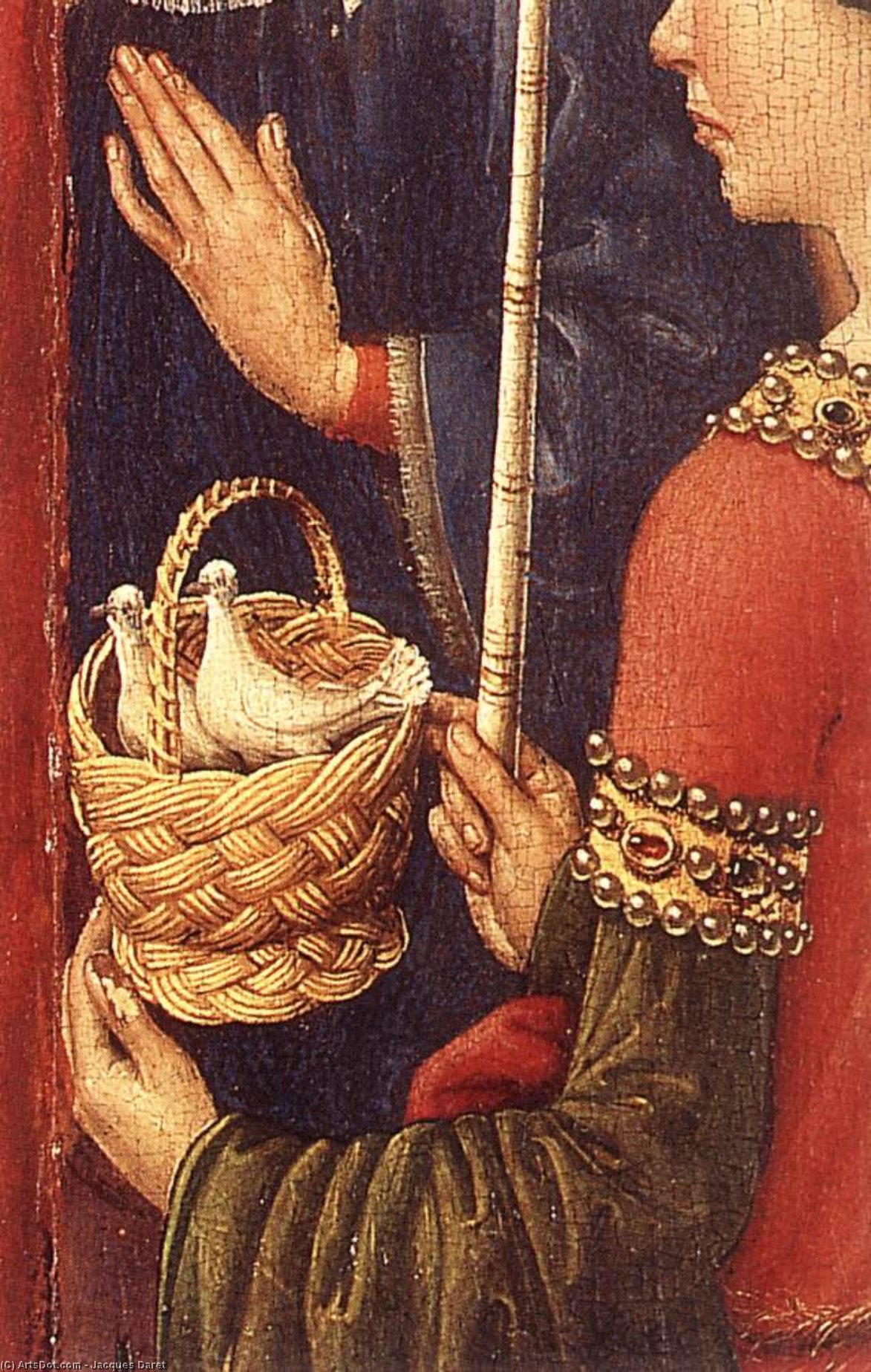
Altarpiece of the Virgin features two figures in the foreground, interacting with each other in a symbolic exchange. One figure holds a basket containing birds or doves, which represent peace or the Holy Spirit in religious art. The other figure holds a staff and gestures towards the basket, possibly indicating an offering. The background features a red curtain, typical of altarpieces, which frames the scene and draws attention to the figures.
Key elements of the painting include fine brushwork, detailed textures, and a limited color palette with dominant tones of red, blue, and gold. These characteristics are common in Gothic art and add depth and meaning to the composition. The
Musée du Petit Palais is home to an impressive collection of French paintings, sculptures, and artifacts, including works by other notable artists such as
Lorenzo Monaco and
Gustave Courbet.
Handmade oil painting reproductions of the
Altarpiece of the Virgin are available at https://ArtsDot.com, allowing art lovers to own a piece of history. The website also offers information on various artists, including Eltono, and their works.
The
Altarpiece of the Virgin by
Jacques Daret is a remarkable example of Gothic art, showcasing the artist's skill and attention to detail. This painting is a must-see for anyone interested in art history and the works of
Jacques Daret.