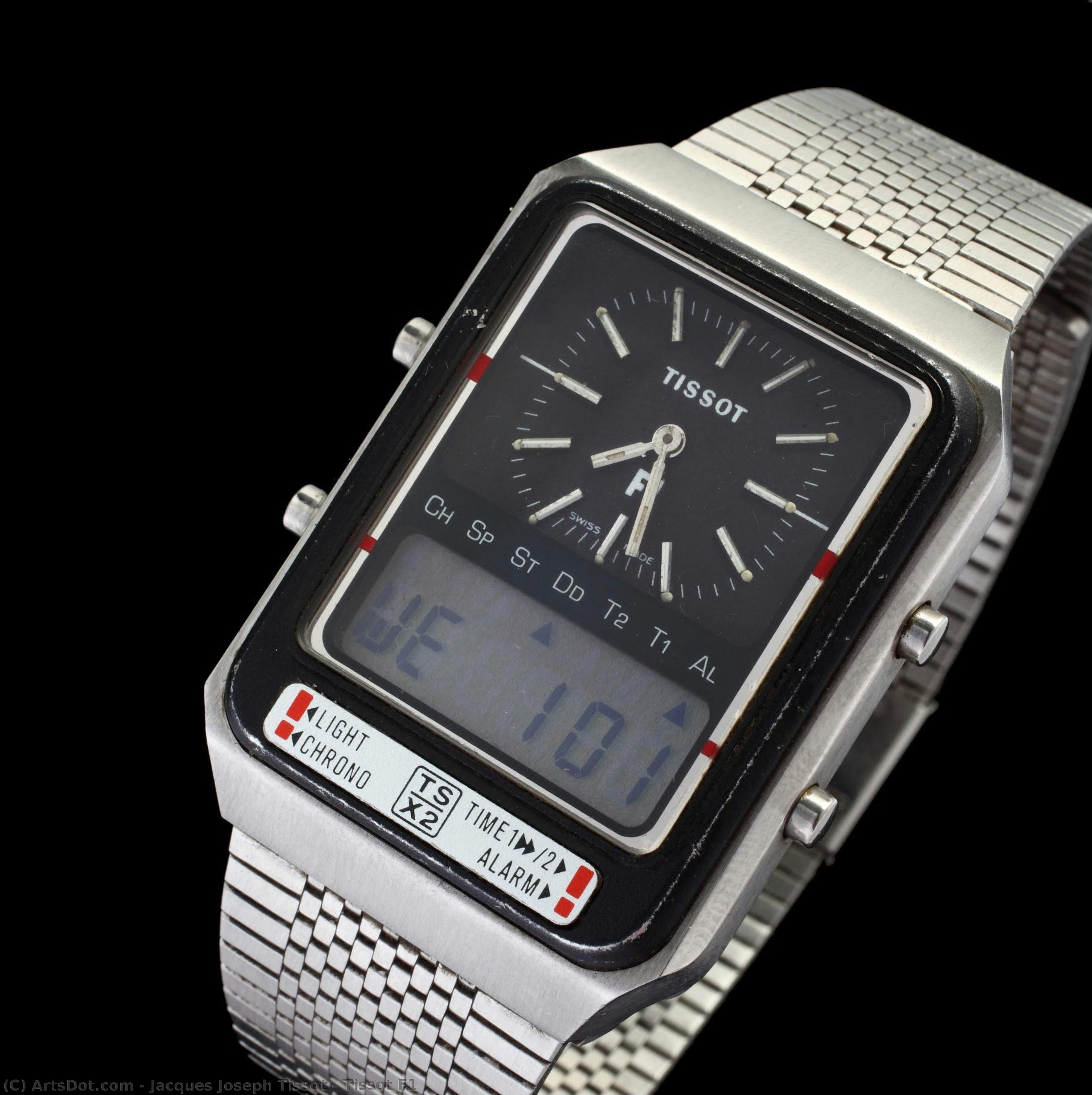
Discover 'Tissot F1,' a stunning vintage Tissot watch painting by Jacques Joseph Tissot. Capturing Belle Époque elegance, this detailed artwork showcases precision engineering & Swiss craftsmanship.
Жак Жозеф Тиссот био је француски сликар који се најбоље познаје по својим жанровским делима из периода Беле Епохе и викторијанске моде и бибљским сценама.Његолова реалистична техника и утицај Јапонизма чини га једним од највећих сликара Француске XIX века.
The Museum of Arts and Crafts, Zagreb stands as Croatia’s premier institution for preserving traditional crafts while fostering contemporary design. Established in 1880, it houses over 160,000 objects showcasing architecture, ceramics, clocks, textiles, paintings, and more—a testament to Croatian artistic evolution.
A Symphony of Precision and Nostalgia
In the realm of fine art reproductions, few pieces capture the intersection of mechanical mastery and cultural zeitgeist as poignantly as this depiction of the vintage Tissot F1 wristwatch. This work is far more than a mere photographic study of a timepiece; it serves as a tangible window into 1977, an era defined by the exhilarating pulse of Formula One racing and the dawn of high-tech innovation. Through a meticulous lens, the viewer is invited to witness a moment where Swiss horological excellence meets the aerodynamic spirit of motorsport. The composition centers on the watch's polished silver casing, which gleams against a profound, obsidian background, creating a sense of dramatic isolation that forces the eye to confront every minute detail of its construction.
The artistry lies in the subtle interplay of light and shadow, a technique that breathes life into the metallic surfaces. Studio lighting is employed with surgical precision, casting specular highlights that dance across the watch's contours, much like the sunlight reflecting off a racing helmet mid-circuit. This careful manipulation of light does more than reveal form; it evokes the shimmering brilliance of the Lotus Racing era, a period when Tissot and the legends of the track were inextricably linked. The contrast between the stark black void of the background and the luminous silver tones creates a visual tension that is both captivating and sophisticated, making it an ideal focal point for a modern, minimalist interior.
The Intersection of Form and Function
Beyond its aesthetic allure, the piece explores the profound symbolism of precision. The design of the Tissot F1 embodies the transition from traditional craftsmanship to the digital frontier. One can observe the complex dialogue between the analog dial, with its radial lines emanating from the center, and the structured, grid-like geometry of the digital LCD screen. This duality represents a pivotal moment in human history—the marriage of classical mechanical movement with the burgeoning era of quartz technology. The presence of the chronograph function and the integrated alarm clock serves as a reminder of the watch's role as an essential tool for the high-stakes environment of professional racing, where every millisecond is a matter of triumph or defeat.
For the discerning collector or interior designer, this reproduction offers a rich tapestry of textures and shapes. The smooth, reflective surfaces of the metal casing contrast beautifully with the matte texture of the digital display and the intricate, rhythmic pattern of the linked bracelet. These elements provide a tactile depth that transcends the two-dimensional plane. To possess such a piece is to hold a fragment of history—a tribute to the bold geometric shapes and minimalist design principles that defined late twentieth-century industrial art. It is an evocative work that resonates with those who find beauty in engineering, offering a sense of timelessness that bridges the gap between the heritage of the past and the technological aspirations of the future.