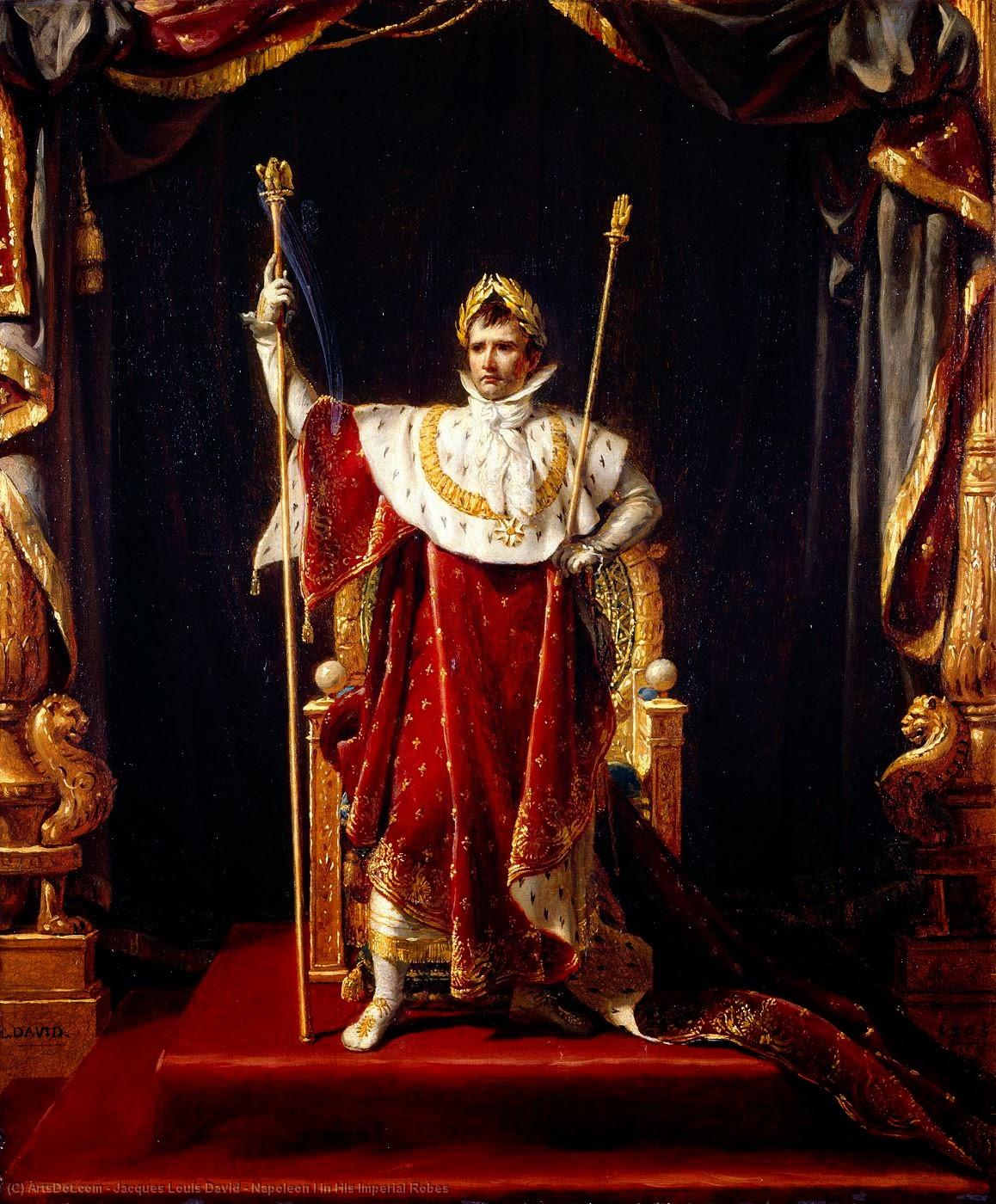
A powerful Neoclassical portrait of Napoleon I in his imperial robes by Jacques-Louis David captures the grandeur of an era through dramatic light and classical ideals, inviting you to explore this masterpiece of history.
Jacques-Louis David je francuski slikar koji je poznat po svom stilu klasicizma i smatra se glavnim predstavnikom tog umetničkog pokreta. Najpoznatiji dela su „Smrt Marata“ i „Napoleon prelazi Alpe“, koje oslikuju istorijske trenutke Francuske revolucije i Napoleonskog imperija, dok njegov portreti prikazuju društvo tog vremena. David je bio jedan od najvažnijih umetnika svog vremena jer je svojim
Istražite Palais des Beaux-Arts u Lilleu, vodeći francuski muzej umetnosti! Otkrijte remek-dela Rafaela, Rubensa, Delakroa i drugih. Čeka vas veličanstven barok ambijent uz vekove evropskog umetničkog nasleđa.
Napoleon I in His Imperial Robes: A Portrait of Power and Ideals
The monumental painting “Napoleon I in His Imperial Robes” by Jacques Louis David stands as an enduring emblem of Napoleonic grandeur—a testament to artistic ambition and the fervent desire to commemorate a pivotal moment in European history. Completed in 1805, shortly after Napoleon’s coronation as Emperor of France, this oil on canvas resides within the prestigious Musée des Beaux Arts in Lille, France, cementing its place amongst the finest achievements of Neoclassicism. David's masterful depiction transcends mere representation; it embodies a carefully constructed narrative designed to elevate Napoleon’s persona and solidify his reign’s legacy.
Style and Technique: The Language of Classical Idealism
David’s stylistic approach firmly anchors itself in the principles of Neoclassicism, rejecting the ornate excesses of Rococo art for a disciplined aesthetic rooted in Greco-Roman ideals. He meticulously studied classical sculptures—particularly those celebrating heroic figures—drawing inspiration from artists like Michelangelo and Bernini to achieve an unparalleled level of realism combined with idealized beauty. The painting’s composition is deliberately austere, dominated by horizontal lines that convey stability and authority. David employs chiaroscuro – the dramatic interplay of light and shadow – to sculpt Napoleon's form, emphasizing musculature and conveying a sense of regal dignity. Precise brushstrokes contribute to an illusionistic surface texture that convincingly mimics marble, mirroring the sculptural traditions of antiquity.
Historical Context: Paris Ascendant
The creation of “Napoleon I in His Imperial Robes” coincided with a transformative period for Paris—a city undergoing rapid modernization and asserting itself as a dominant force on the European stage under Napoleon’s rule. Recognizing the importance of projecting imperial prestige, David was commissioned by Louis XVIII to commemorate Napoleon's coronation, marking a deliberate effort to rehabilitate his image after the tumultuous years of the French Revolution. This project mirrored broader cultural initiatives aimed at reviving classical values and celebrating France’s military victories—a conscious response to the republican fervor that had briefly supplanted monarchy. The Louvre Museum itself was reimagined during this era as the Musée Napoleon, showcasing artworks seized from conquered territories and reinforcing the narrative of Napoleonic triumph.
Symbolism: Regal Dignity and Divine Authority
Beyond its technical brilliance, “Napoleon I in His Imperial Robes” is laden with symbolic significance. Napoleon stands upon a scarlet carpet—a color traditionally associated with royalty—underscoring his elevated status. The gold border surrounding the carpet symbolizes wealth and imperial splendor. Holding two scepters – emblems of power and sovereignty – he embodies divine authority, mirroring depictions of Roman emperors and asserting Napoleon’s claim to rule as ordained by God. The solemn gaze of Napoleon conveys confidence and resolve, projecting an image of unwavering leadership—a deliberate articulation of his ambition to establish a new order based on virtue and reason.
Emotional Impact: Reverence for Glory
The painting evokes a profound sense of reverence for Napoleonic glory—capturing not merely the physical appearance of the emperor but also his inner conviction. David’s masterful portrayal inspires contemplation on themes of power, duty, and legacy. It serves as a reminder of Napoleon's ambition to reshape Europe according to classical ideals – an aspiration that continues to resonate with viewers today. A high-quality reproduction allows one to appreciate the subtle nuances of David’s technique and immerse oneself in the grandeur of Napoleonic France.