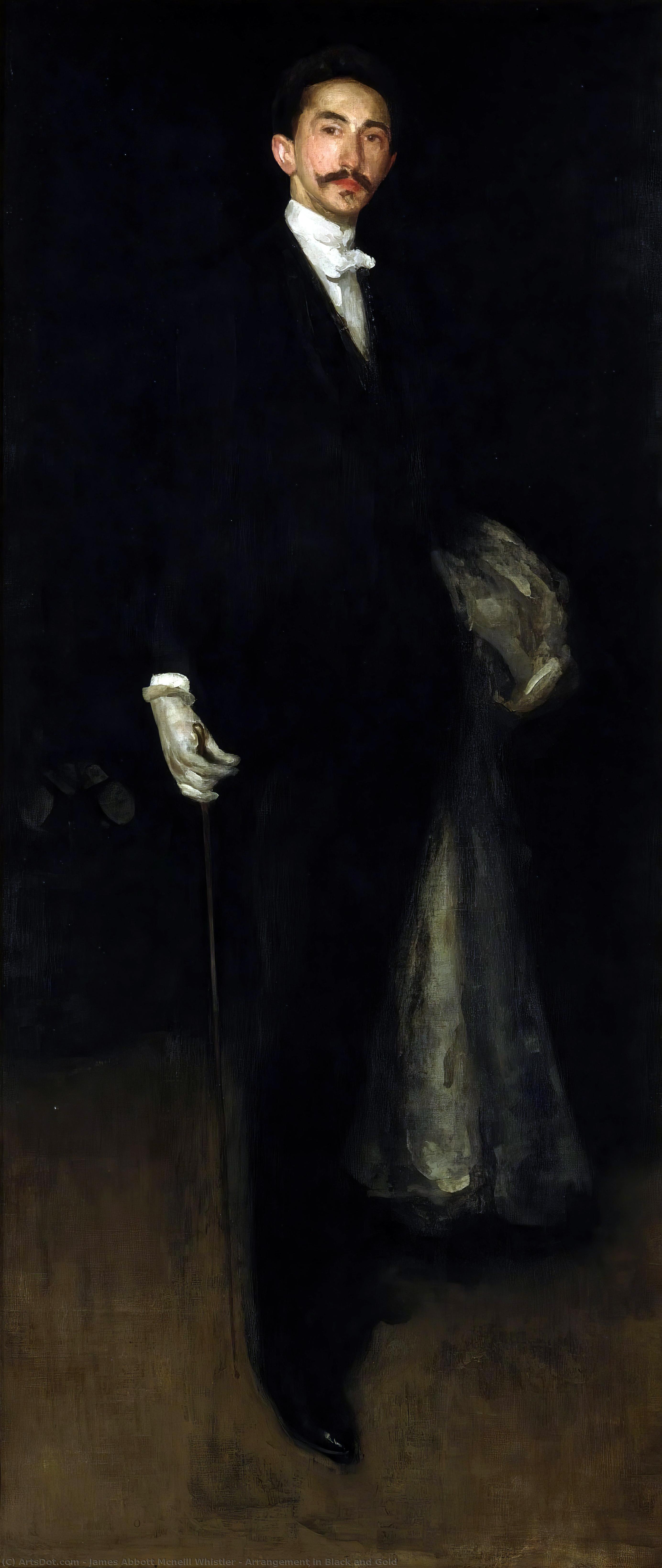
Delicate black and white portrait by James Abbott McNeill Whistler embodies the aesthetic movement's focus on pure visual beauty—a man in formal attire exudes quiet dignity against a minimalist backdrop. Explore this iconic piece and bring timeless elegance into your home.
Lowell
United States of America
James Abbott McNeill Whistler
james abbot mcneill whistler, james mcneill whistler, whistler
Džems Abot Meknil Visler, američki slikar Tonalizma i Estetizma. Poznat po portretu 'Majka', nokturnima i filozofiji 'umetnost radi umetnosti'. Ključna figura viktorijanske ere!
Tonalizam, Estetizam
Estetski pokret
Velázquez
July 14, 1834
1903
James Abbott McNeill
The Soul of Aestheticism
In the heart of the Victorian era, a period often defined by heavy-handed moral lessons and didactic storytelling, James Abbott McNeill Whistler offered a radical and transformative alternative. His Arrangement in Black and Gold stands as a cornerstone of the Aesthetic movement, embodying the profound belief that art should exist solely for its own intrinsic beauty. The painting captures a solitary gentleman, dressed with impeccable formality in a suit and tie, caught in a moment of profound introspection. As he gazes downward, his posture conveys a sense of quiet dignity and refined taste that transcends the need for a traditional narrative. There is no overt drama or conflict presented here; instead, the viewer is invited into a space of pure, unadulterated beauty where form and atmosphere reign supreme.
A Symphony of Tone and Texture
Whistler’s mastery lies in his rejection of vibrant, distracting colors in favor of a sophisticated, monochromatic palette. Through a technique known as harmonium, he layered thin, delicate washes of paint to achieve a velvety smoothness that seems to glow with a subtle, inner light. This meticulous approach allows for incredible tonal modulation, where the deep blacks and rich golds dance together in seamless transitions. The subject's clothing and the subtly textured background are treated with such care that the painting feels less like a literal depiction of a person and more like a carefully composed musical arrangement. This focus on tonal harmony over explicit representation allows the viewer to experience the work as a sensory exploration of light, shadow, and texture, making every glance at the canvas a new discovery of subtle gradations.
Timeless Elegance for the Discerning Collector
For the interior designer or the art enthusiast, this piece offers an unparalleled sense of understated luxury and emotional depth. The deliberate choice of black and gold provides a sophisticated anchor for any curated space, bringing an atmosphere of contemplative calm and historical weight to a room. Because the work avoids the clutter of explicit symbolism in favor of pure aesthetic arrangement, it remains eternally modern, capable of complementing both classical estates and contemporary minimalist settings. To incorporate a high-quality reproduction of this masterpiece into one's collection is to invite a piece of art history into the home—a piece that celebrates the enduring power of quiet elegance and the timeless allure of artistic purity.