Discover James Eckford Lauder (1811-1869), a Scottish artist famed for historical paintings & portraits, including scenes from Sir Walter Scott's novels. RSA member.
Откријте ремек-дела западне umetности у Националној галерији Лондона! Гледајте Ван Гогха, Ремарнпта и још много тога у прелеп музеј на Трга Трафалга. Улаз је бесплатан!
Шкотска уметност, Национална галерија, Единбург, Шкотска, Титијан, Моне, Плејфар, неокласика, фин уметност, ренесанса, импресионизам, шкотски колористи
Национална галерија Шкотске
Преко 1,3 милиона
Национална фин уметност
1859
A Morning of Literary Nostalgia
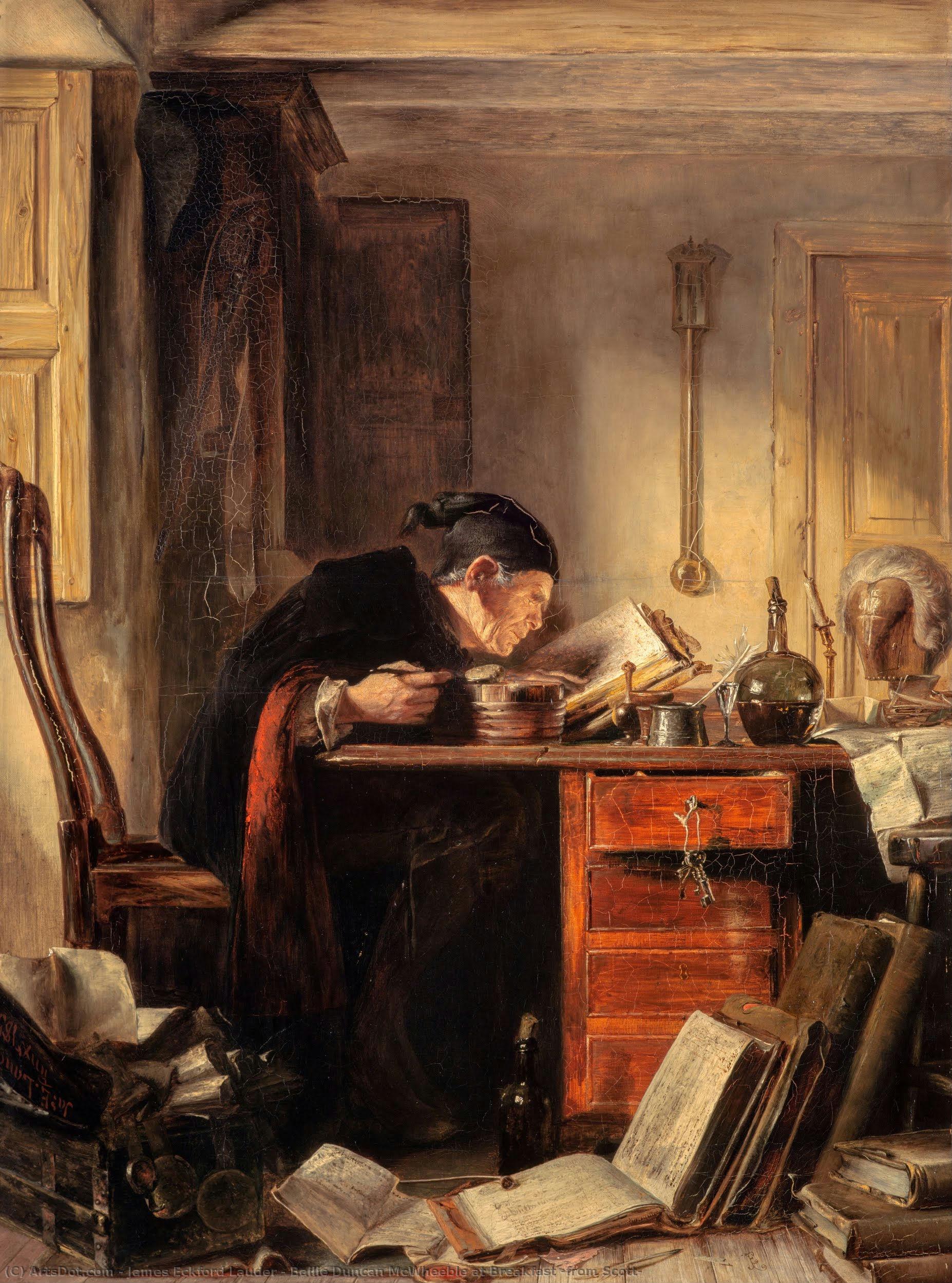
In the quiet, amber-hued moments of a mid-nineteenth-century morning, James Eckford Lauder invites us into a scene that feels less like a mere painting and more like a captured breath from a lost era. Bailie Duncan McWhelee at Breakfast serves as a masterful window into the romanticized Scottish past, drawing profound inspiration from the legendary literary landscapes of Sir Walter Scott. The canvas presents an intimate tableau of two men seated at a table laden with the humble yet significant artifacts of daily life—books, bottles, and cups that suggest a slow, contemplative start to the day. There is a palpable sense of companionship in the way the subjects occupy the space, their presence anchored by the heavy, domestic atmosphere of a kitchen or dining room that feels both lived-in and timeless.
Lauder, a painter deeply rooted in the traditions of Edinburgh’s artistic elite, utilizes his mastery of light and shadow to breathe life into this domestic vignette. The technique is characteristic of the Victorian era's penchant for narrative realism, where every object serves as a silent storyteller. Notice how the light falls across the table, catching the rim of a cup or the spine of a book, creating a rhythmic interplay between the subjects and their surroundings. This careful manipulation of chiaroscuro does more than just define form; it imbues the scene with a sense of warmth and historical weight, making the viewer feel as though they have stumbled upon a private moment of reflection during a casual gathering of friends or kin.
The Art of Storytelling Through Detail
Beyond the immediate visual charm, the painting functions as a rich tapestry of cultural symbolism. The inclusion of books and scholarly items hints at the intellectual pursuits that defined the era's upper and middle classes, bridging the gap between the ruggedness of Scottish tradition and the refined sensibilities of the Romantic movement. The background figures, though softly rendered and secondary to the main protagonists, add a layer of social depth, suggesting a bustling household where history and daily routine coexist seamlessly. For the discerning collector or interior designer, this piece offers more than just aesthetic beauty; it provides a profound sense of heritage and a connection to the soulful, storytelling traditions of 1854 Scotland.
Integrating a high-quality reproduction of this work into a contemporary space allows for a sophisticated dialogue between the past and the present. The painting’s muted, earthy palette and its focus on intimate human connection make it an ideal centerpiece for a study, a library, or a formal dining room where one wishes to evoke feelings of stability, intellect, and warmth. It is a work that does not merely decorate a wall but enriches the very atmosphere of a home, inviting guests to linger and contemplate the enduring beauty of a well-told story.