Allegory: The ‘Victory’ Monolith – A Monument to Ambition and Uncertainty
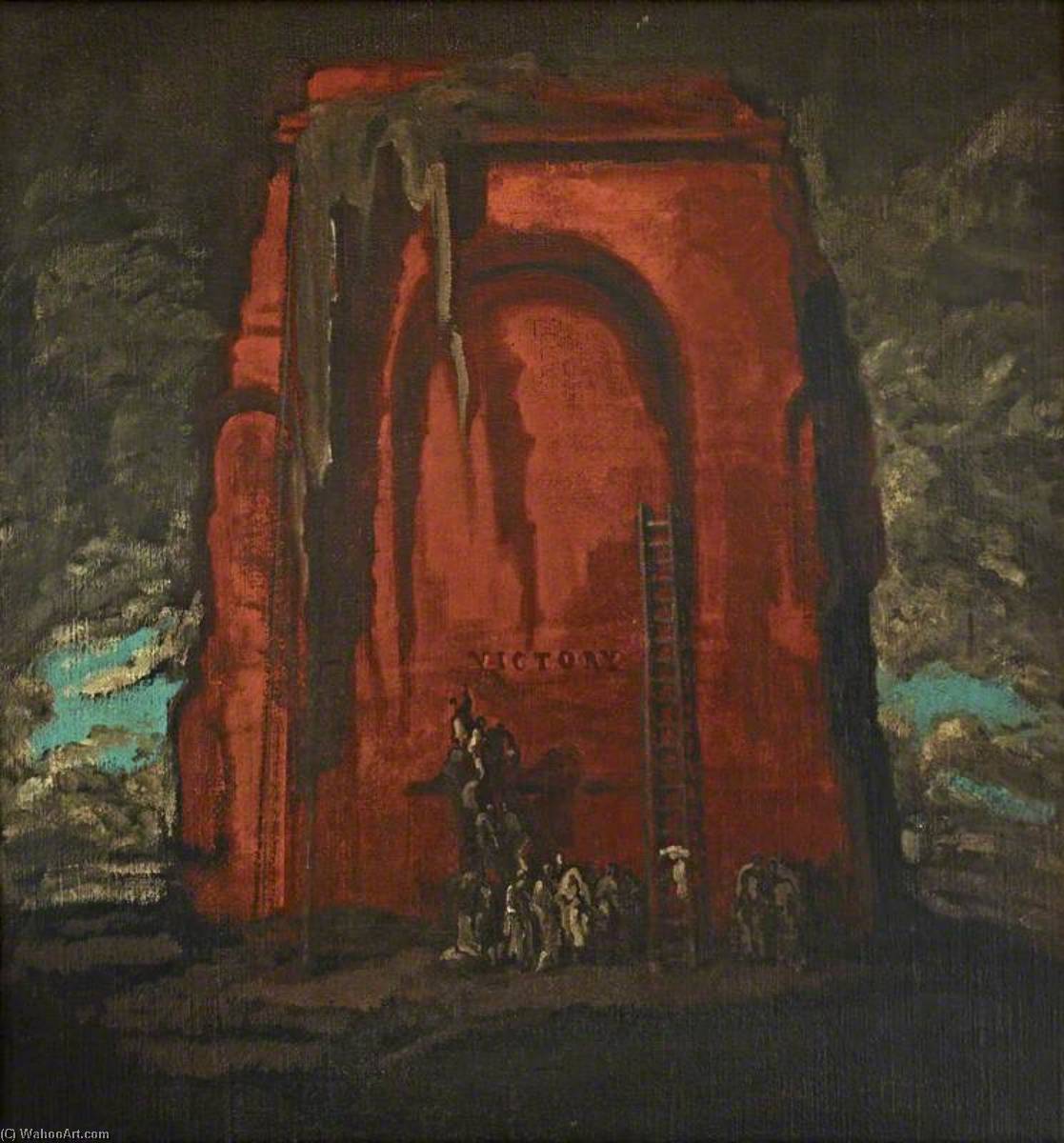
James Ferrier Pryde's “Allegory: The ‘Victory’ Monolith,” painted in 1896, is not merely a depiction of a monumental stone structure; it’s a profound meditation on aspiration, the precarious nature of success, and the inherent ambiguity within human endeavor. Measuring a substantial 71.5 x 69 cm, this oil-on-canvas work immediately commands attention with its imposing scale and dramatic composition. The painting transports the viewer to an imagined landscape – a stark, windswept plateau dominated by a colossal, red monolith, carved with a single, significant doorway and a ladder leading upwards into the swirling grey sky.
Pryde’s style leans heavily towards atmospheric realism, reminiscent of the Glasgow School painters who influenced him. He masterfully employs color to evoke mood – the deep reds and browns of the monolith contrast sharply with the cool blues and greys of the heavens, creating a sense of both solidity and unease. The brushwork is loose and expressive, particularly in rendering the textures of the stone and the billowing clouds, contributing to the painting’s overall feeling of dynamism and movement. Notably, Pryde's background was heavily influenced by his family history, with connections to Robert Scott Lauder and James Eckford Lauder, both prominent Scottish painters, suggesting an inherited artistic sensibility.
The Beggarstaff Legacy and Pictorial Storytelling
Pryde’s artistic journey is inextricably linked to his partnership with William Nicholson as part of the famed Beggarstaffs. This collaborative venture, active from 1893 to 1899, revolutionized commercial art through its innovative use of illustration – particularly in posters and signage. The Beggarstaffs were known for their gritty realism, dramatic lighting, and ability to tell compelling stories within limited spaces. “Allegory: The ‘Victory’ Monolith” exemplifies this storytelling approach; it presents a fragmented narrative, inviting the viewer to interpret the scene's meaning.
The ladder ascending the monolith is central to the painting’s intrigue. It represents an ambition, a striving towards some unseen goal. However, the figures climbing – depicted in varying states of struggle and exertion – suggest that this ascent is fraught with difficulty. The composition deliberately avoids offering a clear resolution; we don't know what awaits those reaching the top, or whether their efforts will ultimately be rewarded. This ambiguity is characteristic of Pryde’s work and reflects a broader Victorian fascination with themes of progress, fate, and the potential pitfalls of ambition.
Symbolism and the Weight of History
The monolith itself carries significant symbolic weight. Its imposing size suggests permanence and authority, yet its weathered surface hints at age and the passage of time. The carved doorway represents an entrance – perhaps to knowledge, power, or even oblivion. The moss clinging to the stone evokes a sense of decay and the relentless march of nature, reminding us that even grand achievements are ultimately subject to erosion.
Interestingly, the painting’s title, “Allegory,” points towards its broader thematic concerns. Allegories frequently employ symbolic figures and events to explore abstract ideas – in this case, perhaps the human condition itself. The scene can be interpreted as a metaphor for life's journey, where individuals strive for success but are often confronted with obstacles and uncertainties.
A Timeless Reflection on Human Endeavor
"Allegory: The ‘Victory’ Monolith" is more than just a visually striking artwork; it’s a poignant reflection on the complexities of human ambition. Pryde's masterful use of light, color, and composition creates an atmosphere of both grandeur and melancholy, prompting viewers to contemplate their own aspirations and the potential costs associated with pursuing them. Reproductions of this powerful image offer a captivating glimpse into the artistic vision of James Ferrier Pryde, a key figure in the history of British art and a master of evocative storytelling.